
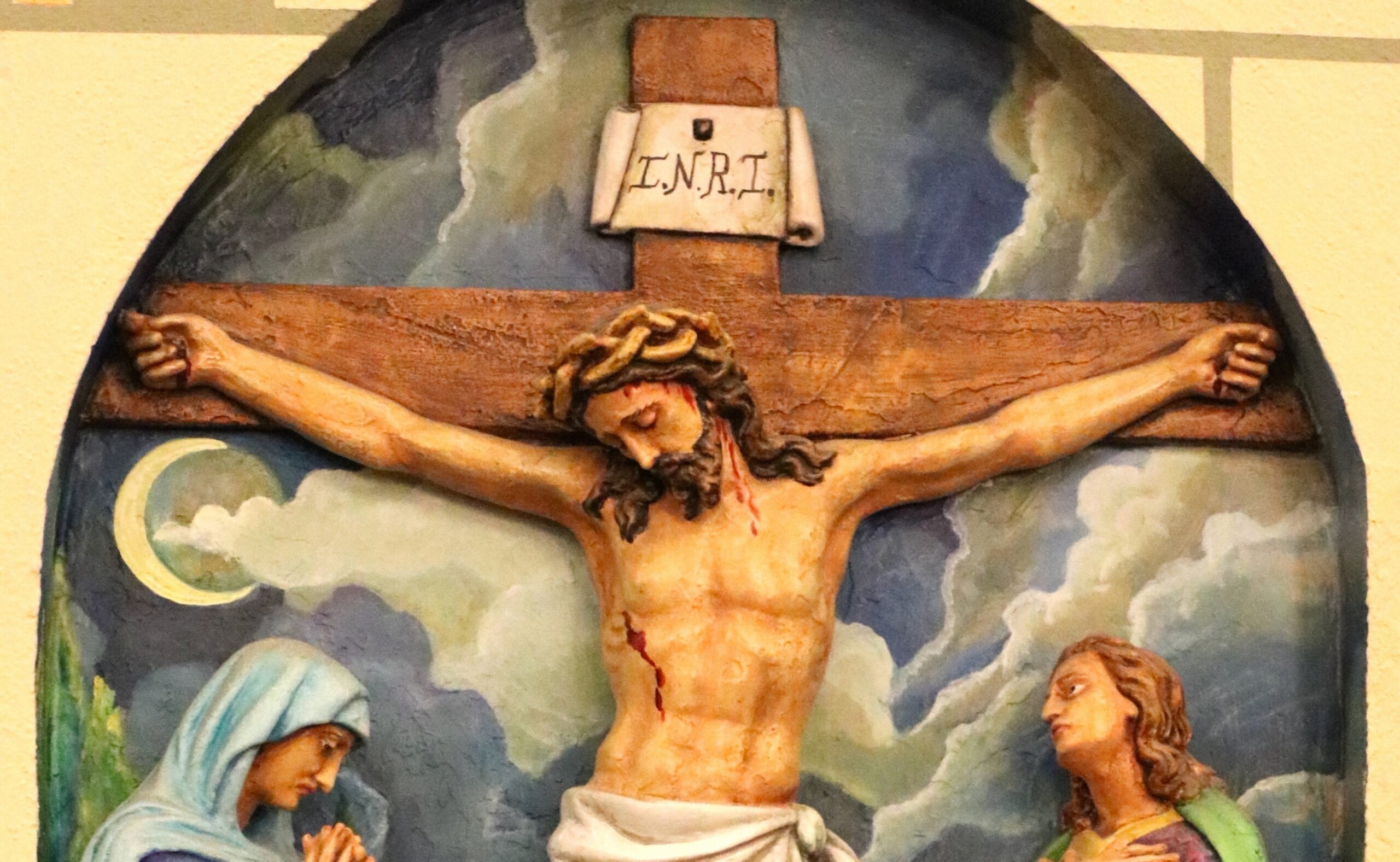
Holy Family’s Stations of the Cross help us recall fourteen moments during the Passion of the Lord. Saint Francis of Assisi is often credited with creating the Stations of the Cross as a way for Christians to make a virtual pilgrimage to the Holy Land to walk in the steps of Jesus.
Tulsa Artist Cindy Webster restored and repainted Holy Family’s Stations in 2014.
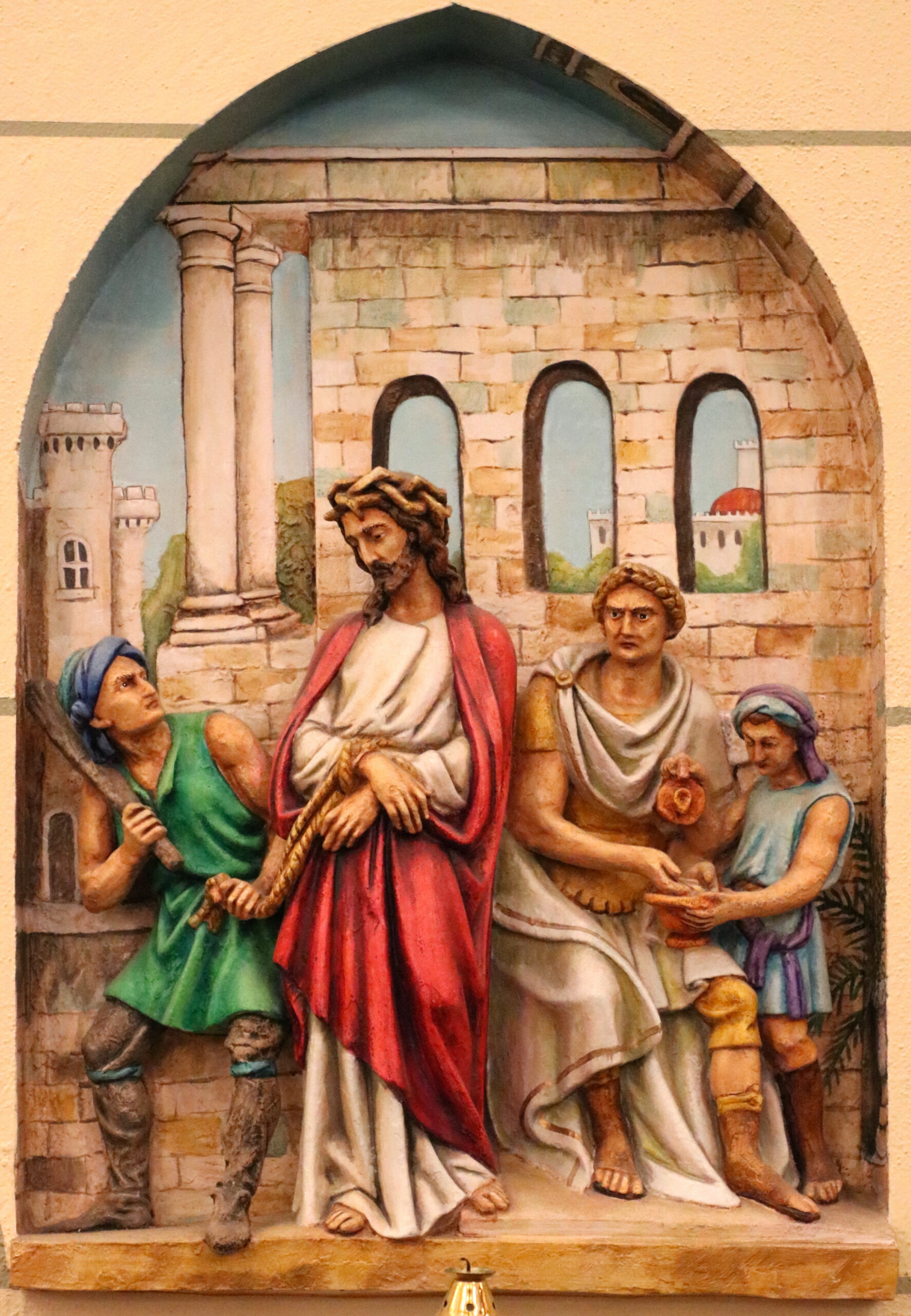
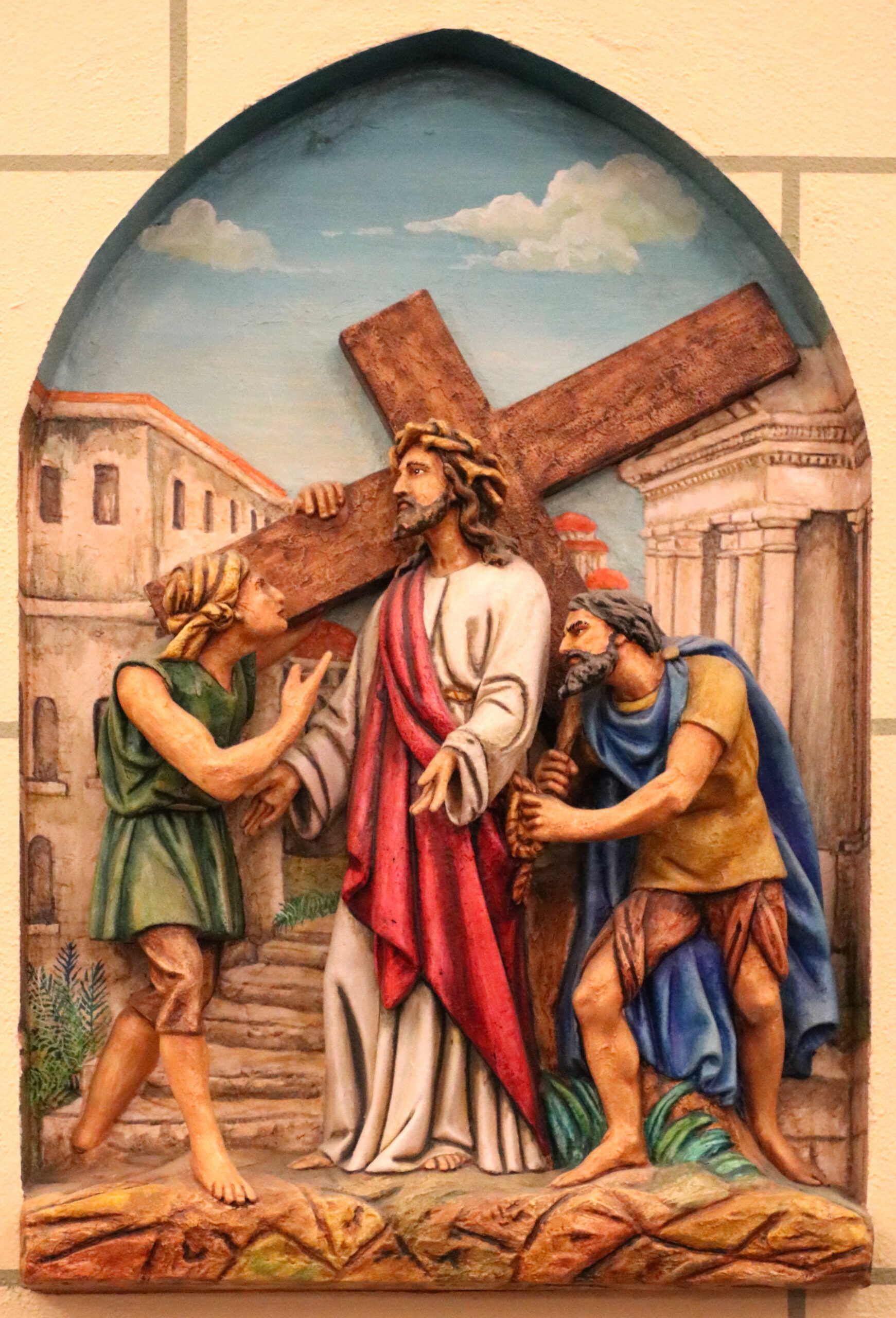
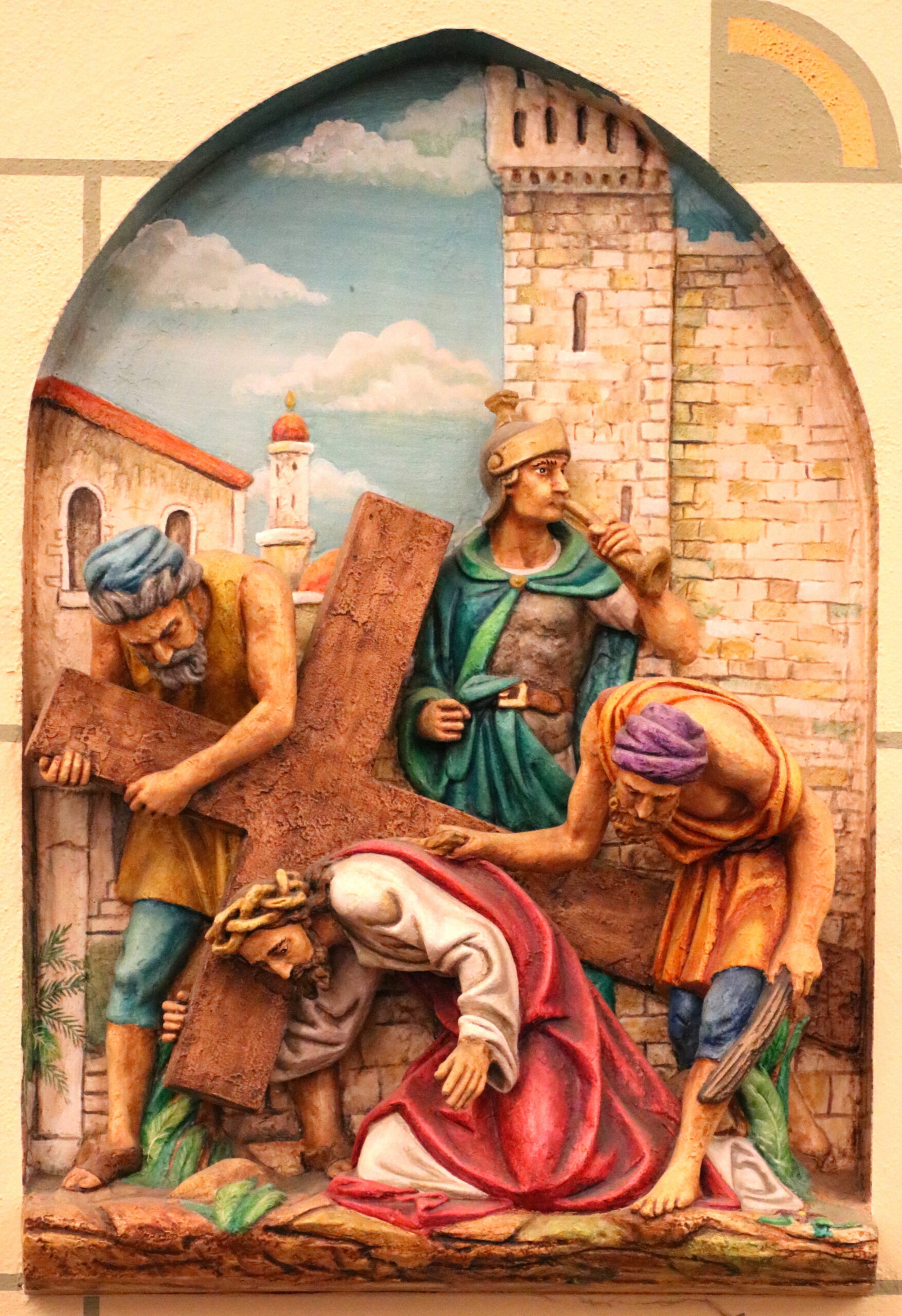
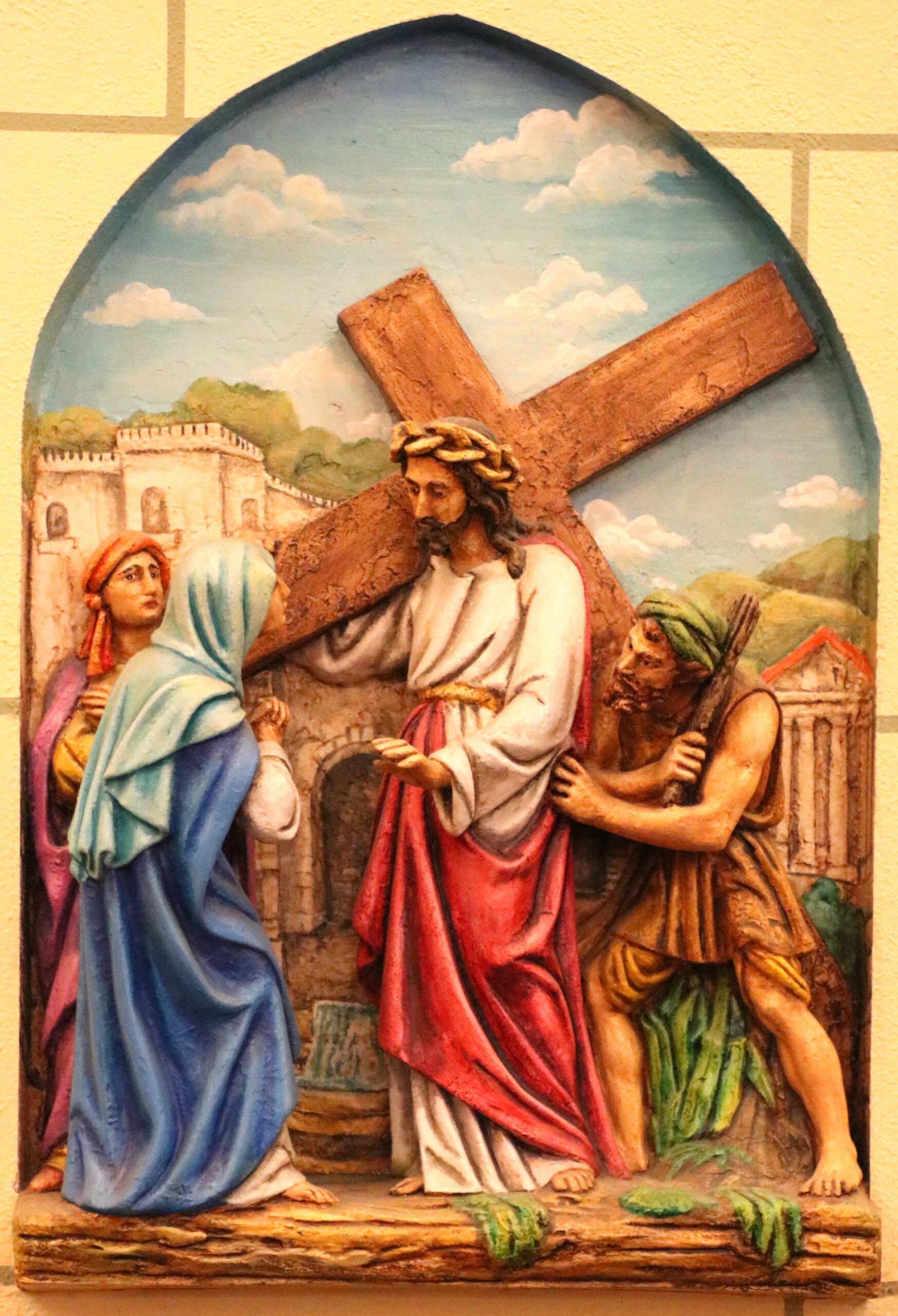
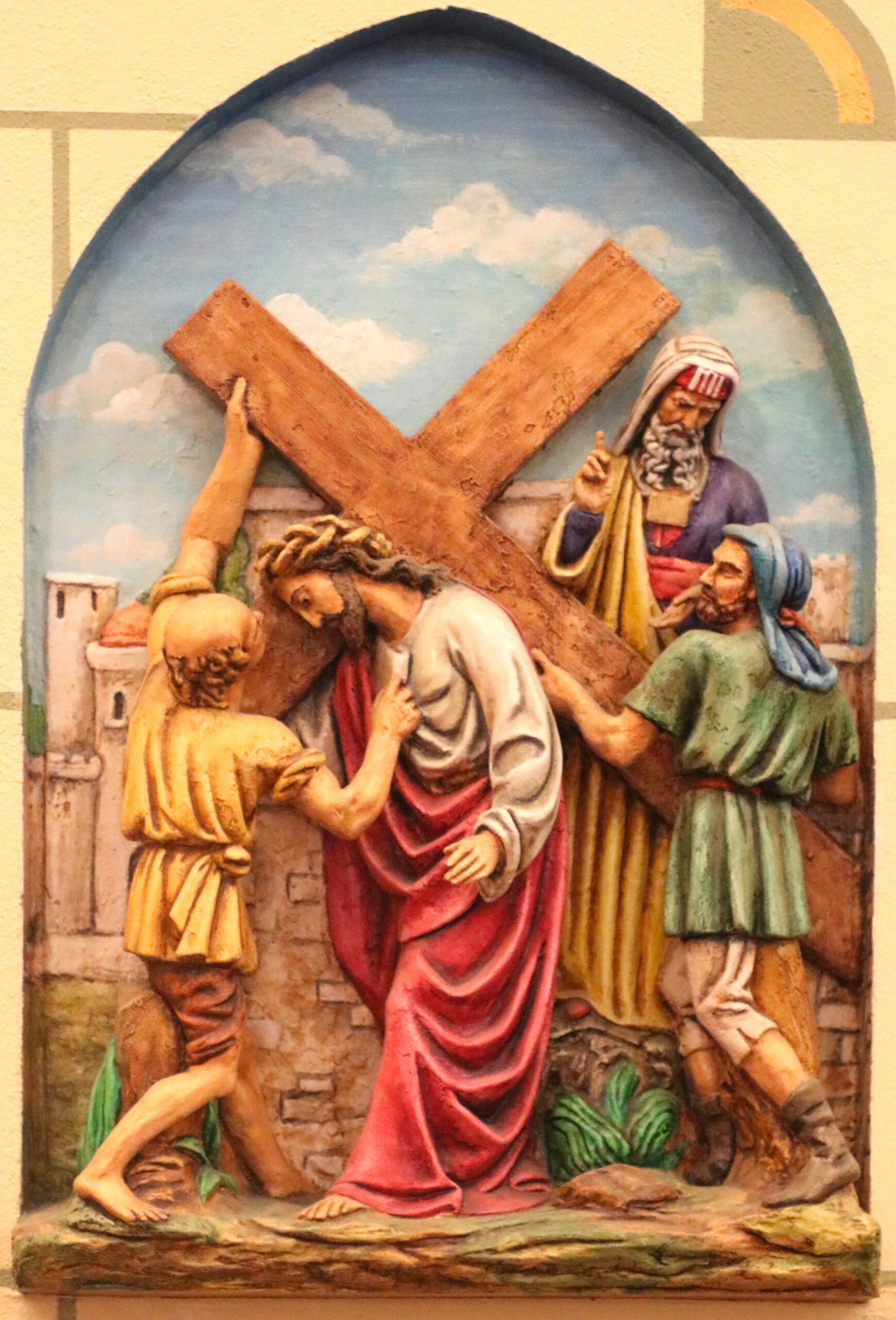
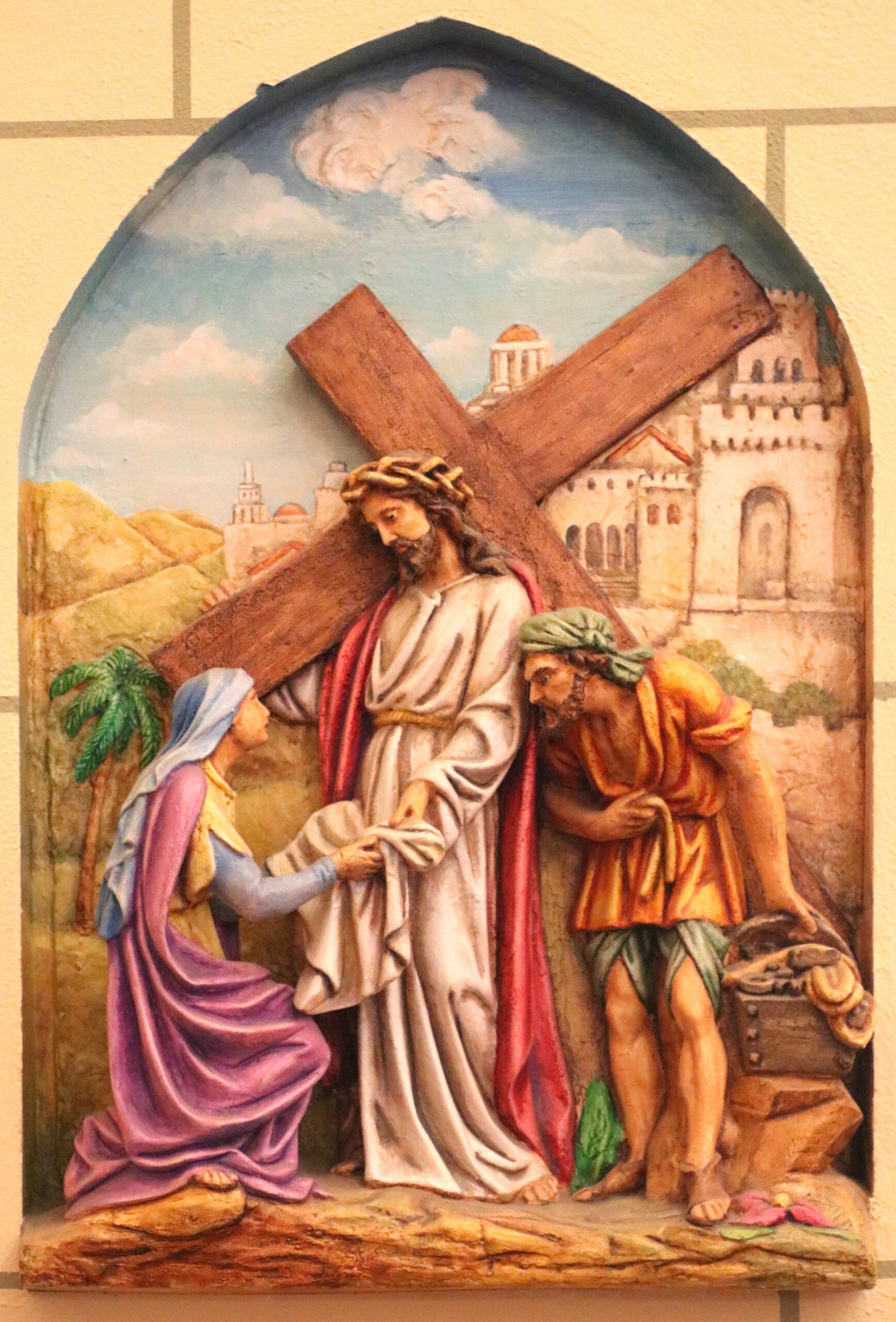

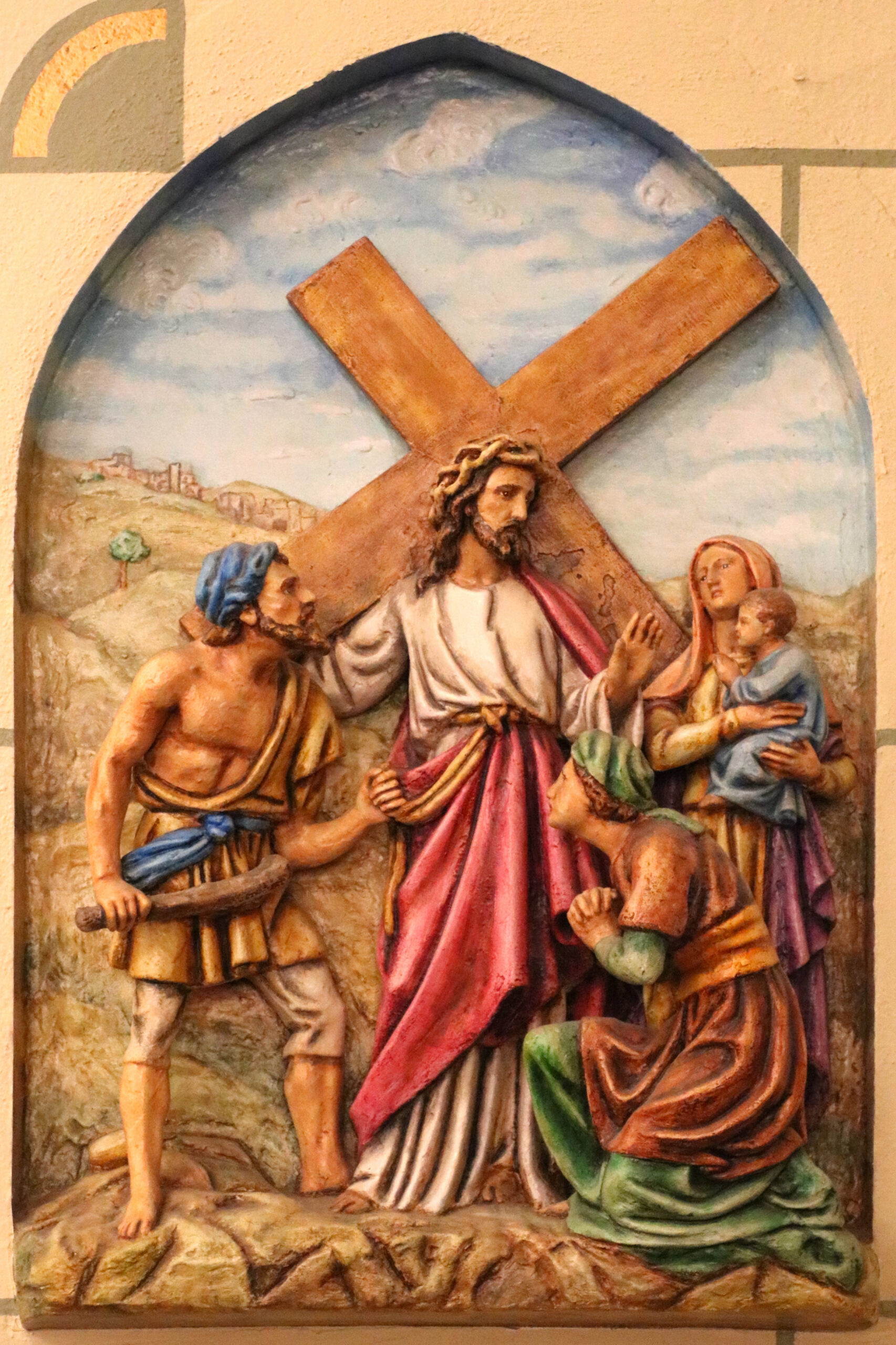
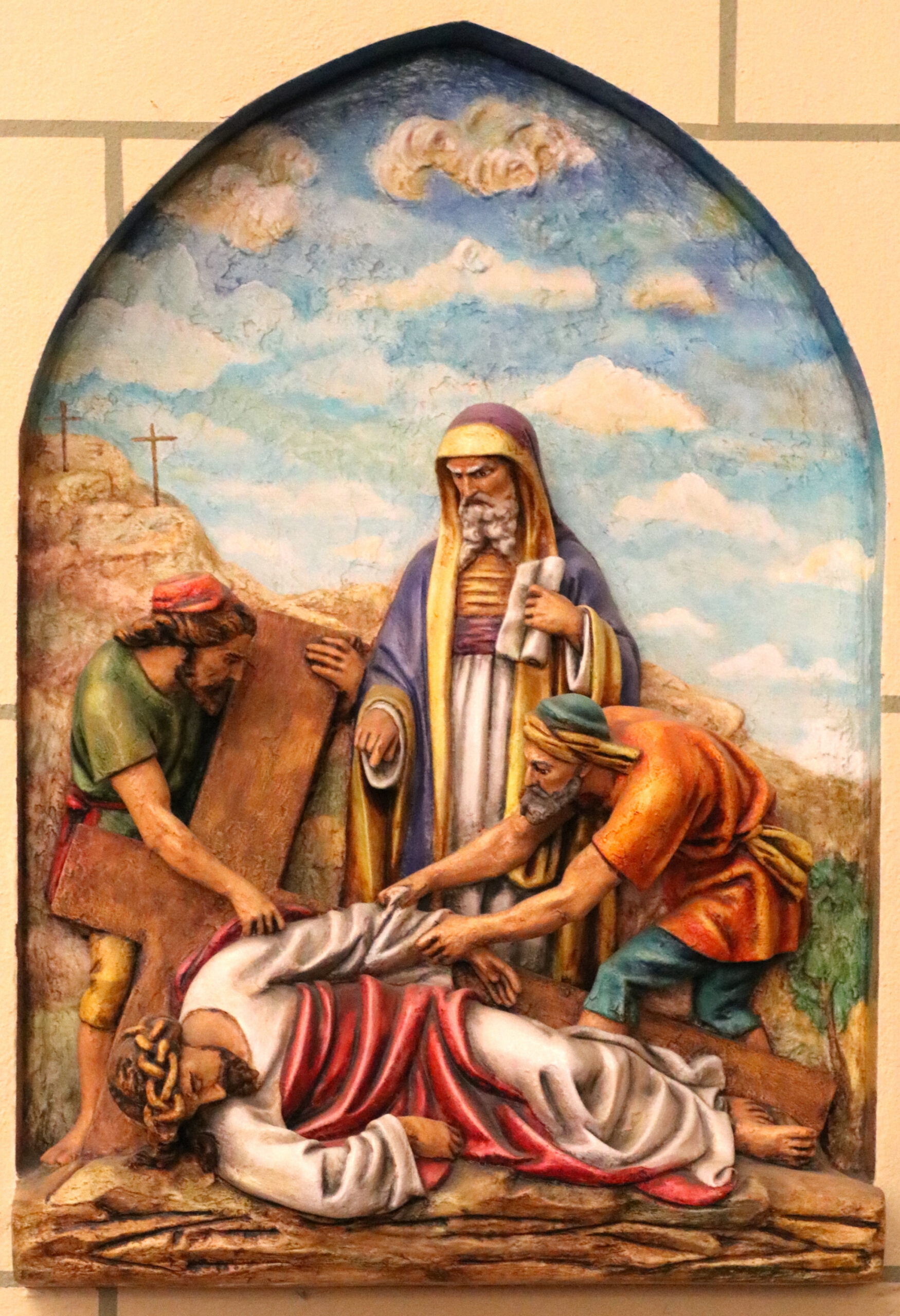
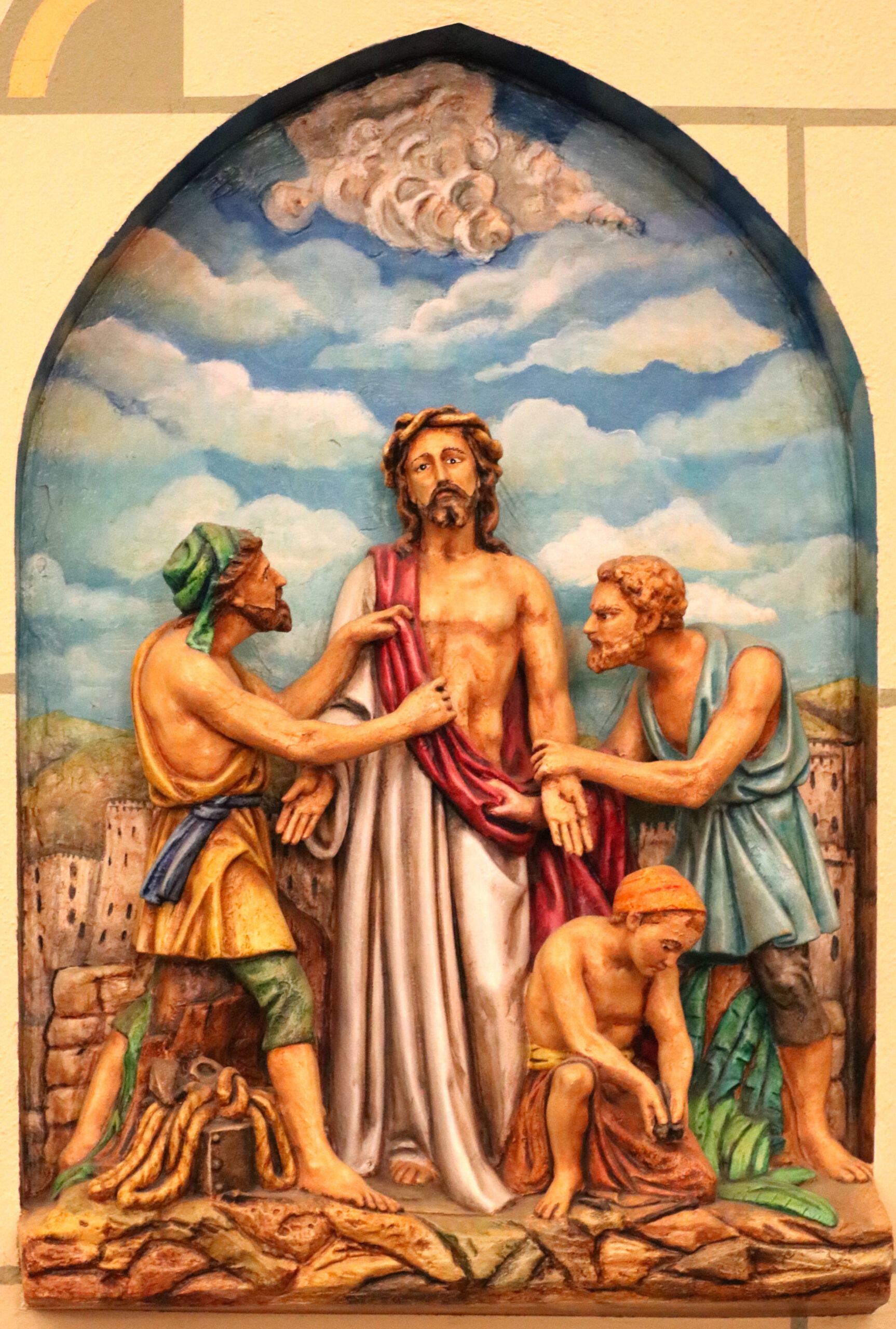
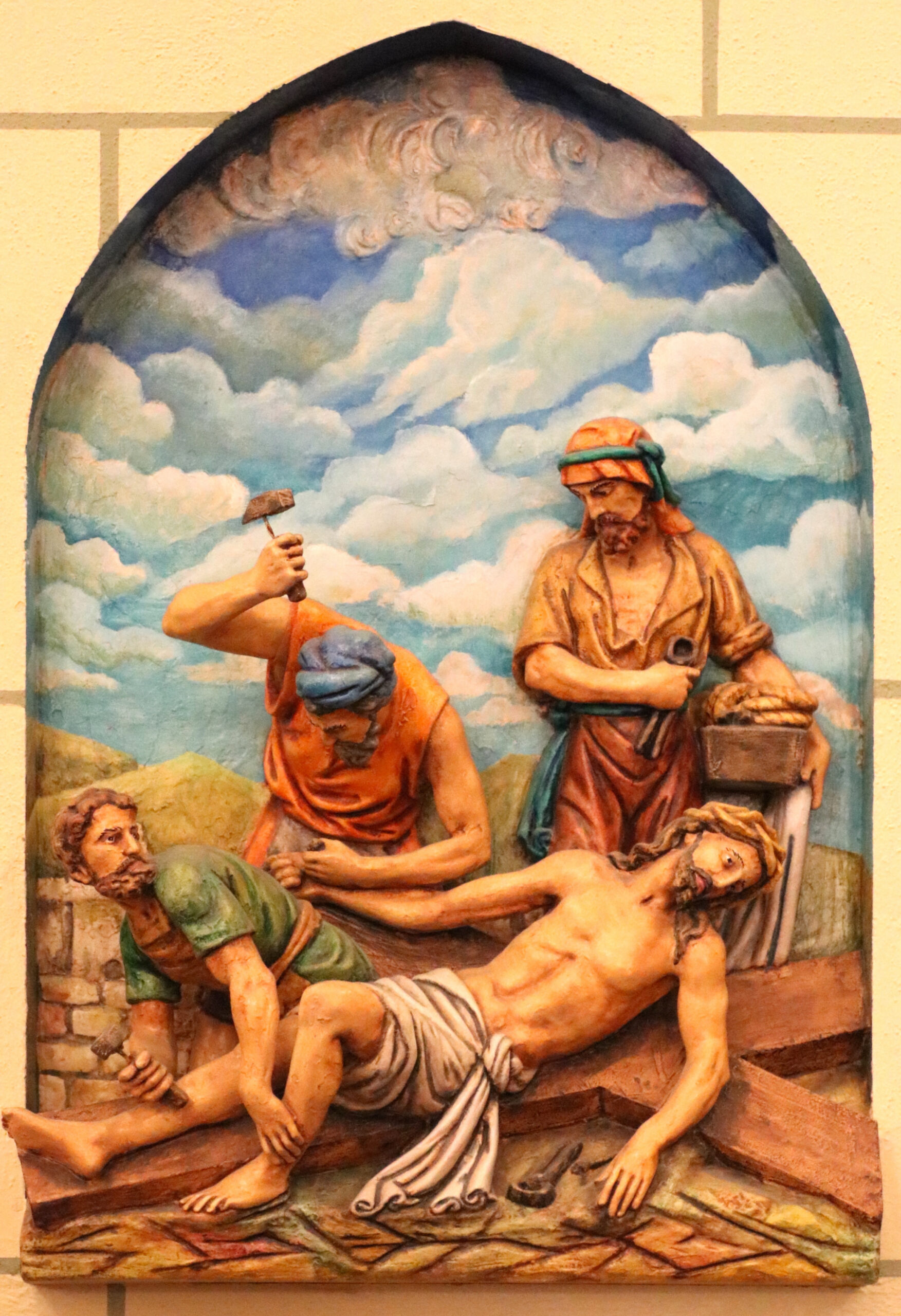
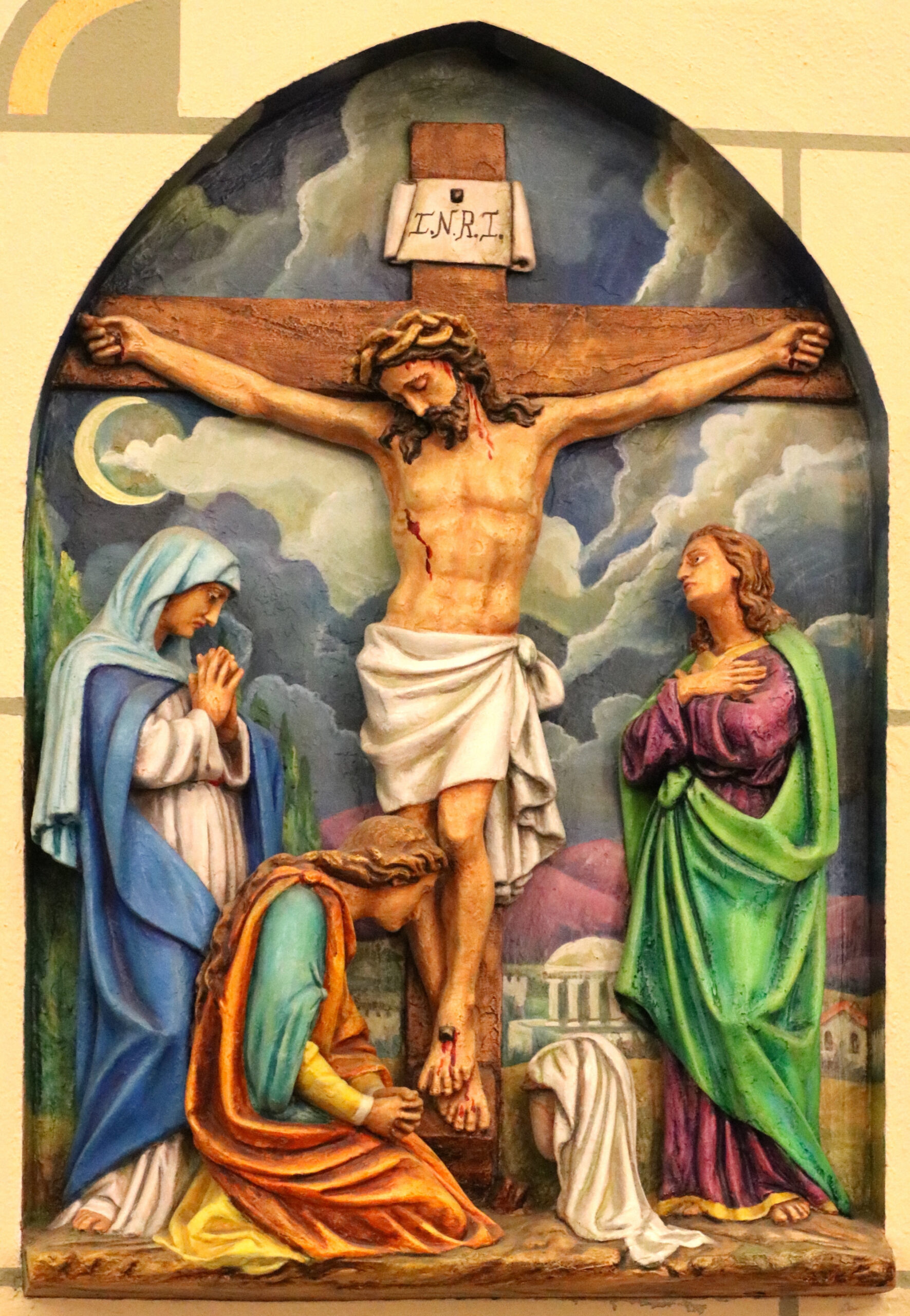
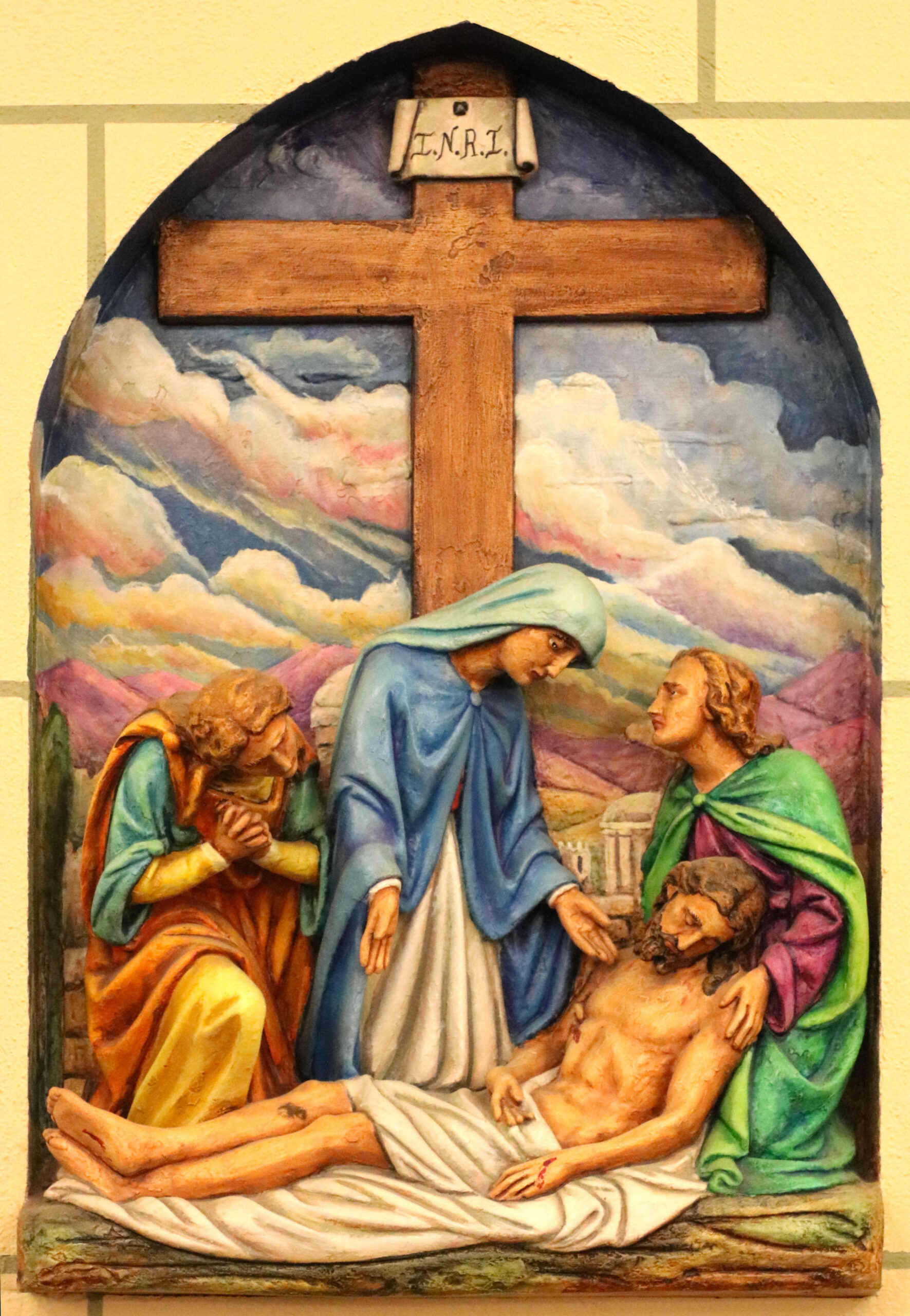
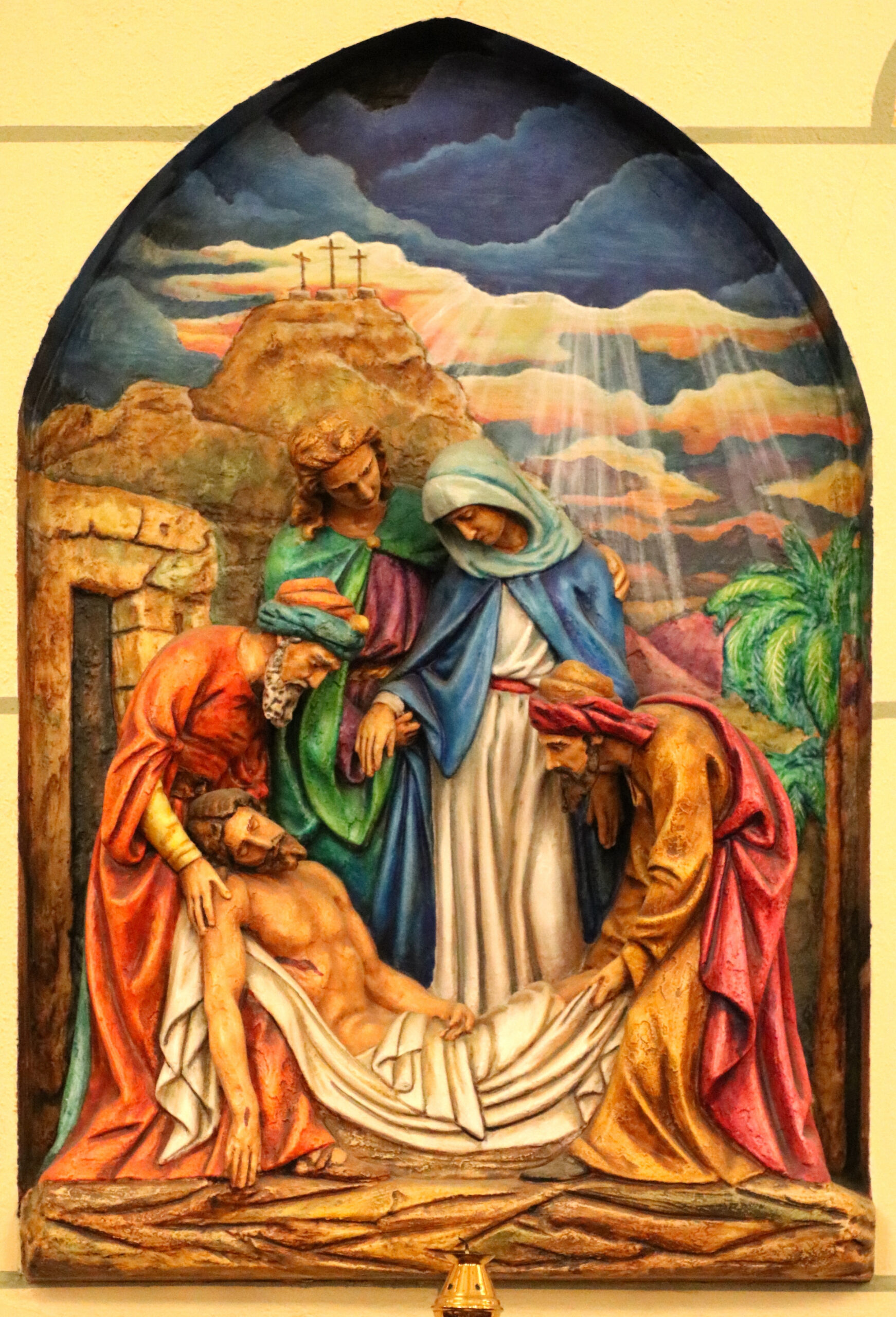
Holy Family’s Stations
In Holy Family’s earliest years, the stations were set inside elaborate frames made to look like the three high altars. The frames were made of scagliola, the same material as the altars. Scagliola is marble dust mixed with an adhesive. It is beautiful, but not as durable as solid marble.
 |
| This is the only known color photo of the original Stations. |
In the 1960s and 1970s the Stations were extracted from their frames and installed in recessed niches in the walls of the nave. A large wooden cross hung over each station.
The original vibrant colors having faded over several decades, each station was repainted with a high gloss neutral color in keeping with the muted color scheme chosen during the 1974 renovation.
More recently the high gloss paint was covered by a flat gray paint. The crosses were removed.
Former Associate Pastor Rev. Matthew La Chance brought small wooden crosses made by Christian artists in the Holy Land using native olive wood. Each cross was laid on the altar stone of the empty Tomb in the Church of the Holy Sepulchre in Jerusalem. Those crosses grace the walls of our church.
Recent Restoration
The parish received donations from a number of parishioners who wished to see the Stations restored to their original vibrant colors. The parish hired the same artist who hand paints our Paschal Candles to paint the Stations.
 |
| White primer seals the cracks in the plaster figures in each sculpture. |
She began by lightly sanding cracked layers of paint away, then applying a coat of primer. She traces the trees, hills, and clouds in the background, then colors the figures in the foreground using hues from our stained glass windows.
 |
| The colored background adds depth and contrast to the figures in the foreground. |
 |
| The nearly completed Eighth Station dries before it is covered with a protective top coat. |
A Troubled Time in the Holy Land
Saint Francis of Assisi (d. 1226) lived in a time when many Christians wished to make pilgriemages to the Holy Land but found both the travel and the destination dangerous – so much so that many Christians chose to remain in their hometowns rather than risk the journey.
Saint Francis developed the Stations as a simple prayer for private and communal use. Over the next two centuries, the devotion quickly spread across Europe and the rest of the world.
Although Holy Family uses the traditional number of Stations: fourteen (They focus on moments during Christ’s Passion from His condemnation to death through His burial in the Holy Sepulchre), the number and content of the Stations varies greatly around the world. Recent innovations in some parishes include a Fifteenth Station: The Resurrection. In 1991, Pope Saint John Paul II led the traditional Good Friday Stations at the Colosseum in Rome using a new list of stations including Jesus in the Garden of Gethsemane and Jesus’ Arrest.
Leave a Reply