The Franz Mayer Windows: Holy Family’s stained glass
Franz Mayer
19th Century Artist Franz Mayer founded a stained glass studio in Munich, Germany. His distinctive style earned worldwide acclaim.
The Mayer studio completed a set of stained glass windows that tells the story of the life of Jesus Christ and the founding of the Church. Pilgrims and art lovers traveled to Munich to see the remarkable set of windows. They praised the colors, the posing of the characters, the detailed faces, hands, and feet.
From Munich to Tulsa
The Mayer studio produced many copies of the windows for churches around the world including the cathedrals in Denver, Colorado and Tulsa, Oklahoma. Holy Family Cathedral in Tulsa purchased their windows from the Daprato Company and were licensed through the Royal Bavarian Art Institute.
Before the second World War, the original windows were moved to a church in Dresden as church leaders grew concerned that the Munich church may become damaged. Unfortunately, military operations in Dresden saw the windows destroyed.
The Main Windows
The ten largest windows recount ten moments in the life of Christ from his birth through the ascension and the descent of the Holy Spirit. Note that whether indoor or outdoor, the people depicted in the windows are all standing on a stage of sorts. Most of the Mayer windows use the “stage” as a way to add a third dimension to the windows.
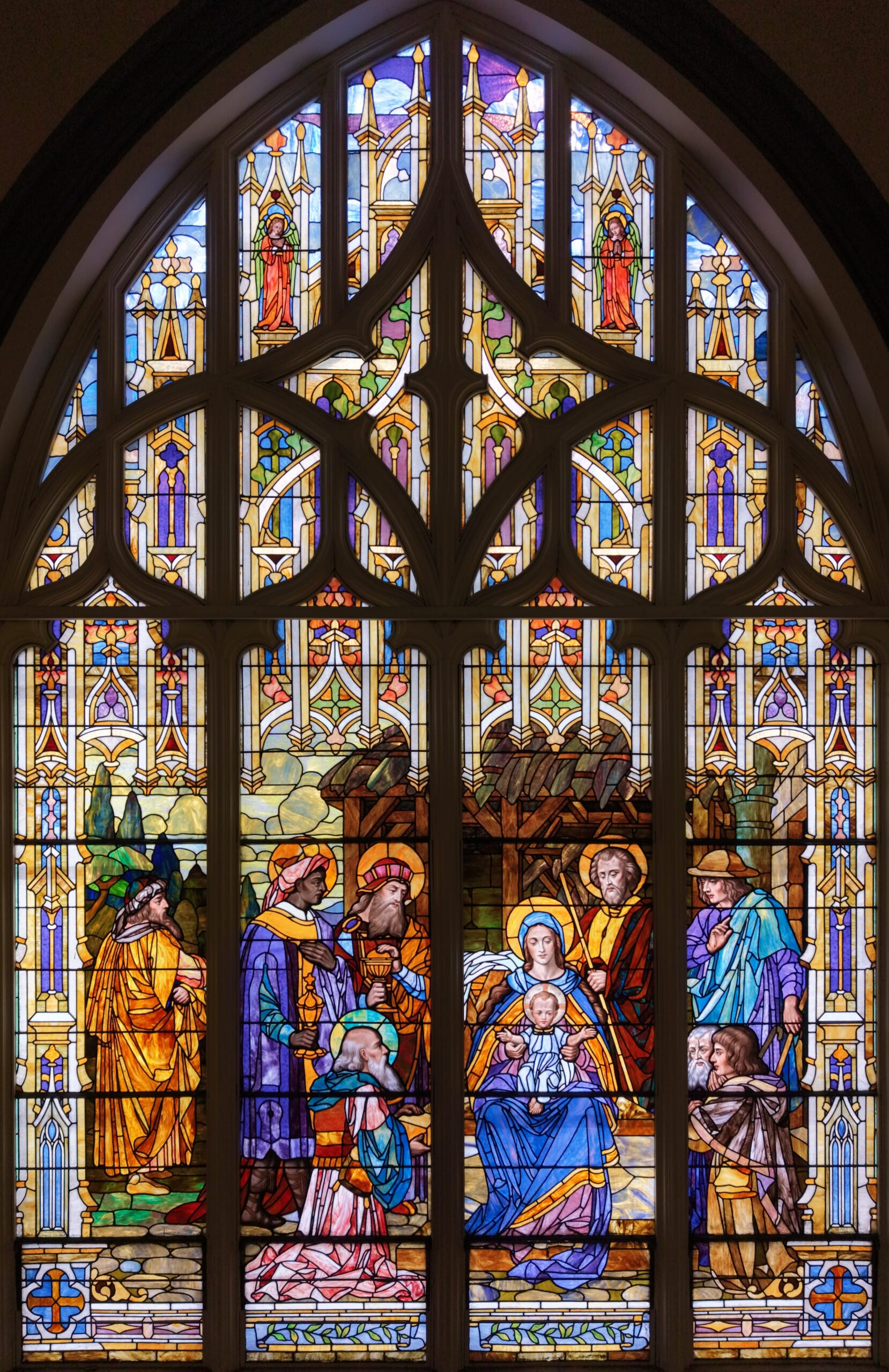
The Nativity of the Lord
The newborn Jesus sits on his mother’s lap as Joseph looks protectively over her shoulder. The three shepherds are on the right. The Magi are on the left. King Herod clothed in gold is on the far left.
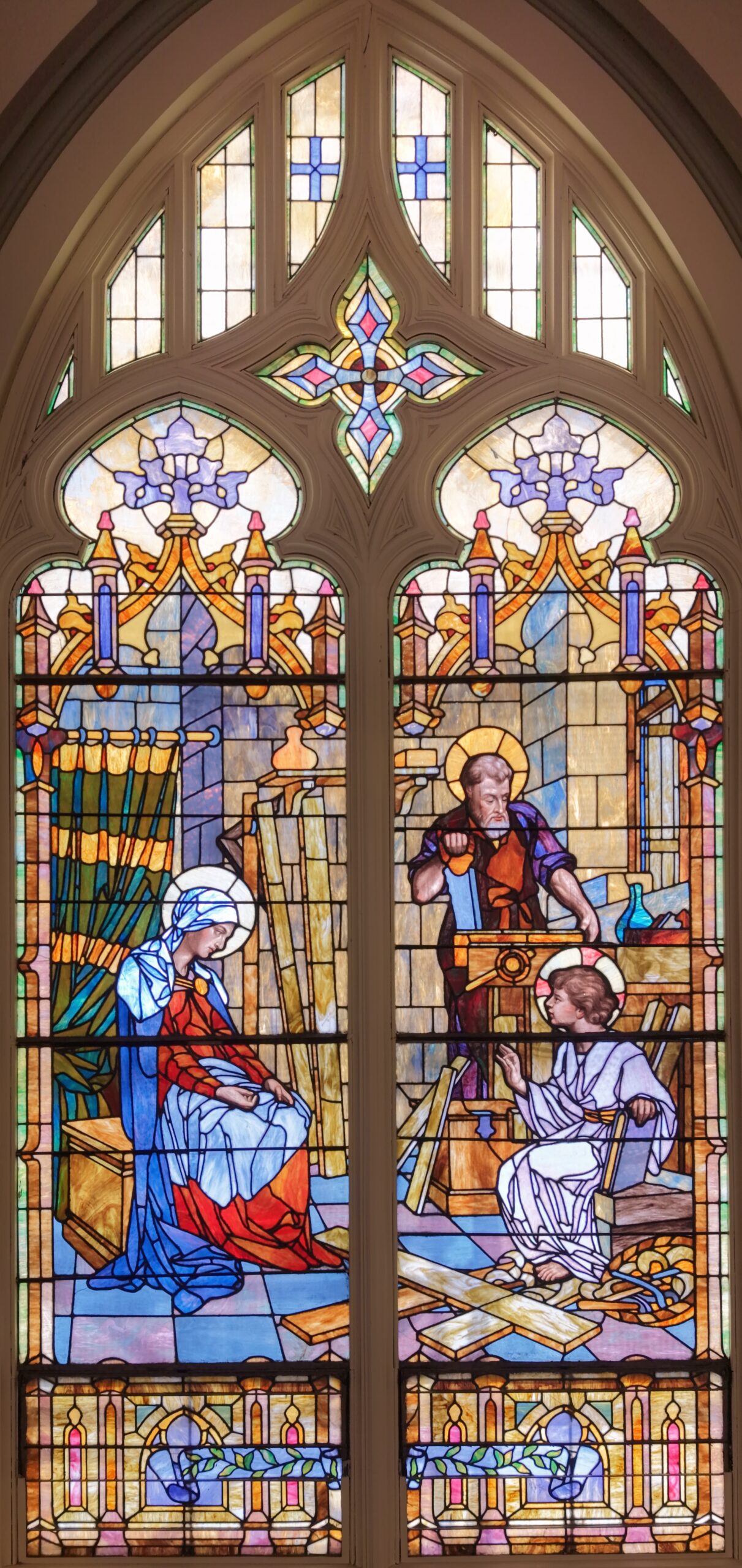
The Holy Family at Work
The Holy Family gathers in Joseph’s carpentry shop as the Blessed Virgin Mary knits a garment in her lap.
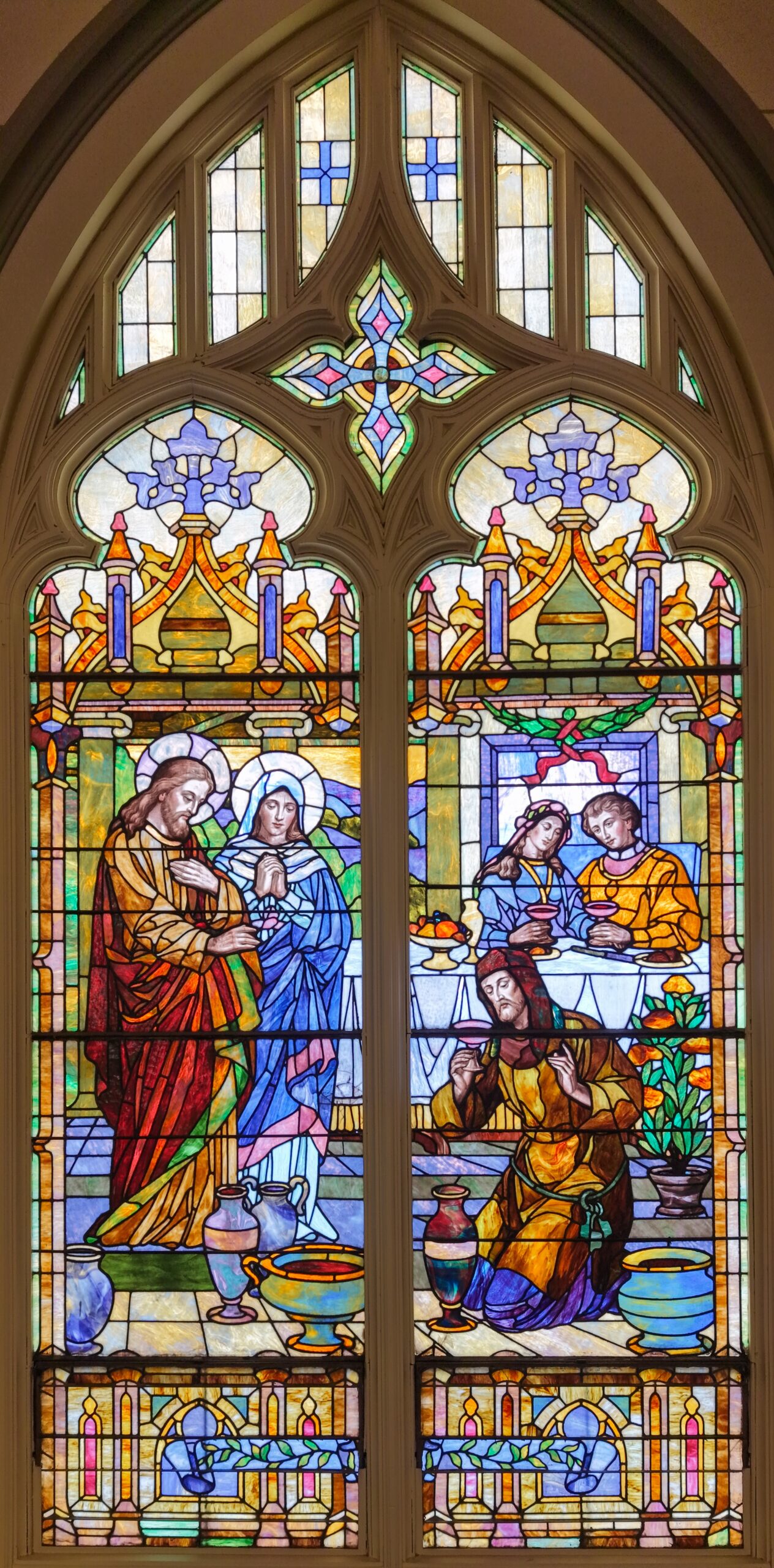
The Wedding Feast at Cana
“Do whatever he tells you,” says the Blessed Virgin Mary to the wine steward.
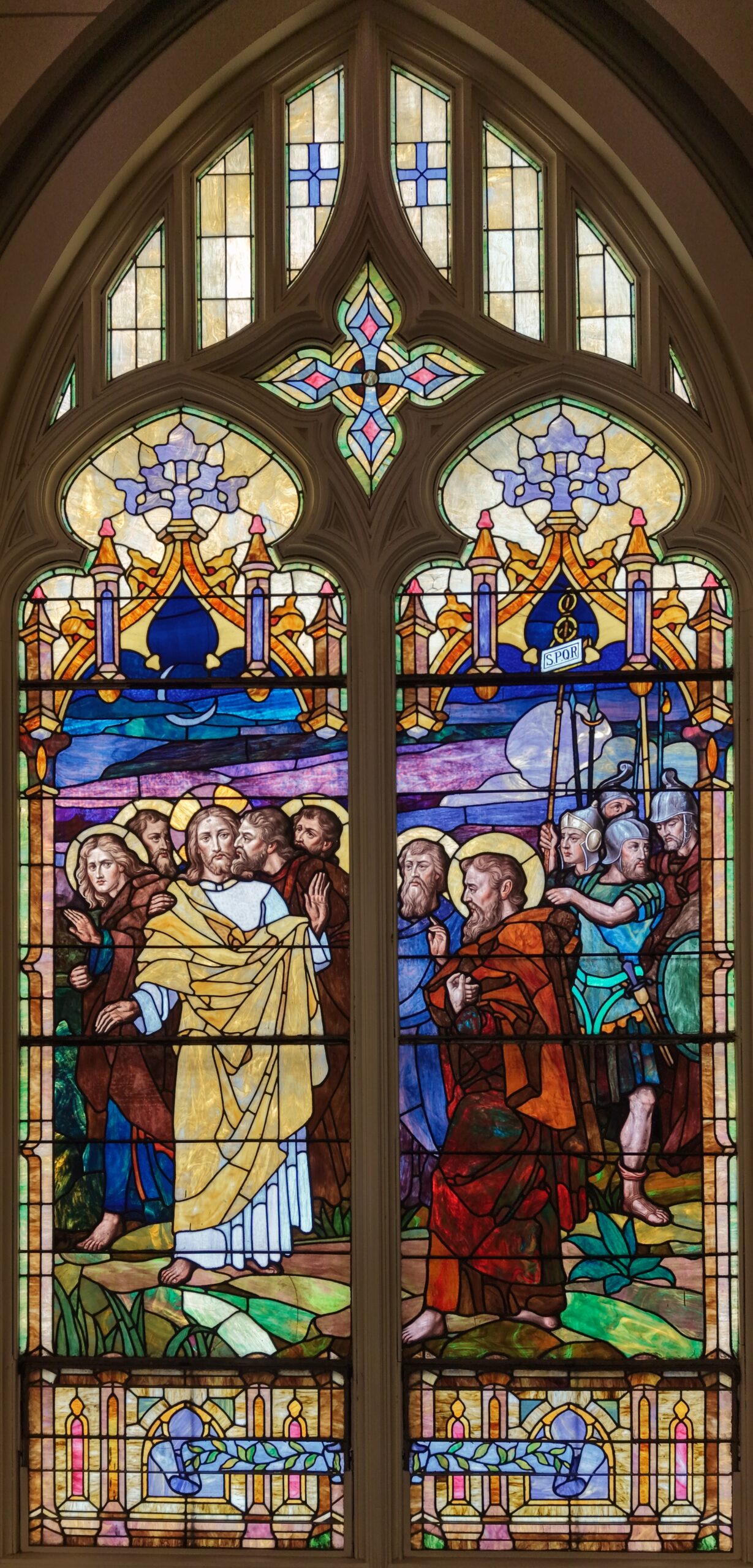
Judas Betrays the Lord
Judas signals the guards to arrest Jesus by kissing him on the cheek as the apostles look on. The soldiers hold a banner identifying them as Romans. The “S.P.Q.R.” on the banner stands for a phrase “Senatus Populasque Romanus” or “The Senate and People of Rome.”
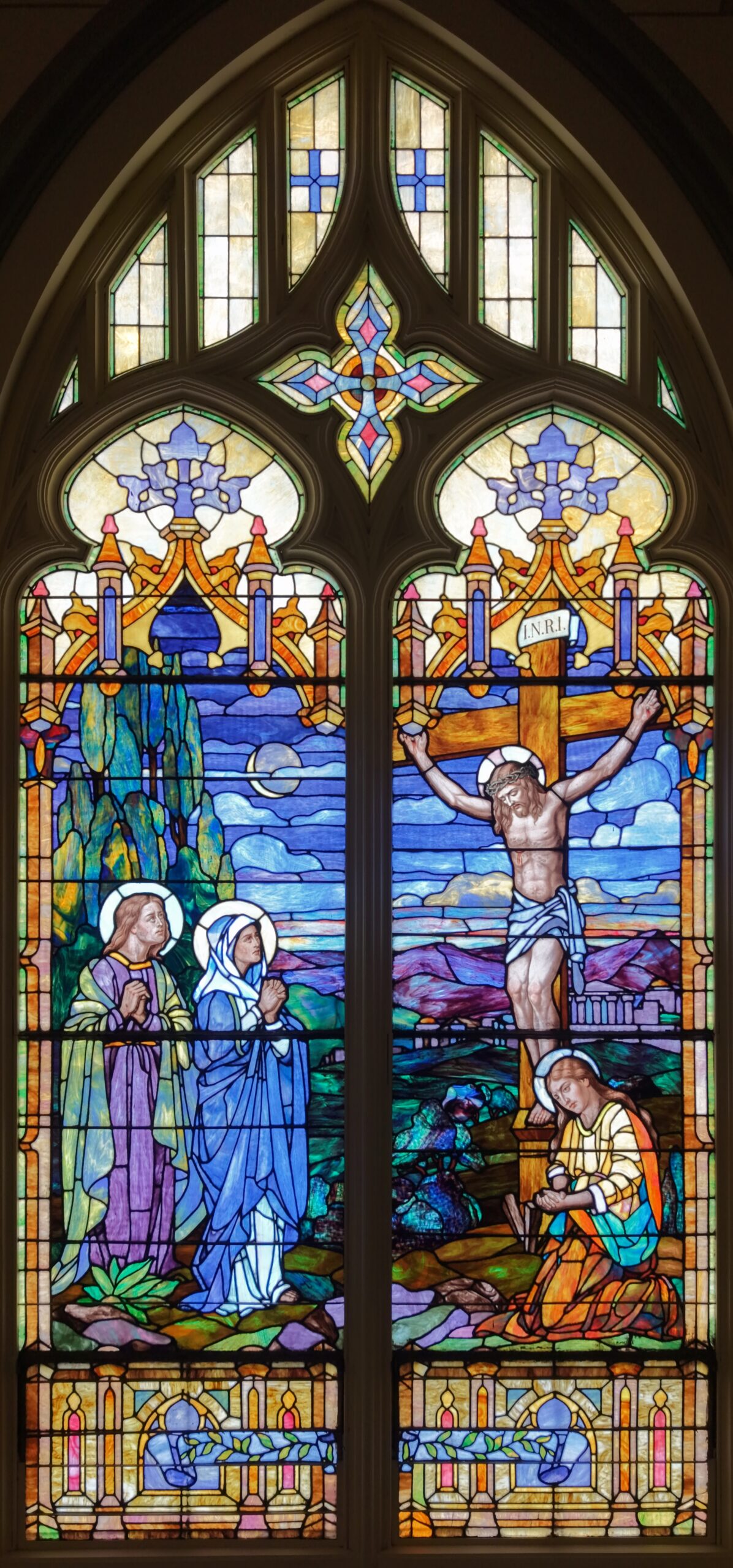
The Crucifixion
Saint John, Saint Mary Magdalene, and the Blessed Virgin Mary watch as the Lord is crucified. The temple of Jerusalem is in the background. The eclipse of the sun begins as the sky darkens.
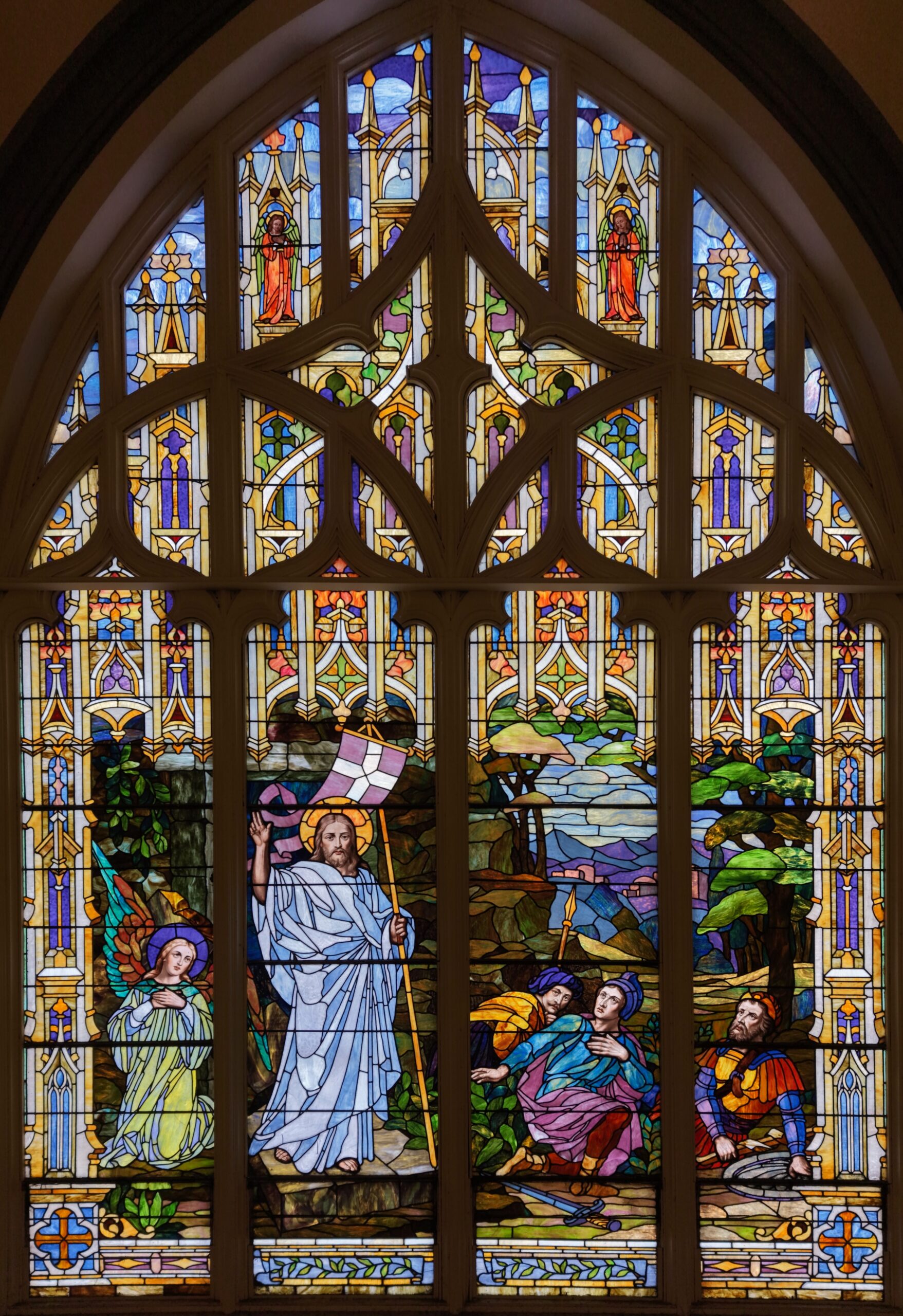
The Resurrection of the Lord
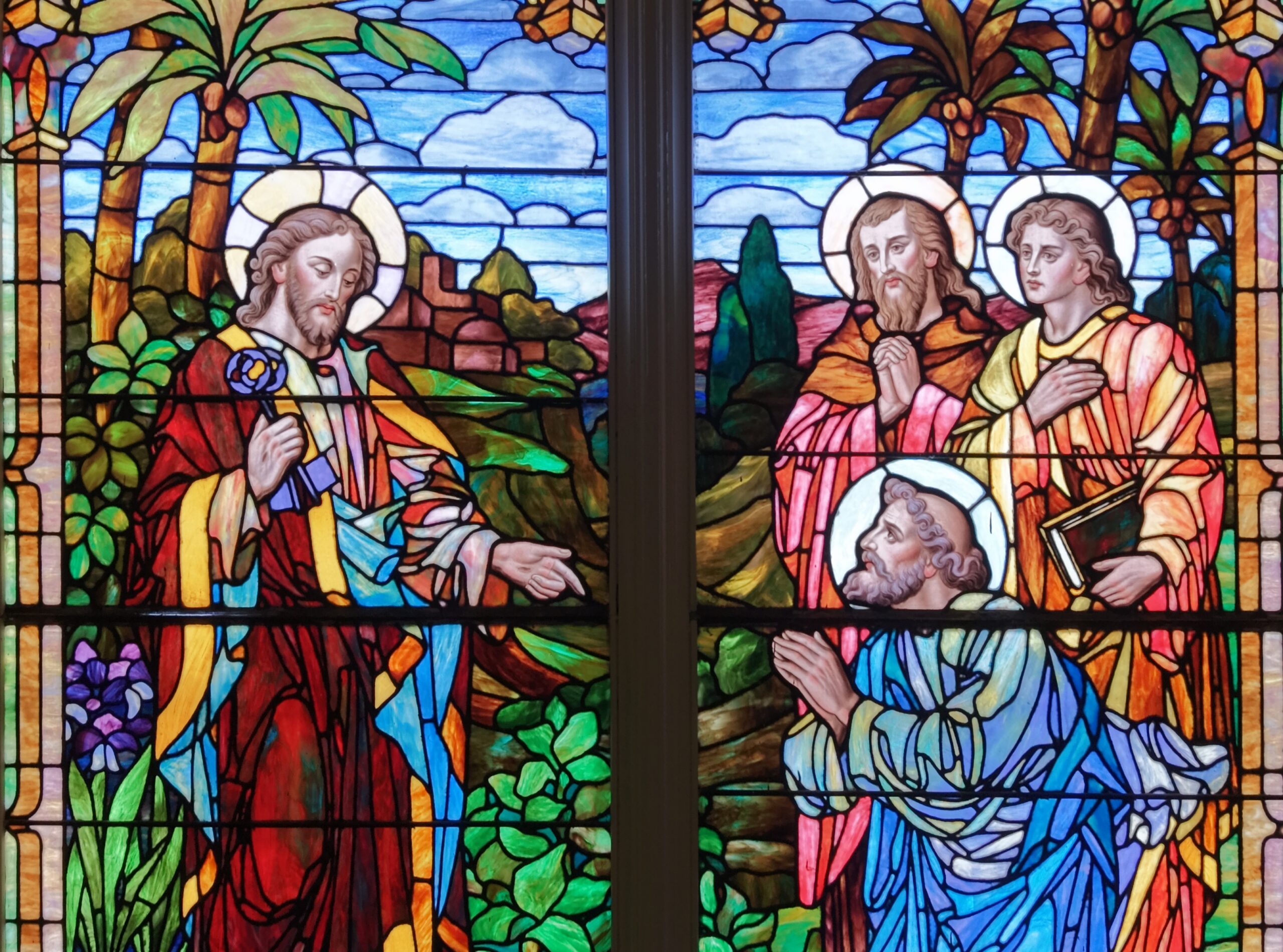
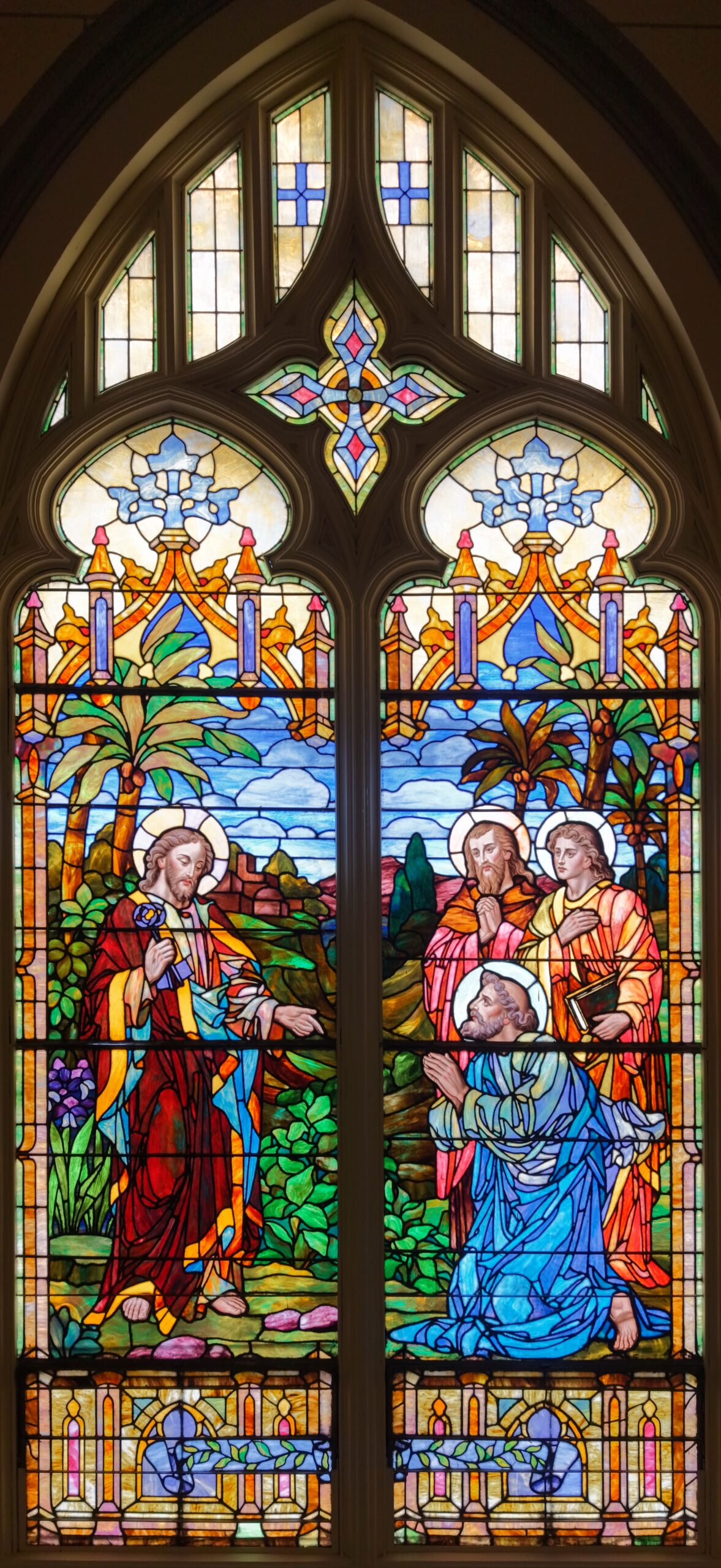
The Keys to the Kingdom
Saint Peter becomes the first pope when Jesus gives him the metaphorical keys to the kingdom. Those keys are found on the papal flag and coat of arms.
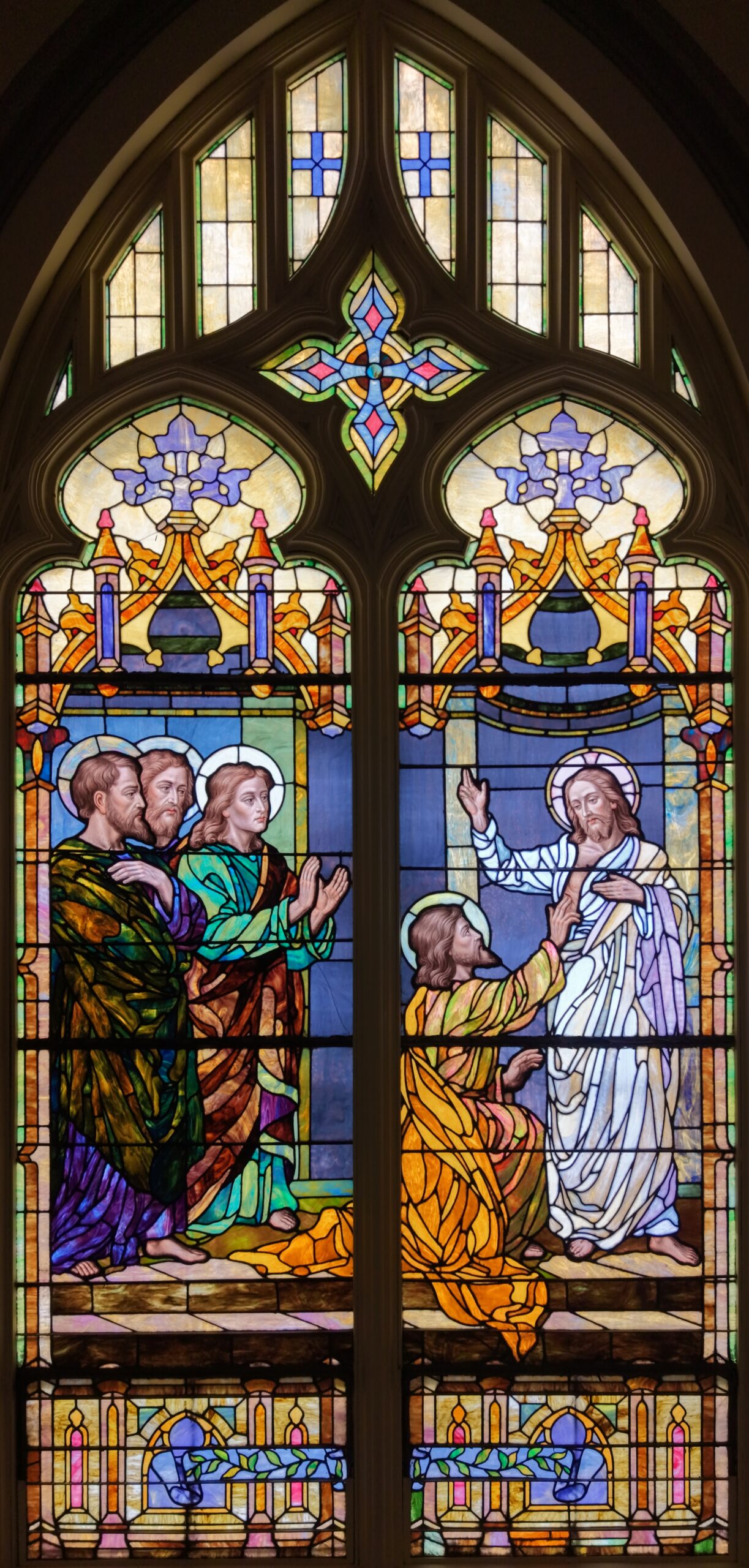
Thomas Believes
Doubting Thomas probes the wound of Jesus as he comes to believe in the Resurrection.
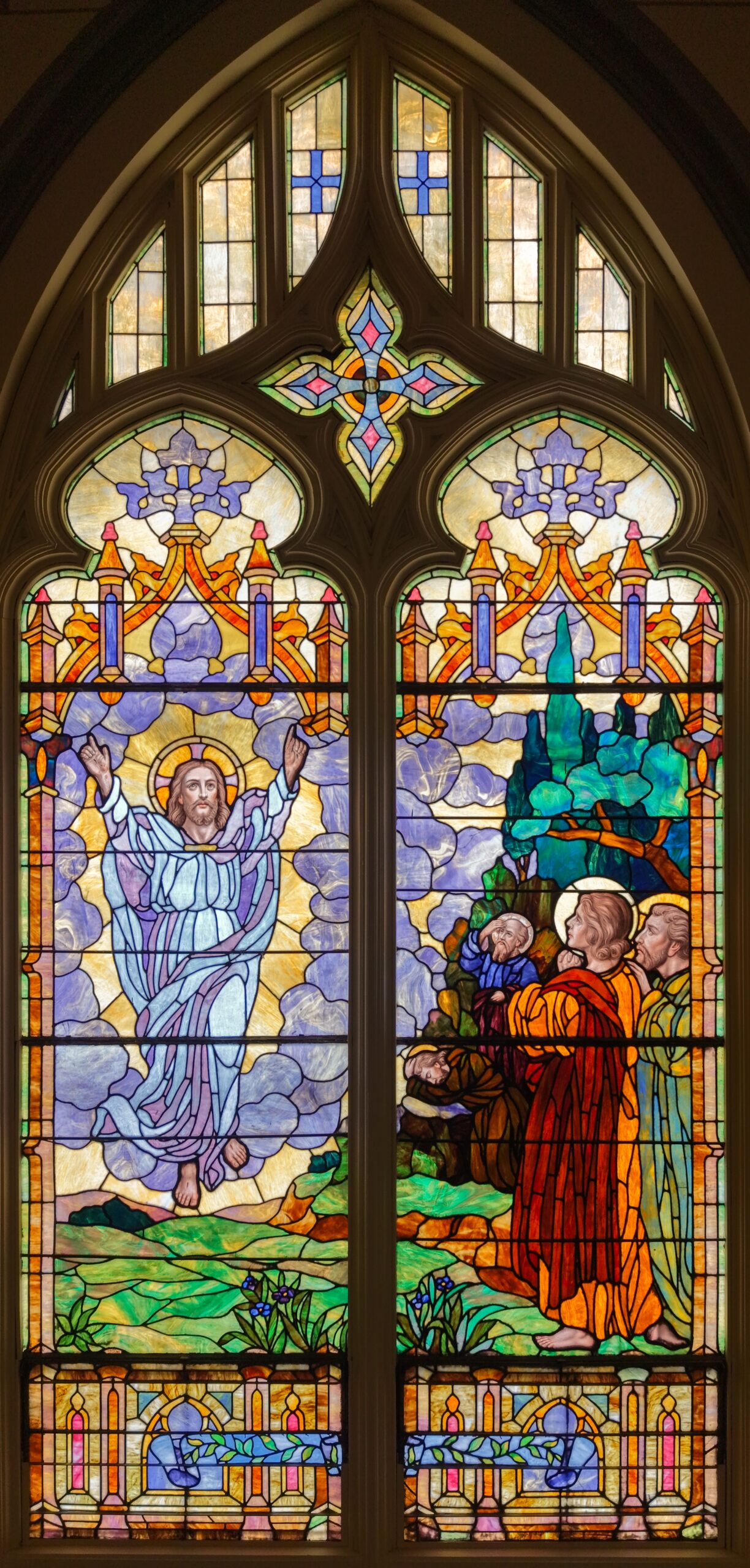
The Ascension of the Lord
The Apostles watch as Jesus lifts his hands in blessing and rises into heaven.
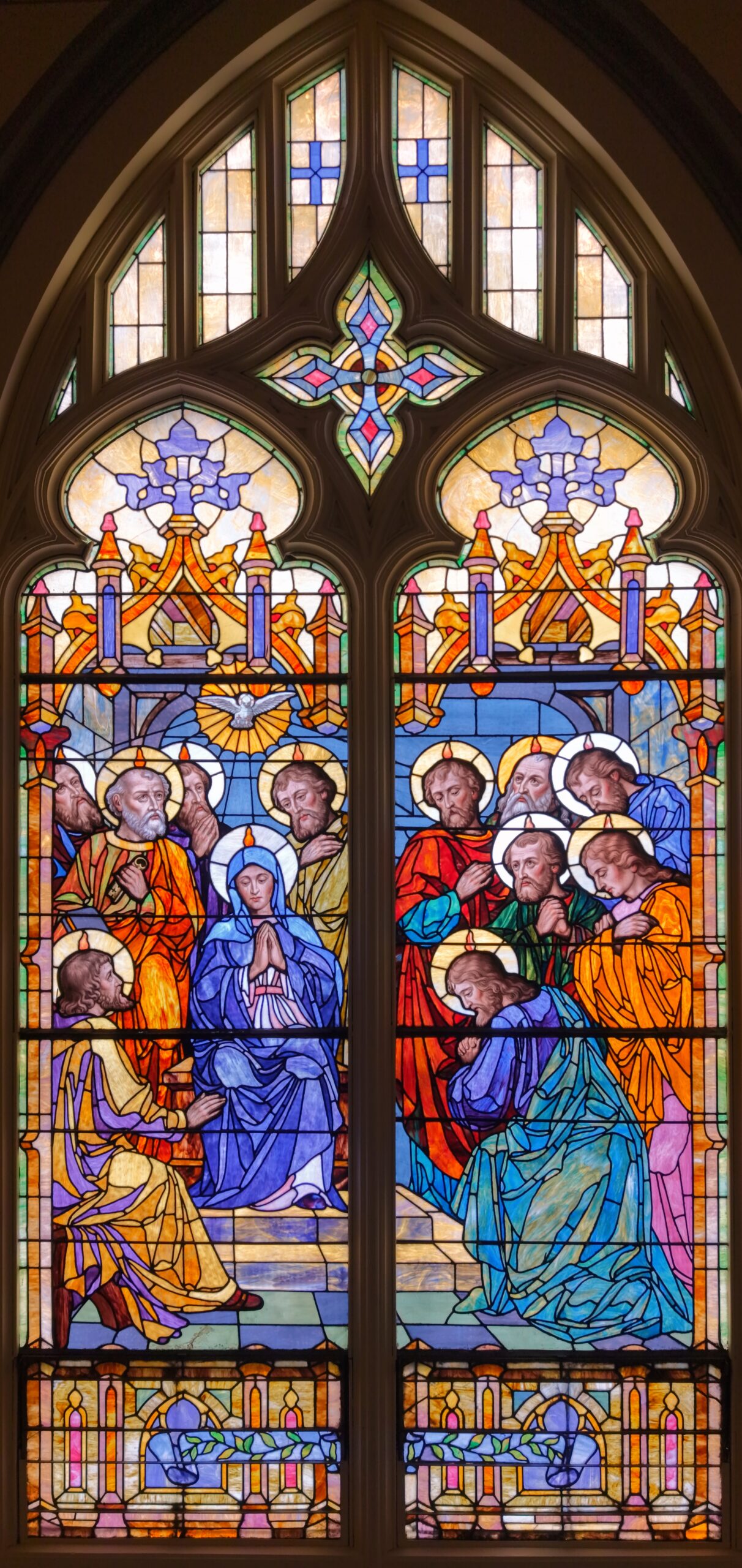
The Descent of the Holy Spirit
The Holy Spirit – in the form of a dove – descends upon the Blessed Virgin Mary and the apostles as tongues of fire appear over their heads.
The Apse Windows
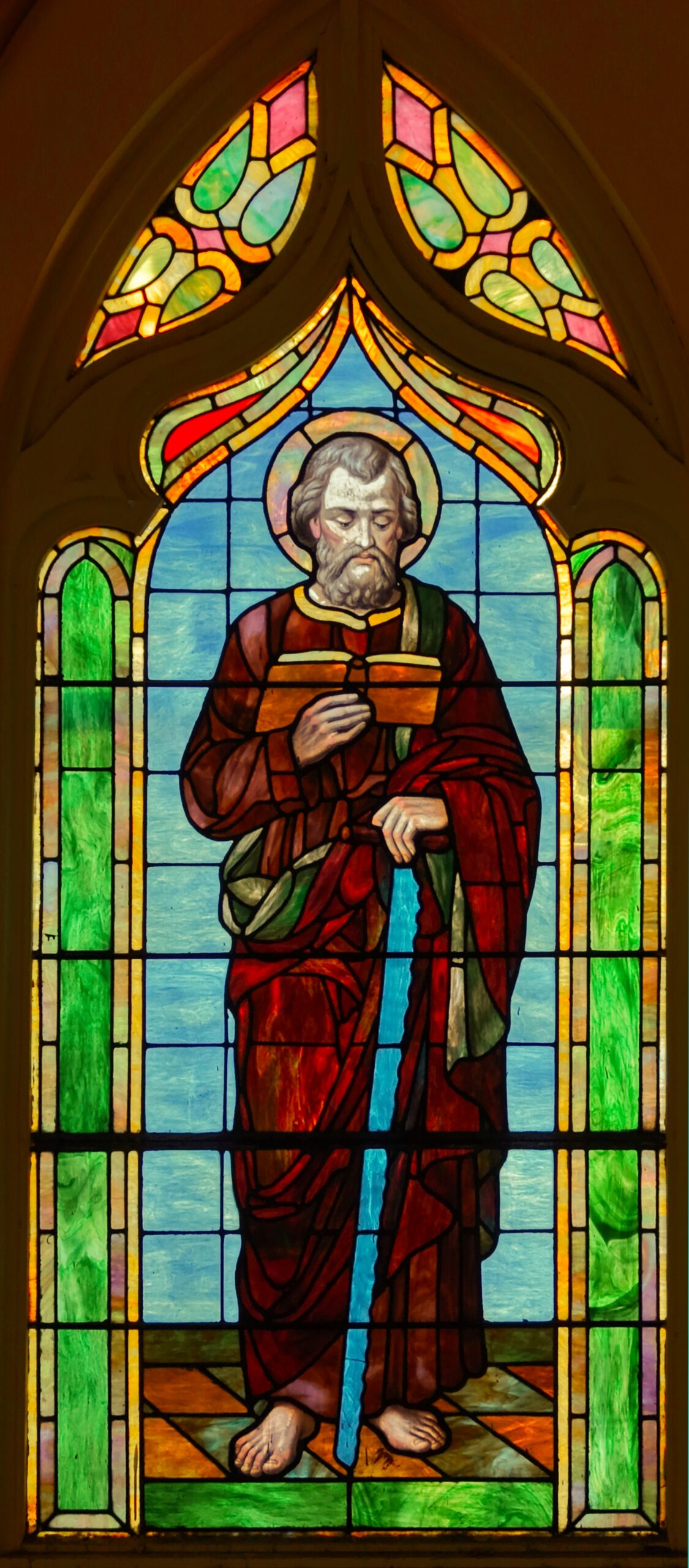
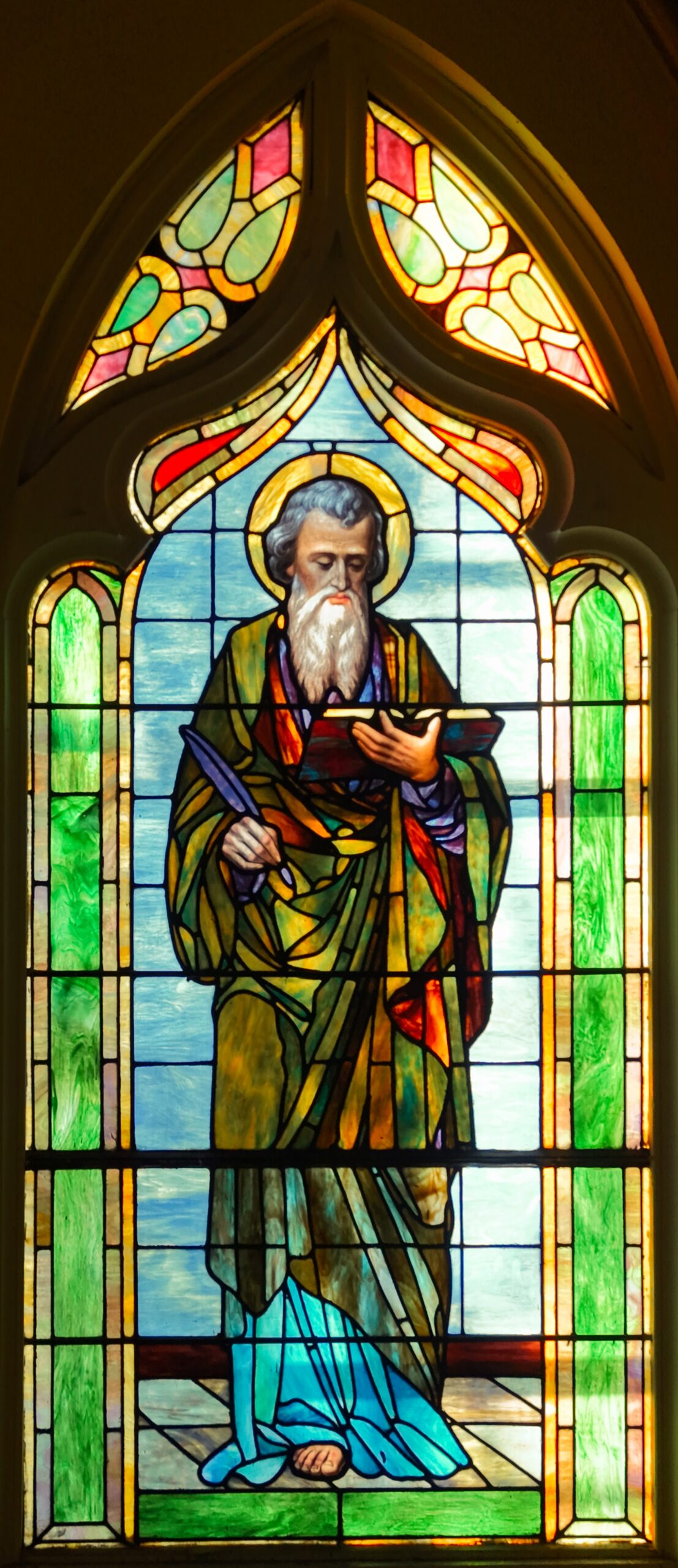
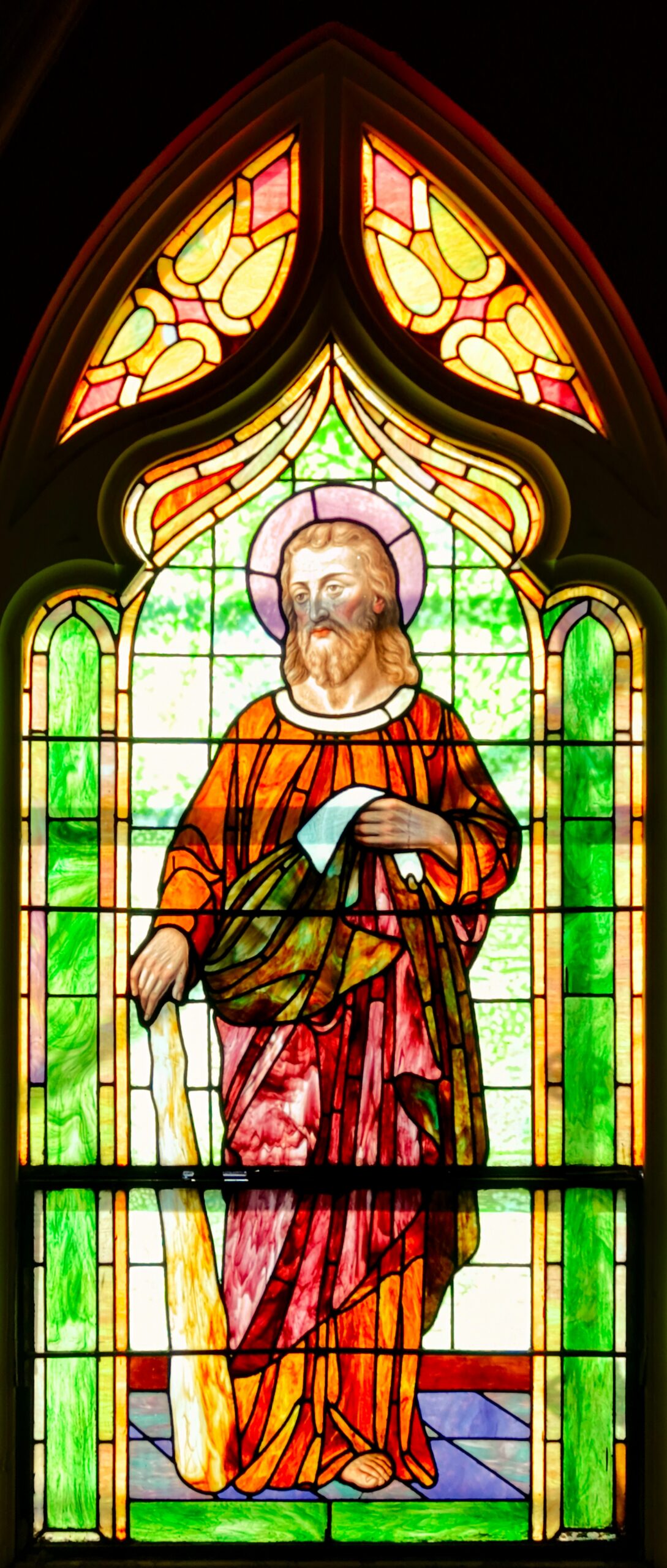
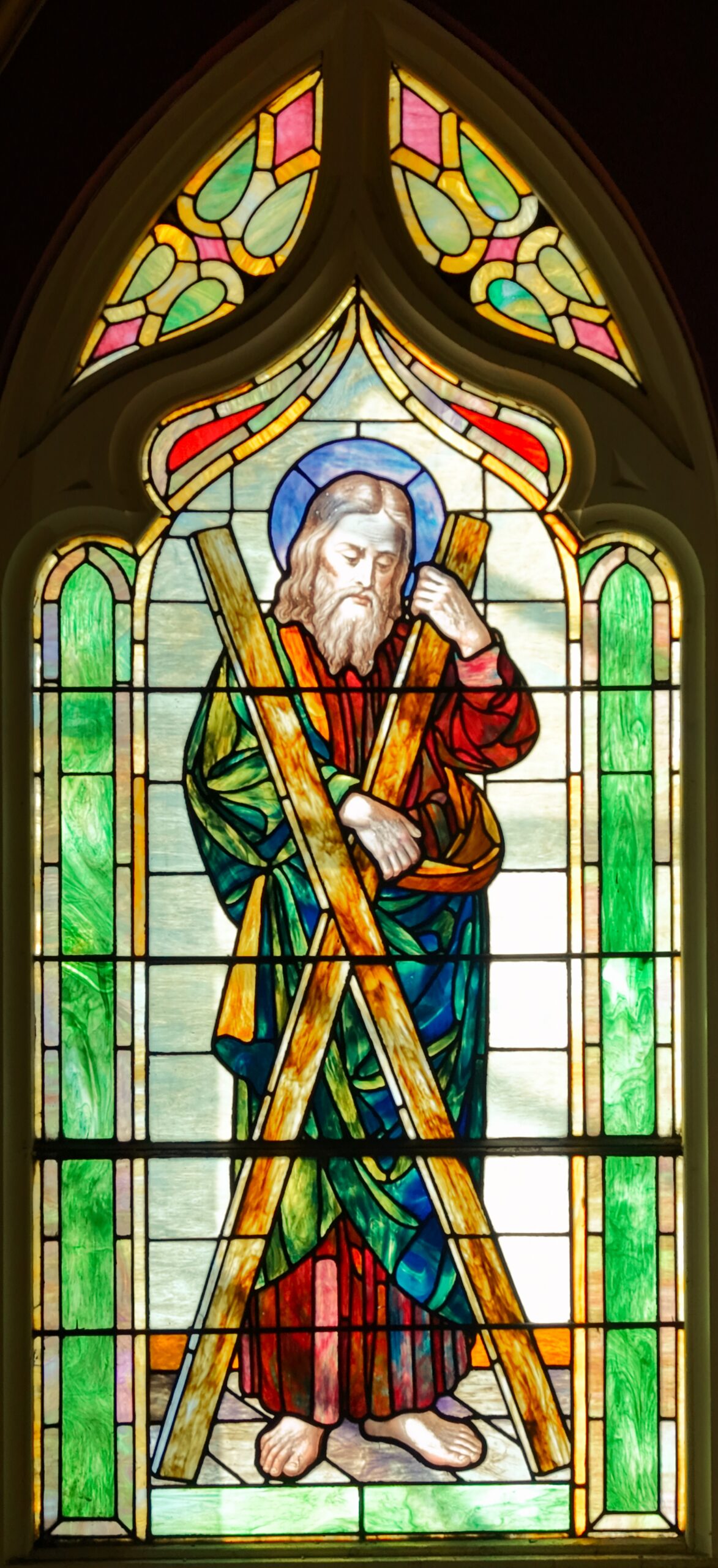
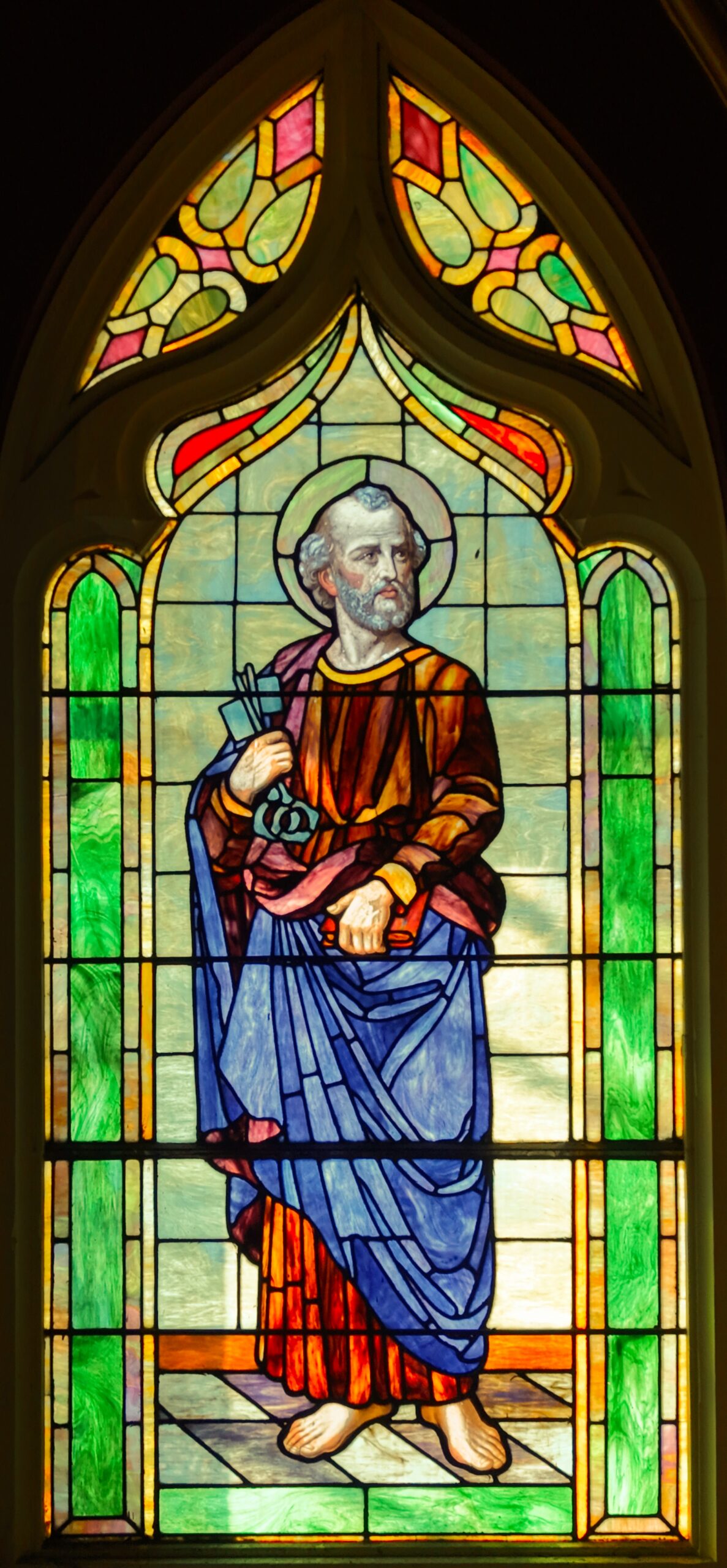
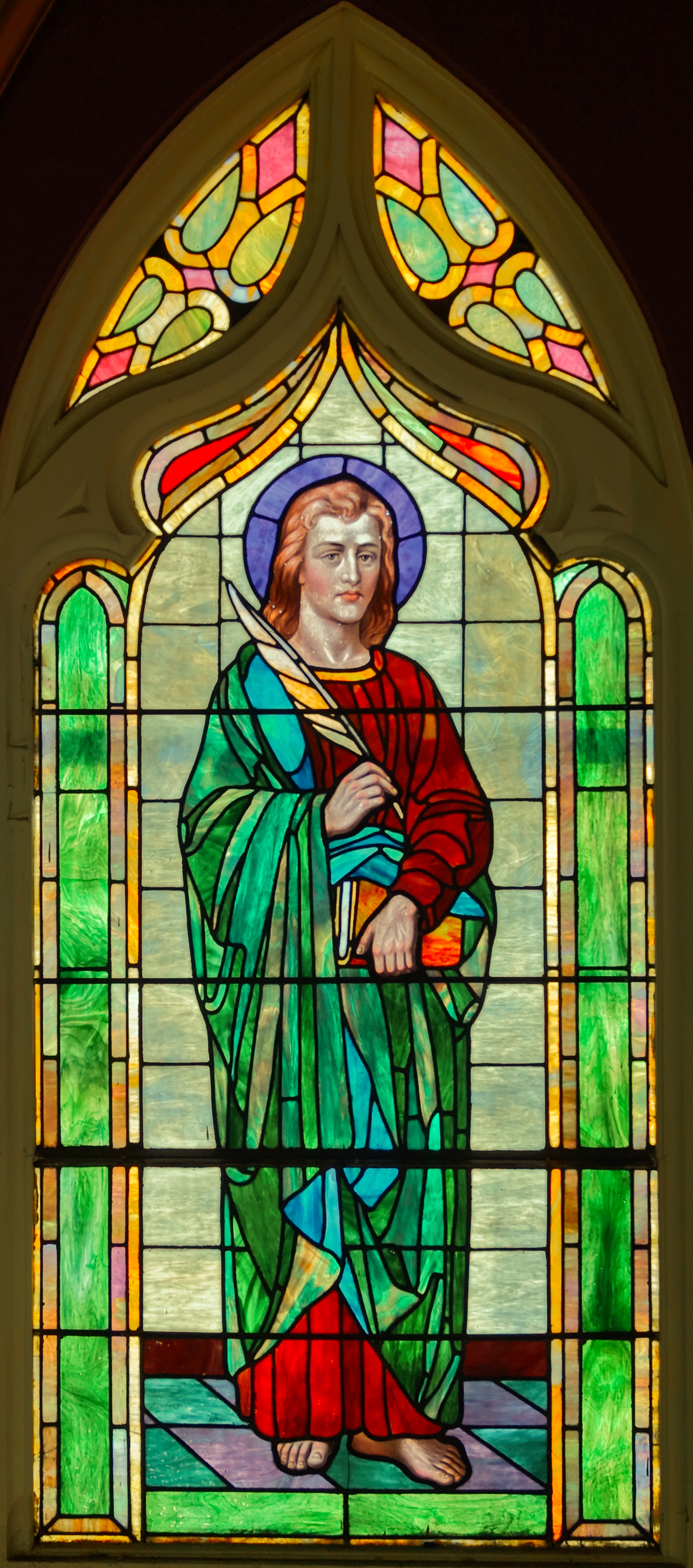
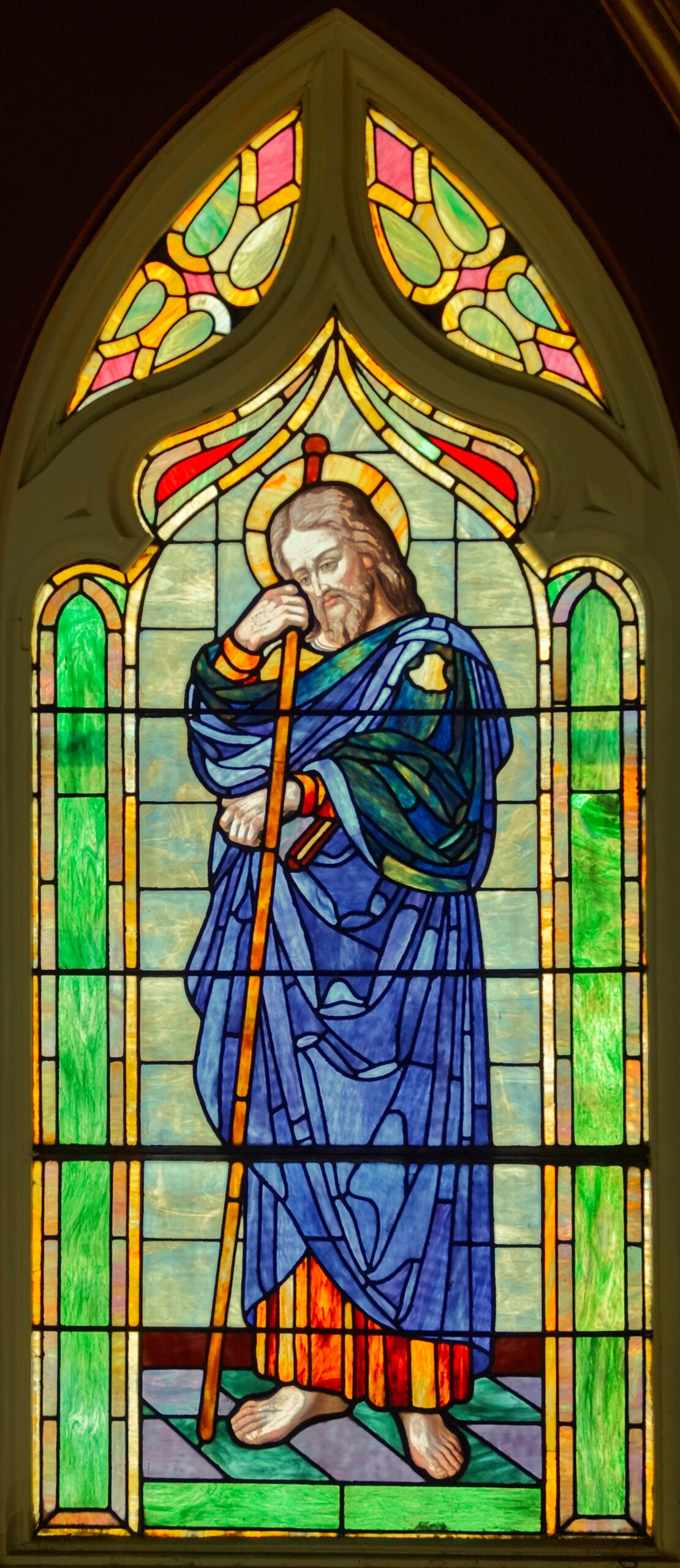
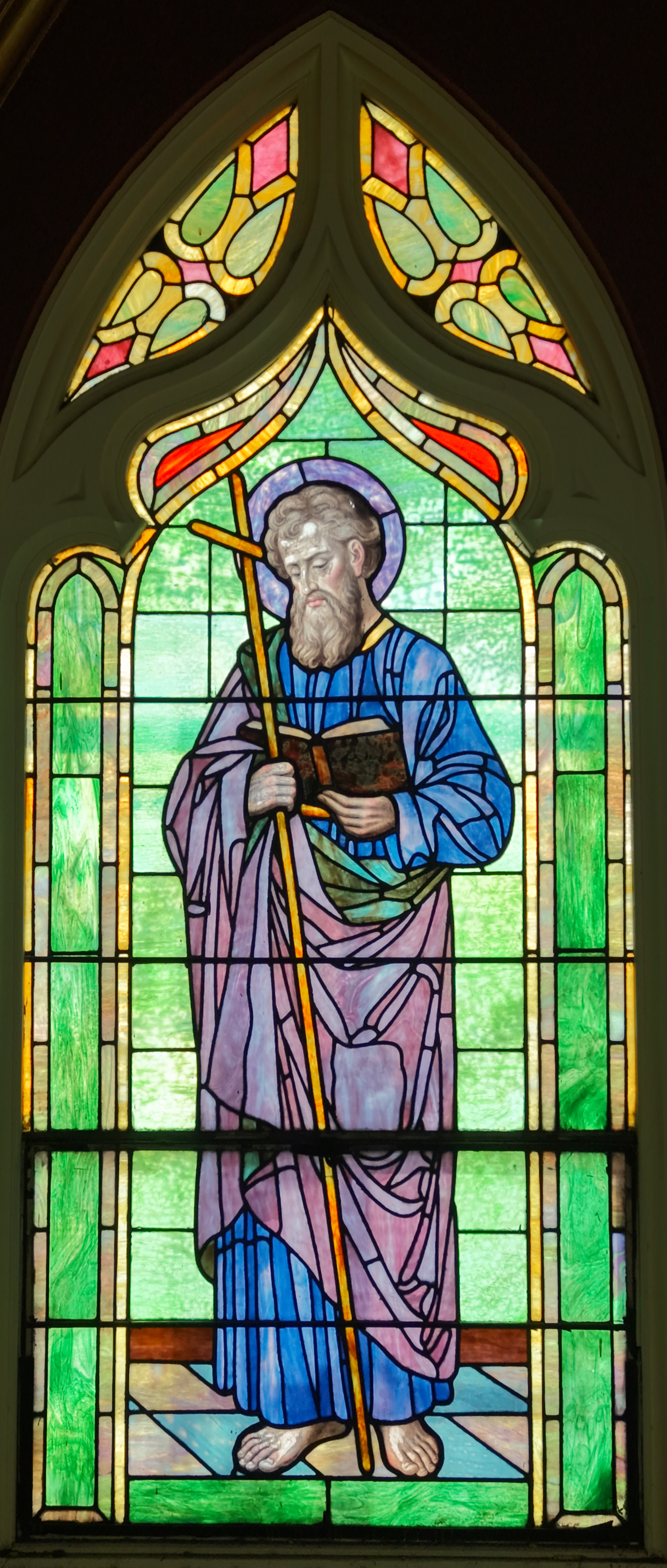
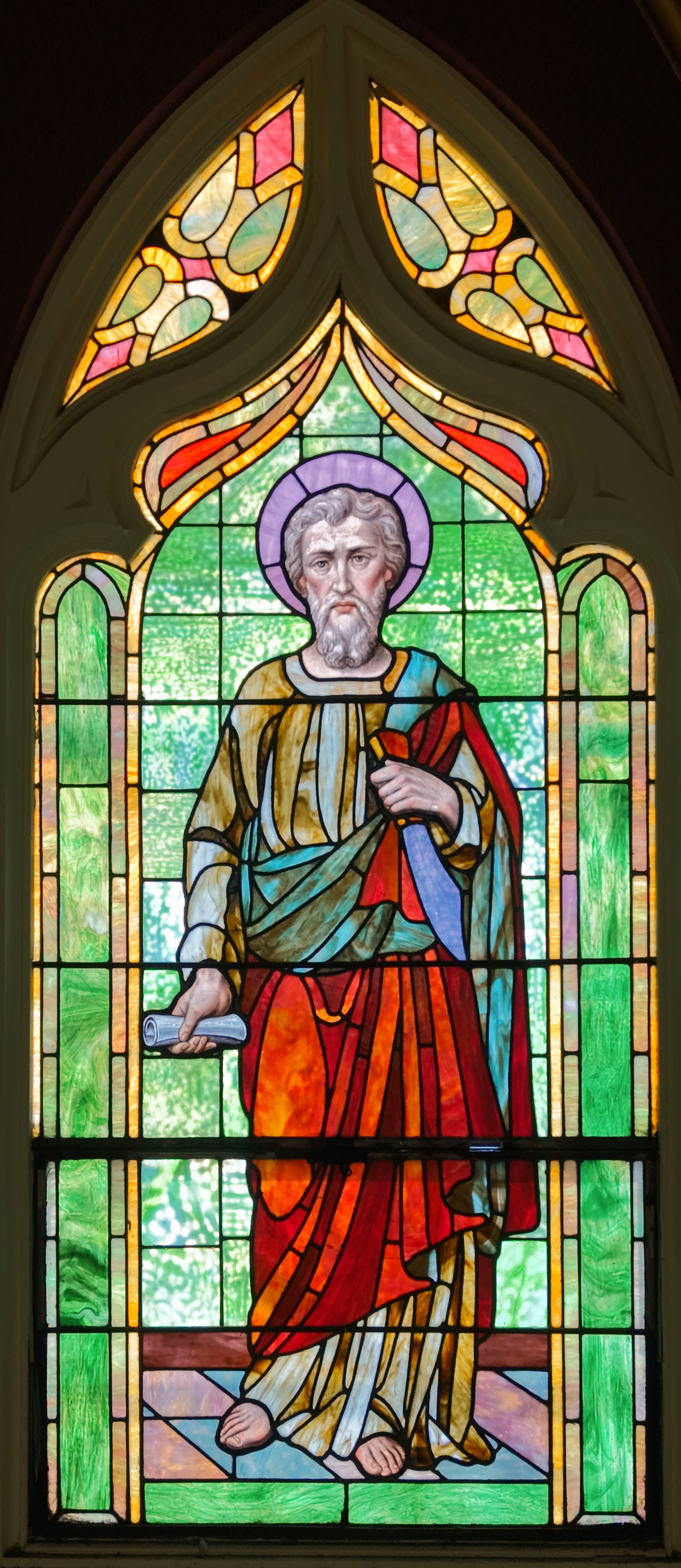
The red wall behind the high altar extends up to twelve windows that depict the Eleven Apostles plus Saint Matthias who was elected to replace Judas. These twelve saints were all contemporaries of Jesus and as such are closest to the tabernacle.
Saint Simon the Apostle
Saint Matthew the Apostle
Saint Batholomew
Saint Thomas the Apostle
Saint Andrew the Apostle
Saint Peter the Apostle
Saint John the Apostle
Saint James the Greater, Apostle
Saint Philip the Apostle
Saint Jude Thaddeus
Saint James the Lesser
Saint Matthias the Apostle
The Clerestory
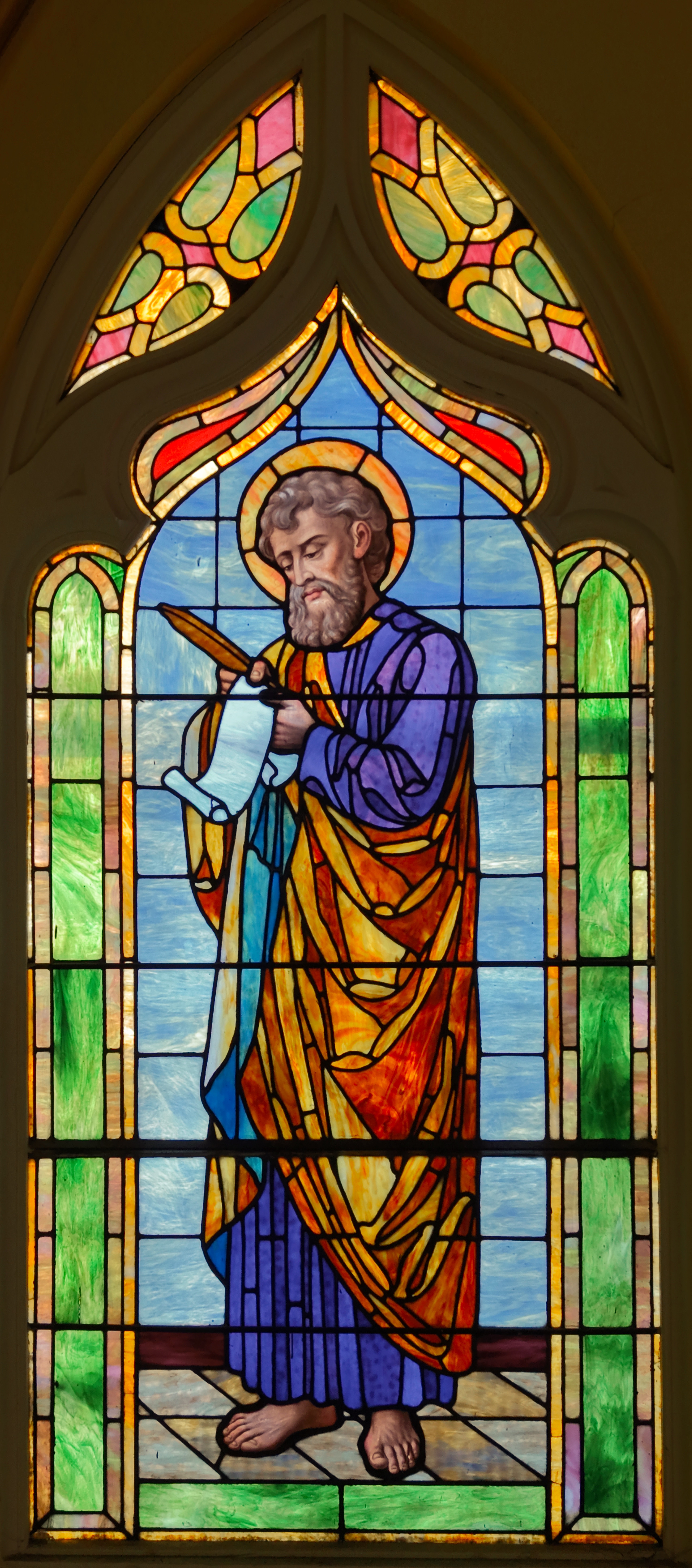
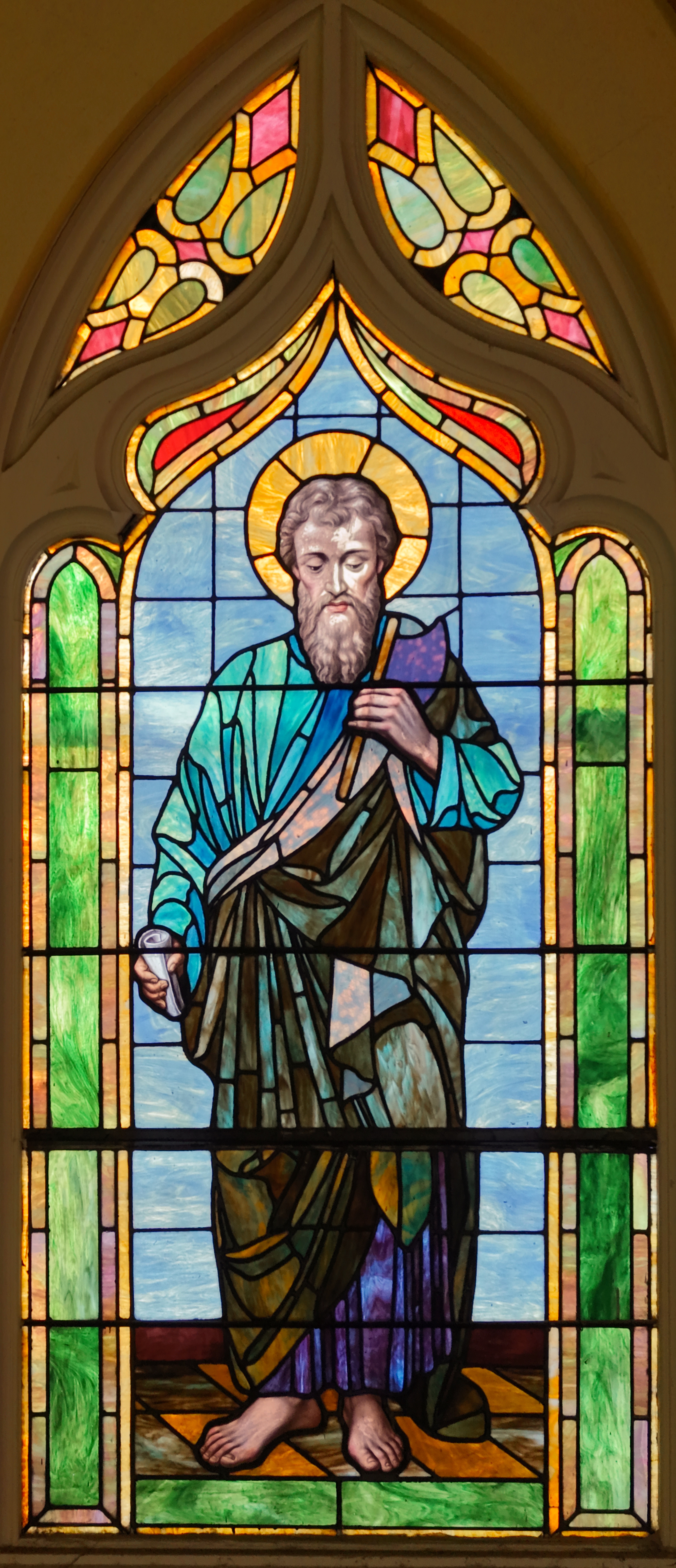
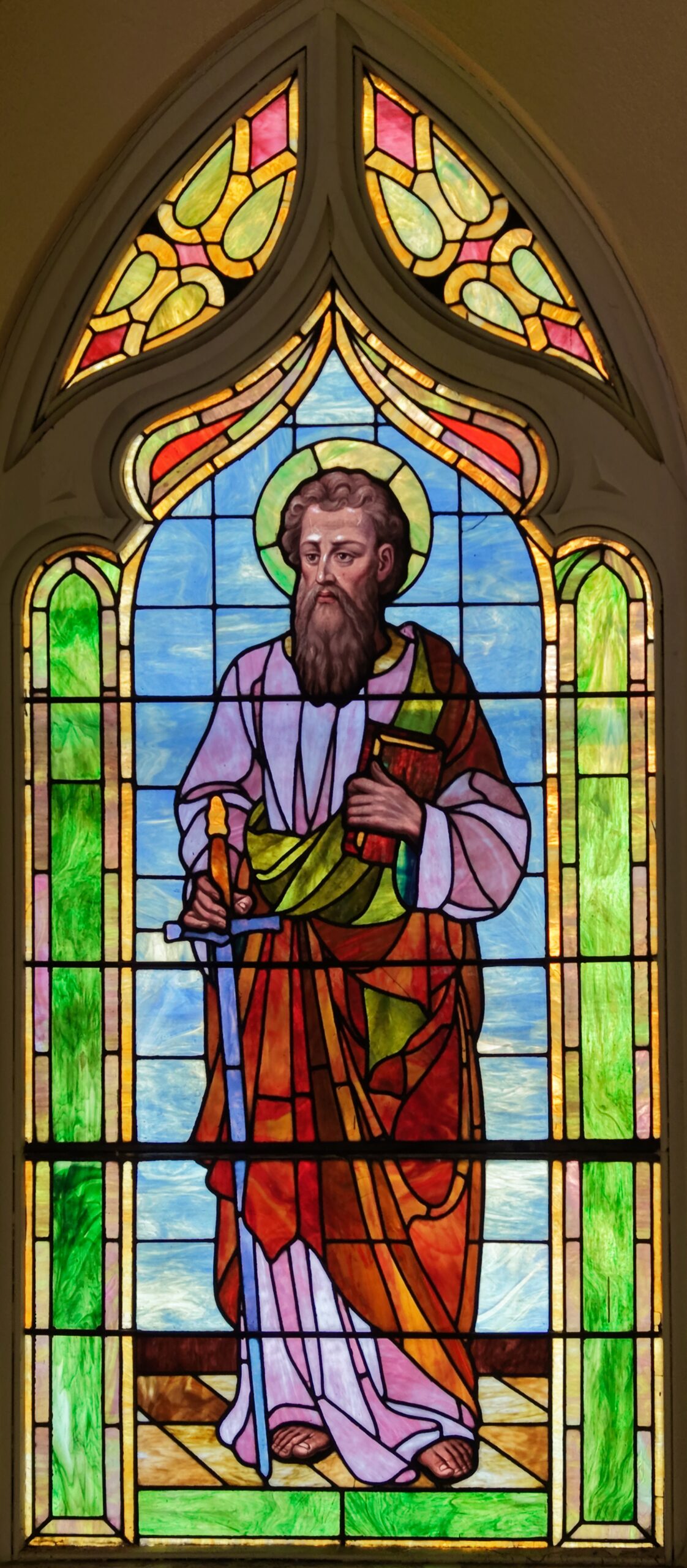
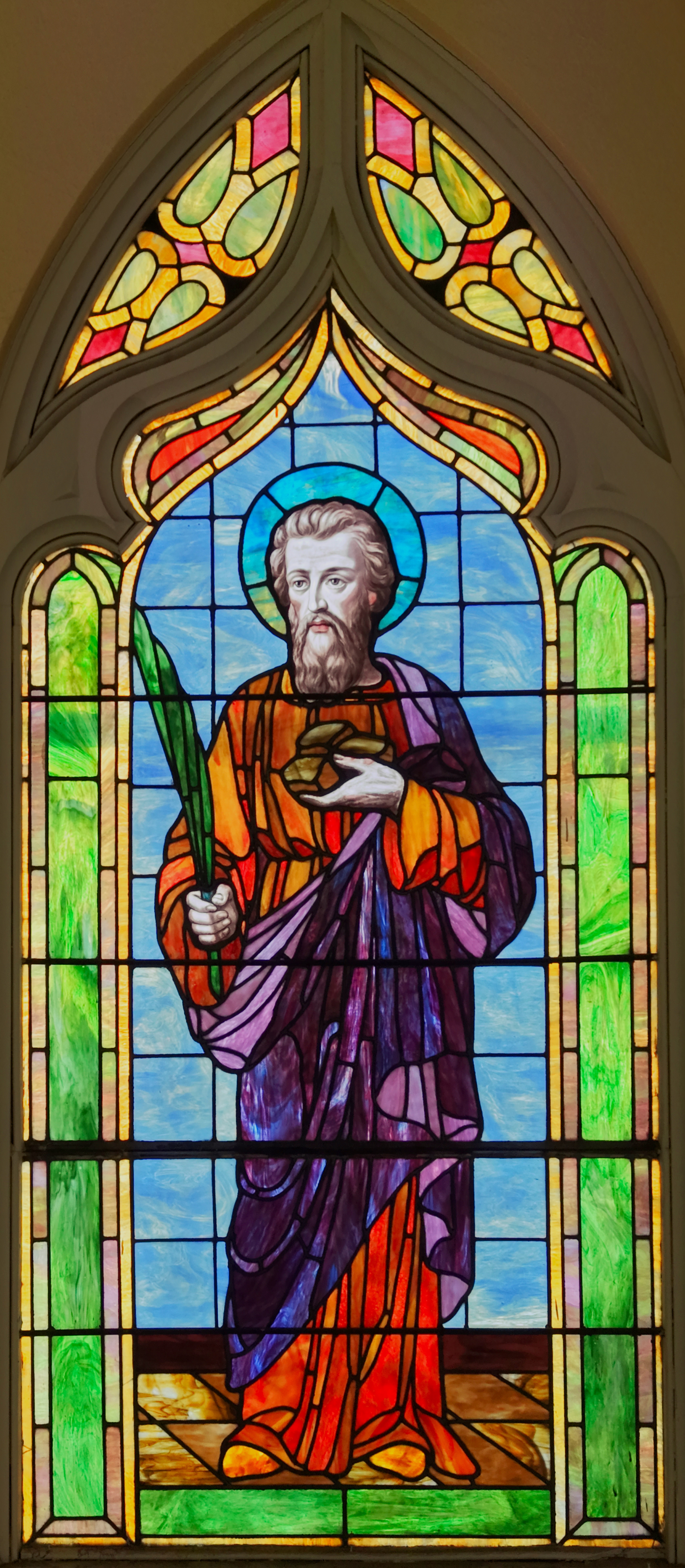
In classical church architecture, the clerestory is a row of windows that runs high along the perimeter of the church. The clerestory windows are essential at illuminating large Romanesque or Gothic churches – especially in the age before electricity.
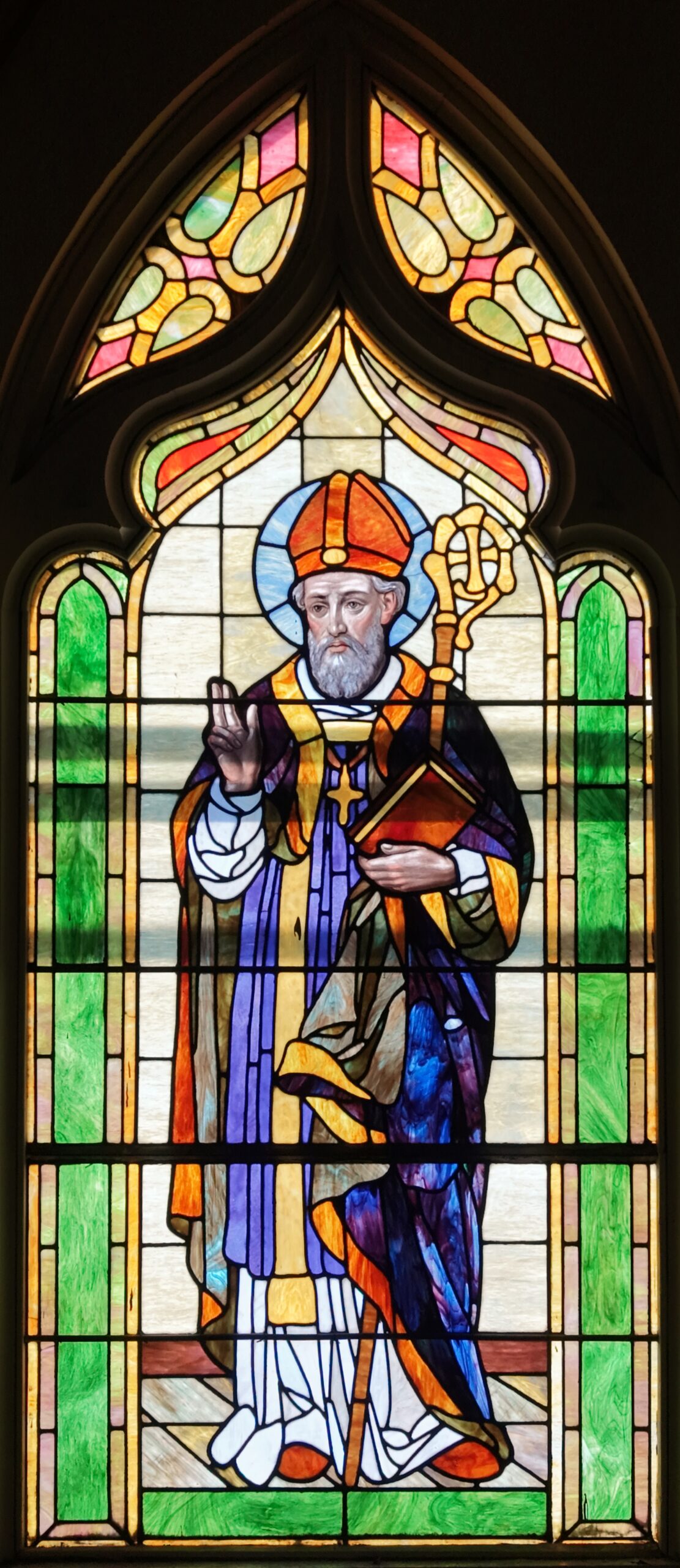
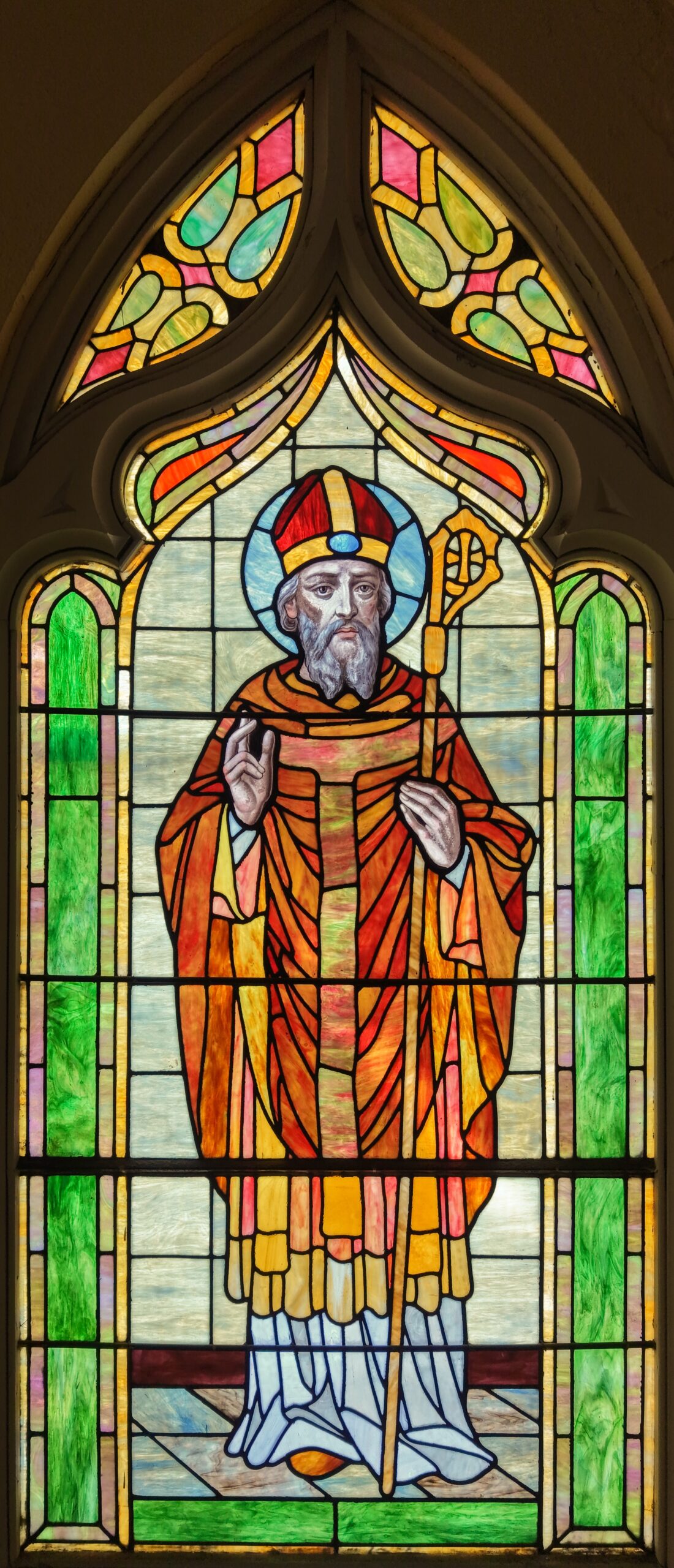
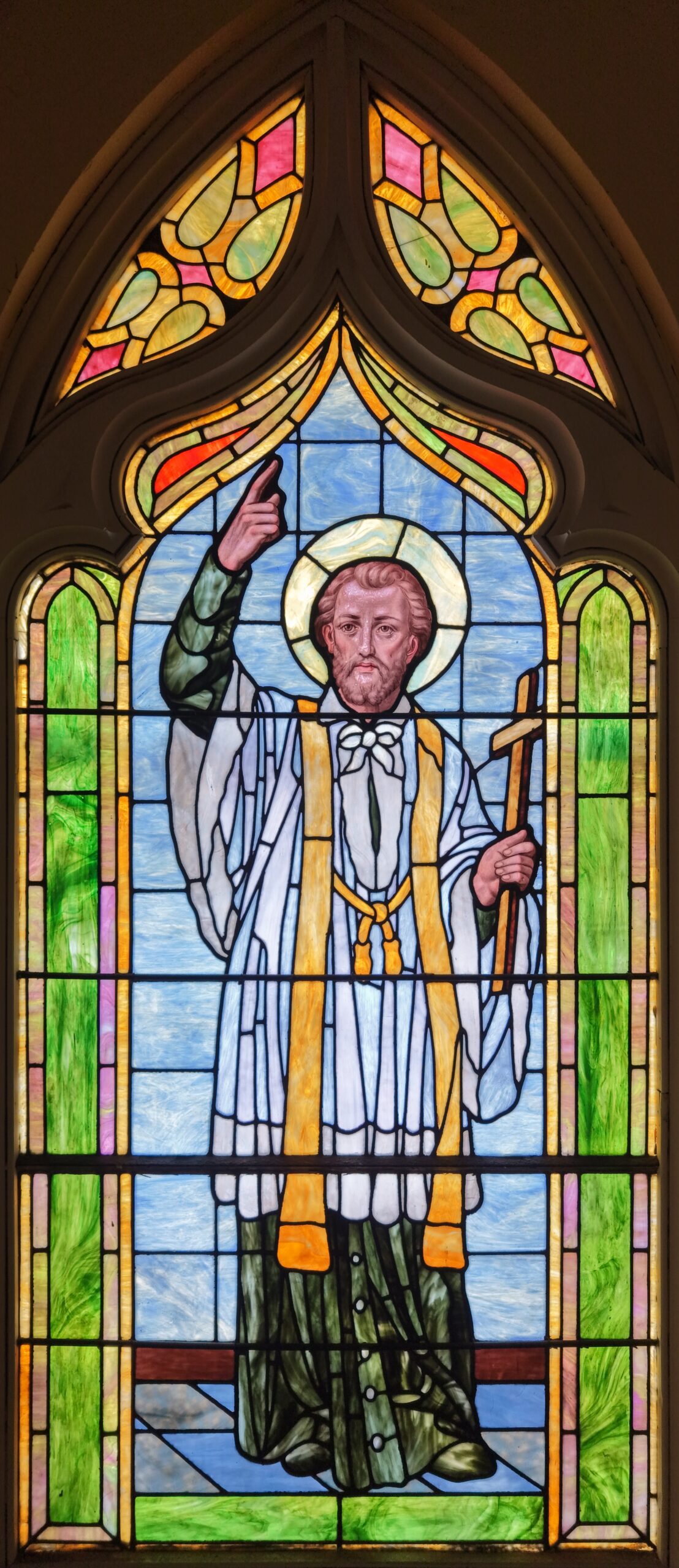
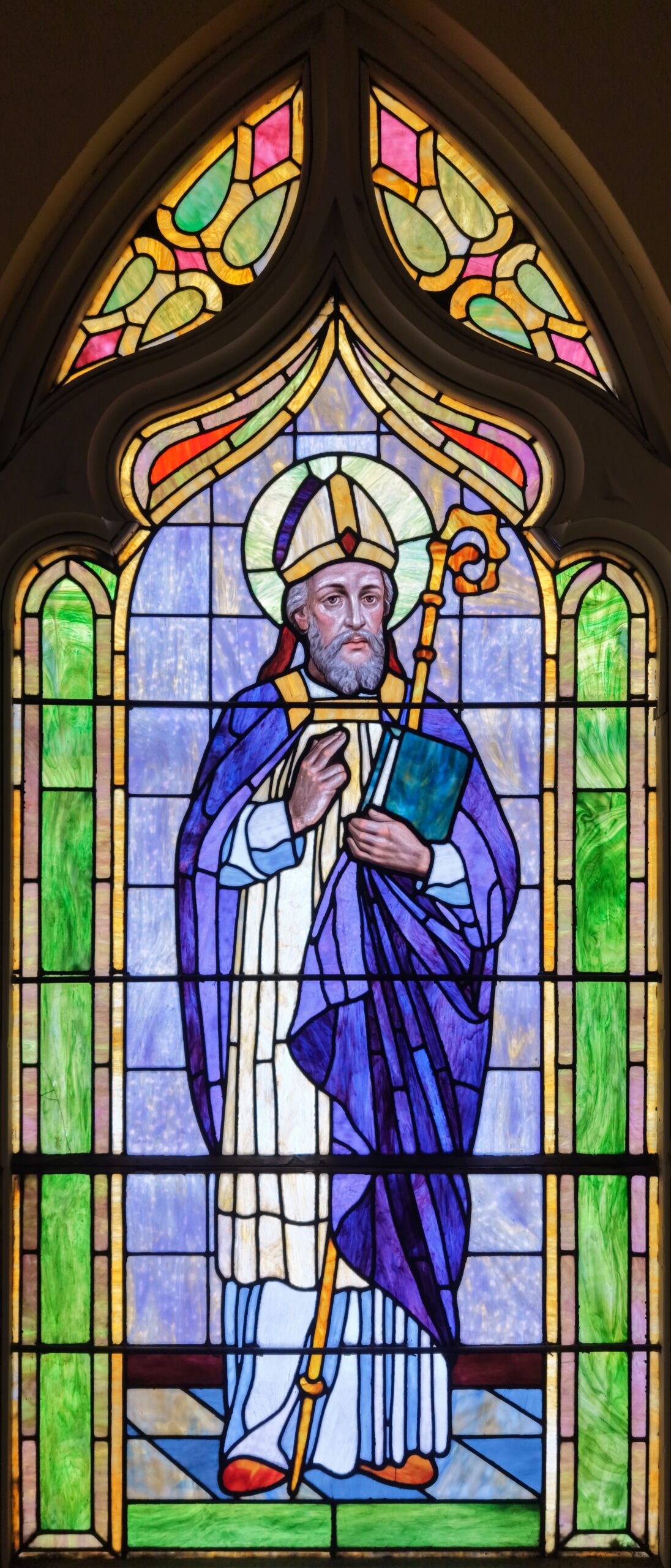
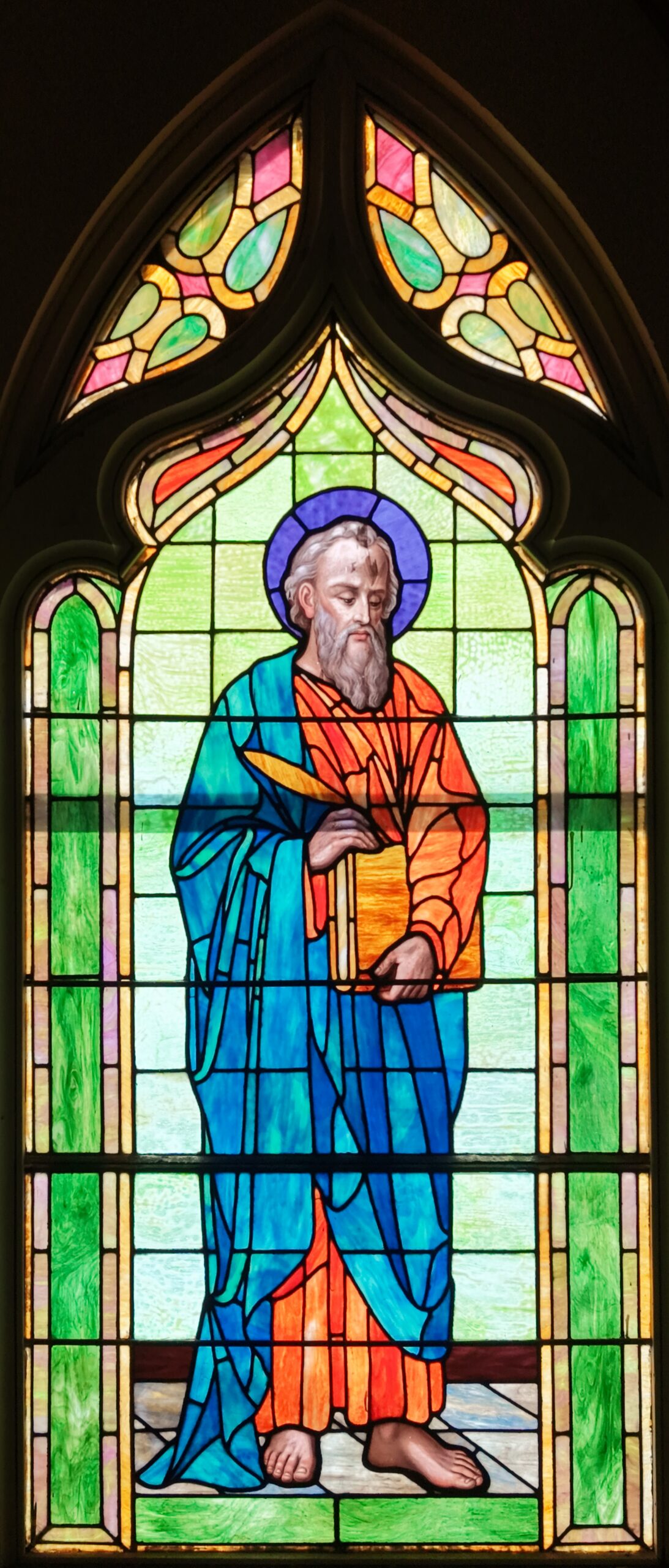
Holy Family’s clerestory windows depict the Communion of Saints. They are roughly in chronological order from Saints Paul, Mark, Barnabus, and Luke nearer the tabernacle all the way to more recent saints over the choir loft.
Saint Paul
Saint Barnabus
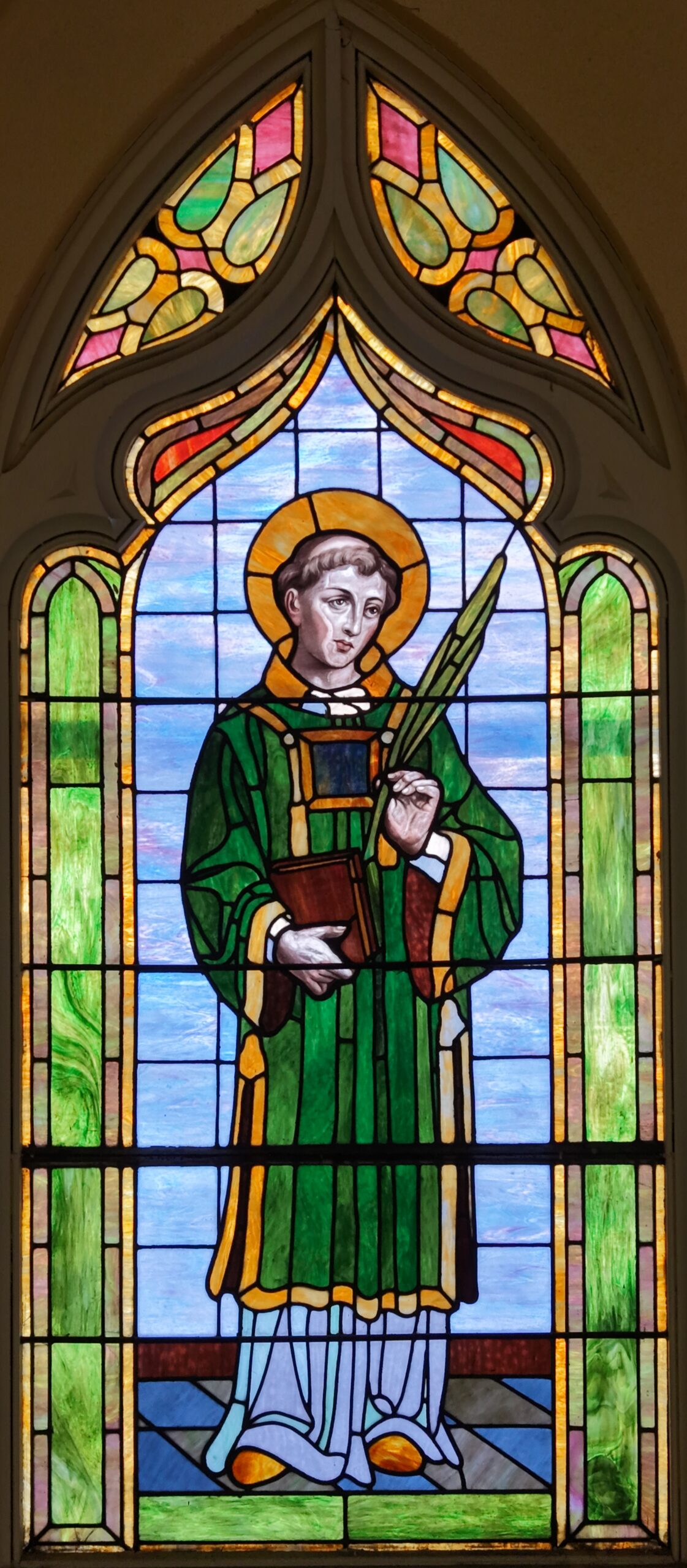
Saint Lawrence
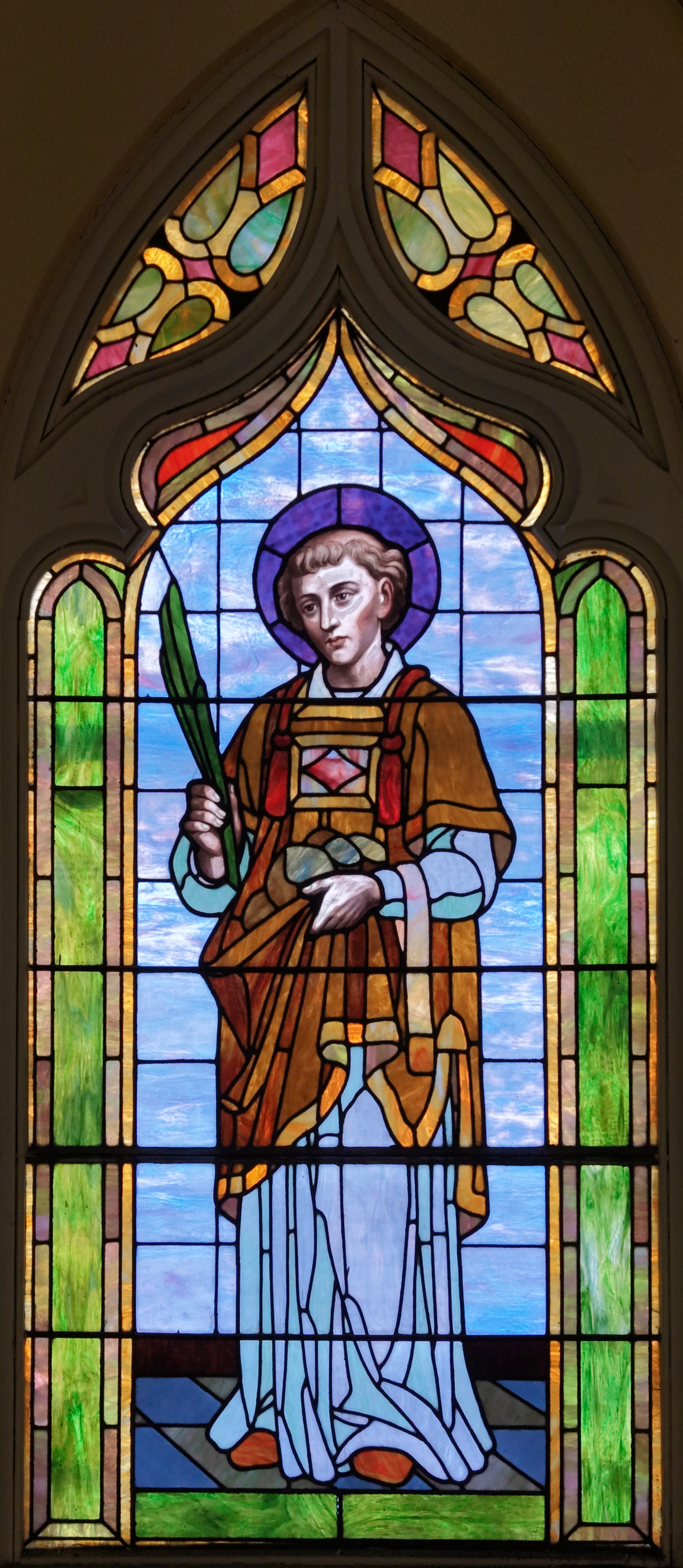
Saint Stephen
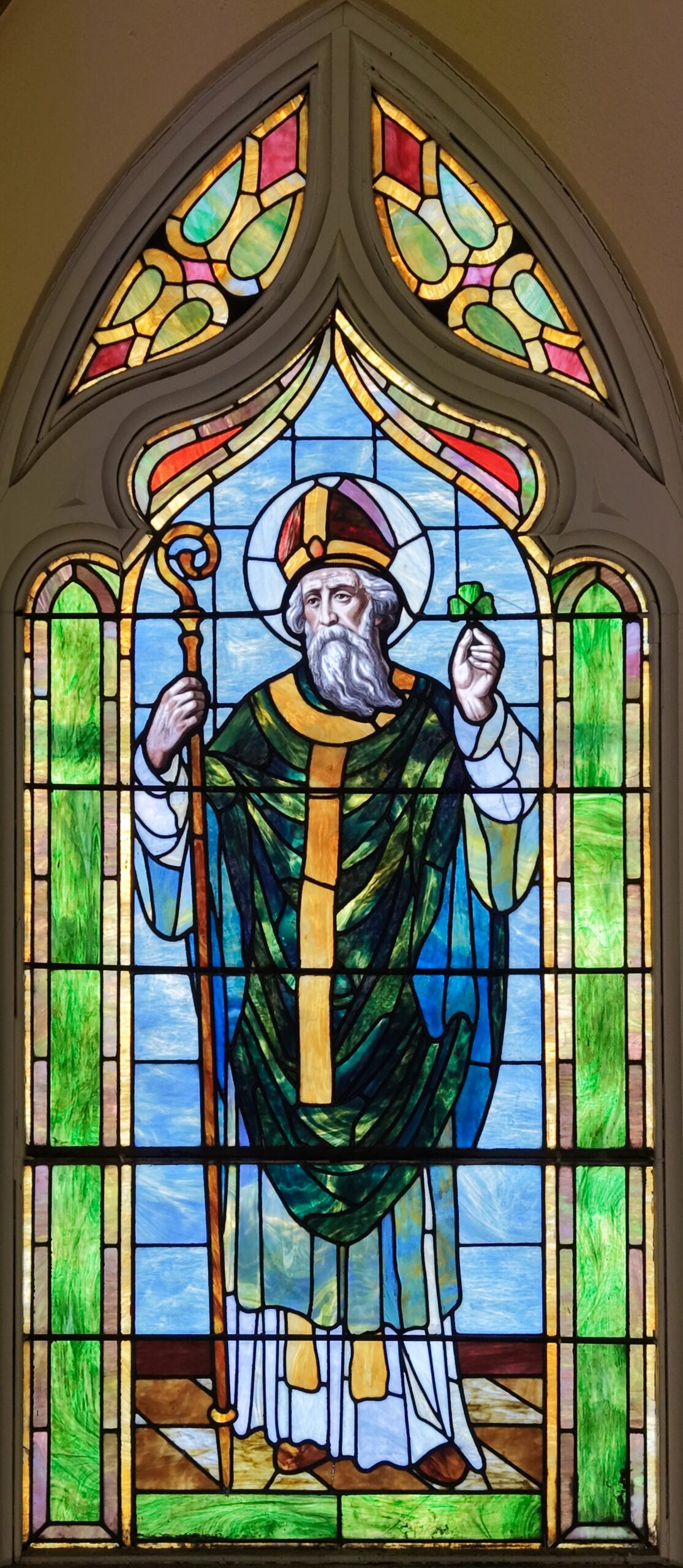
Saint Patrick
Saint Boniface
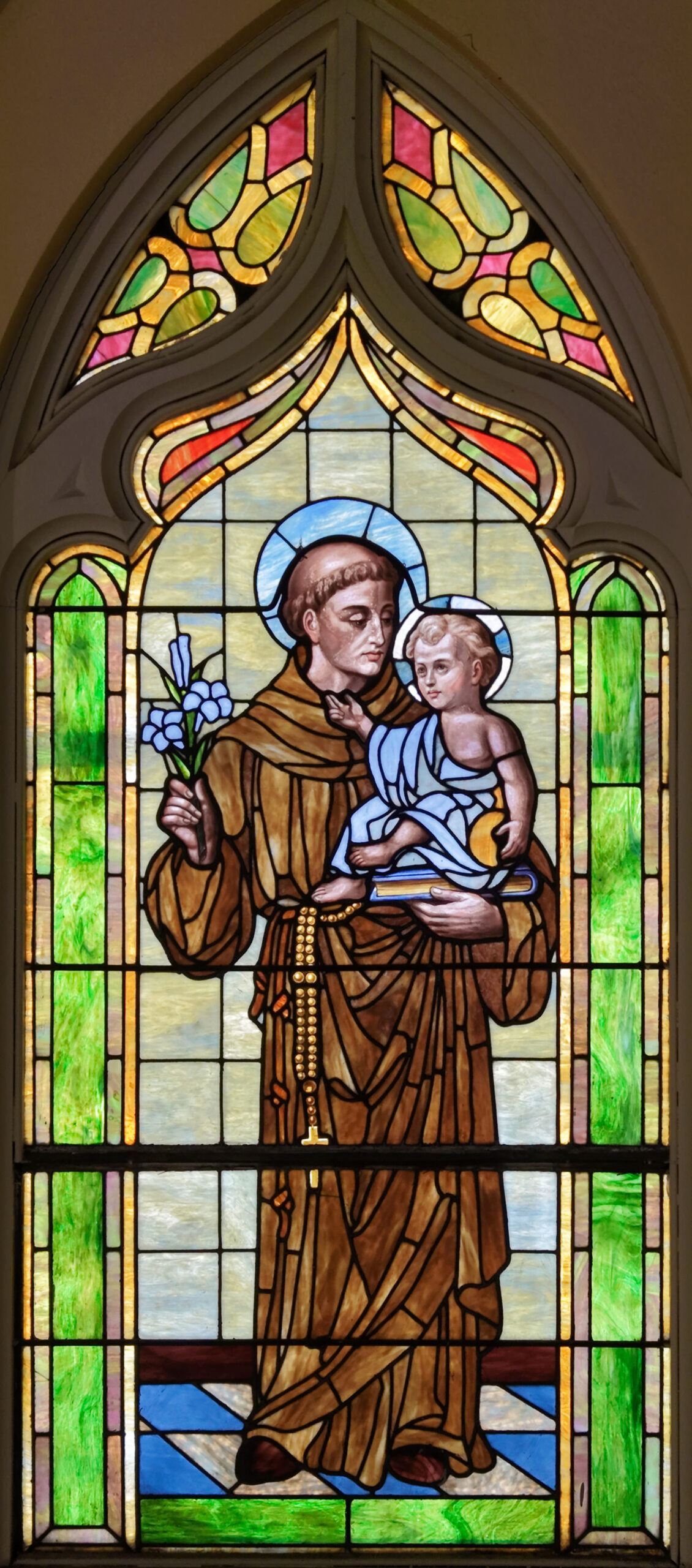
Saint Anthony of Padua
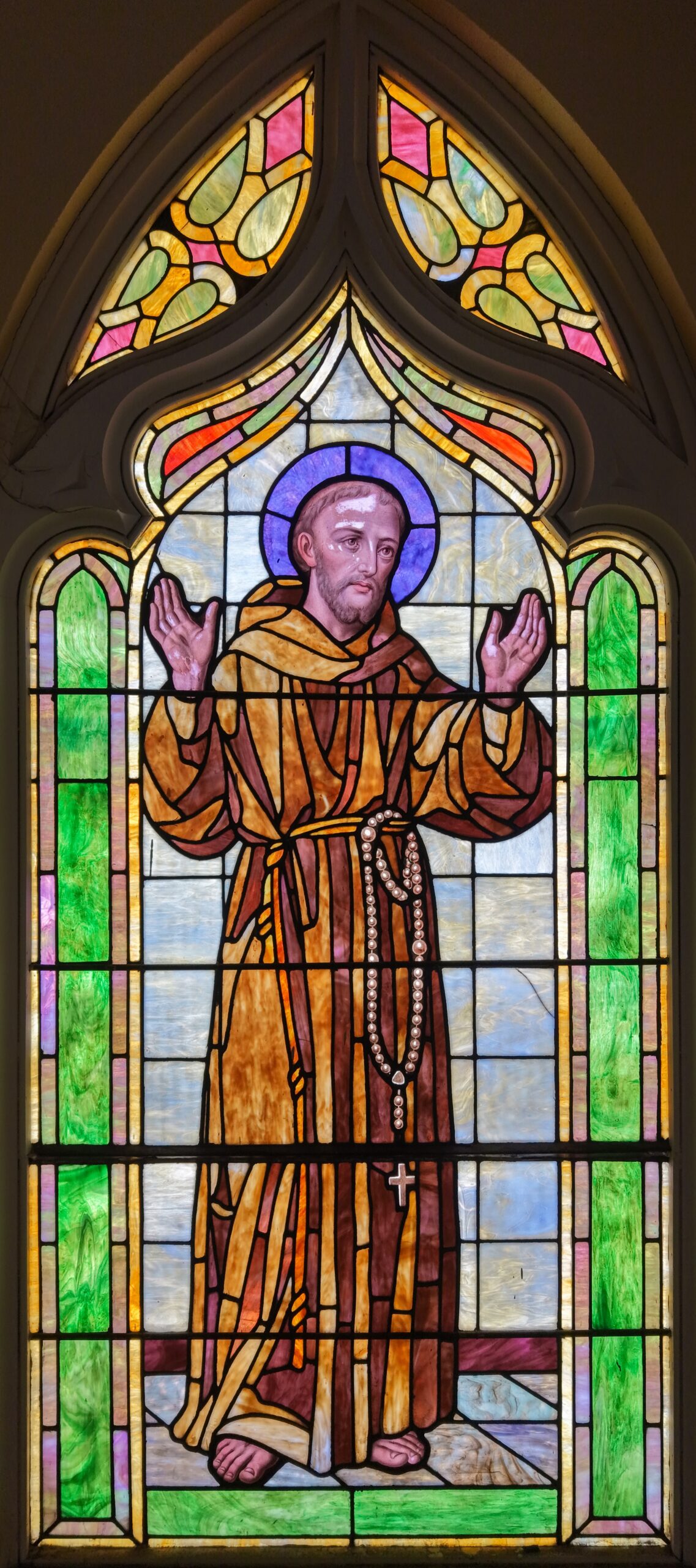
Saint Francis of Assisi
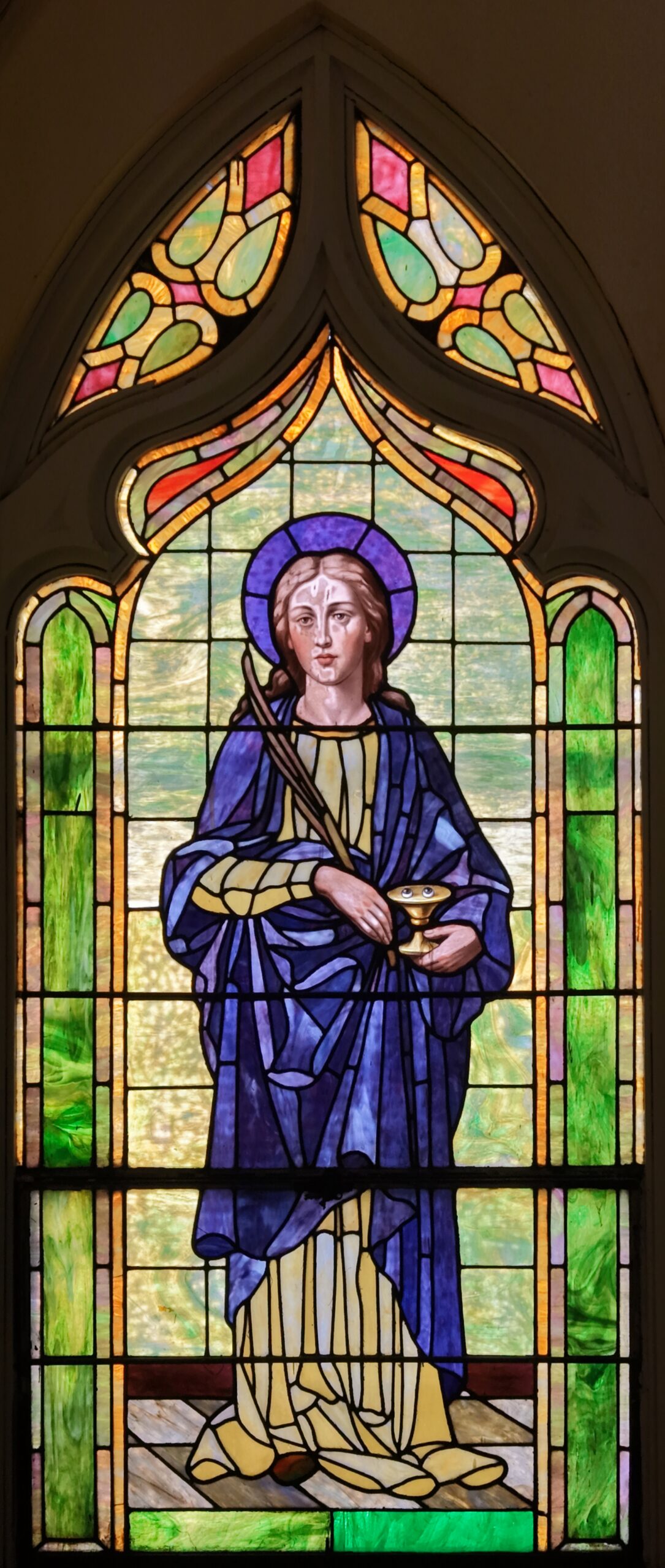
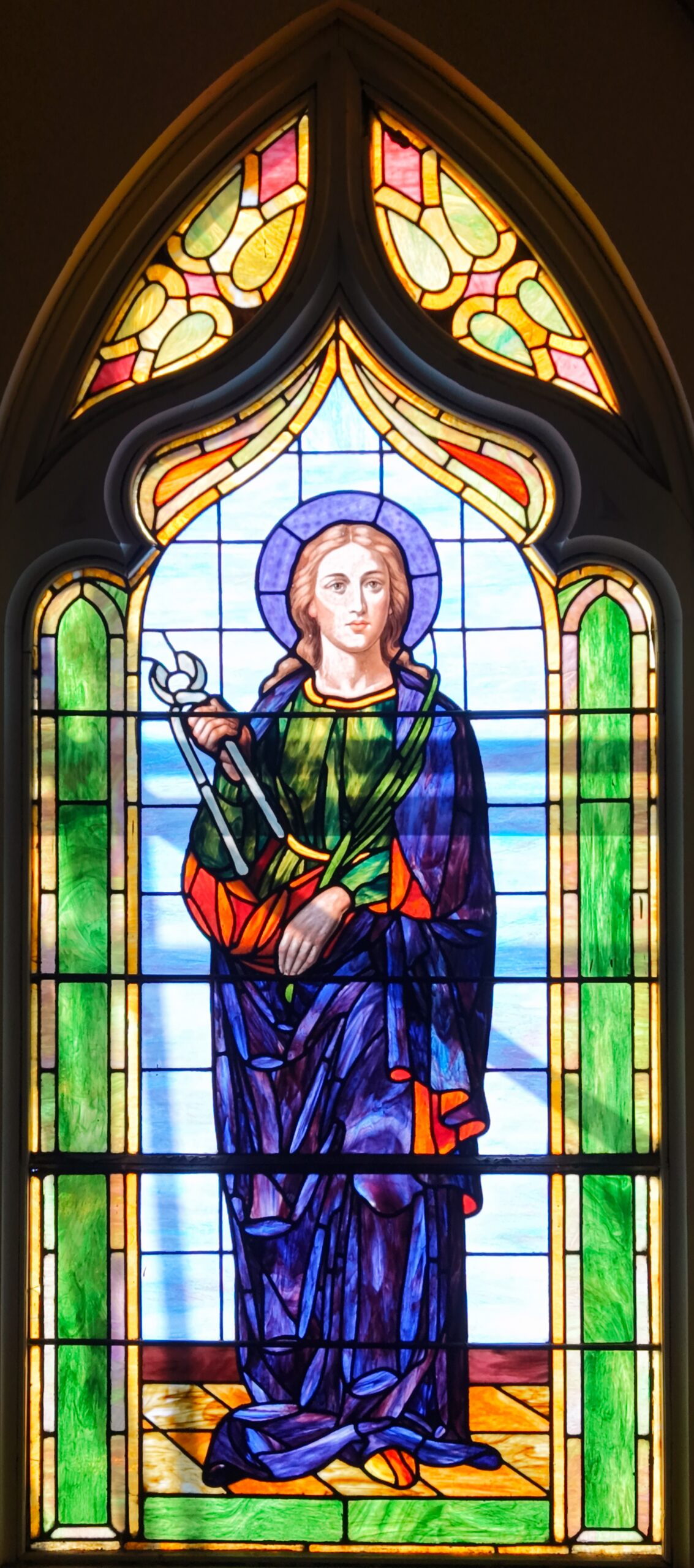
Saint Lucy of Syracuse
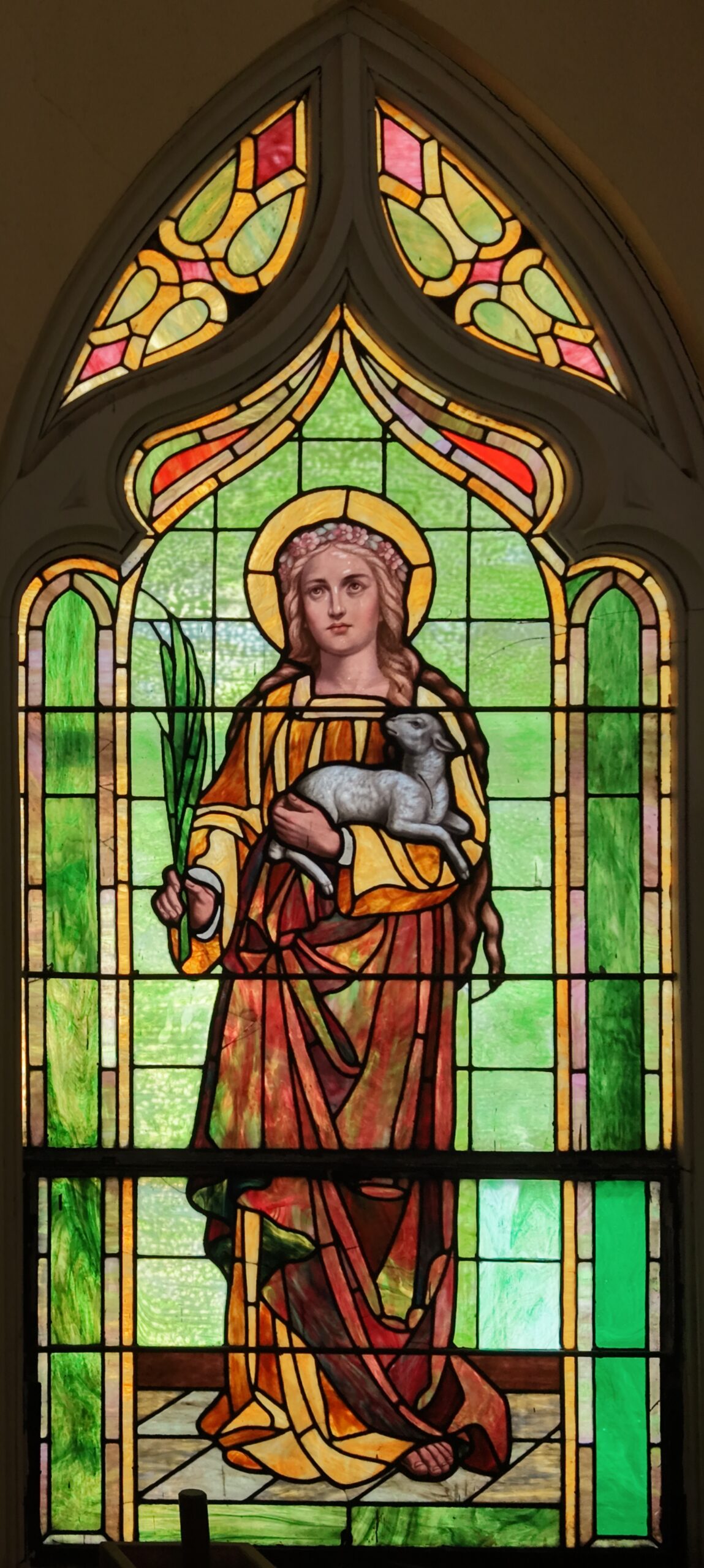
Saint Agnes of Rome
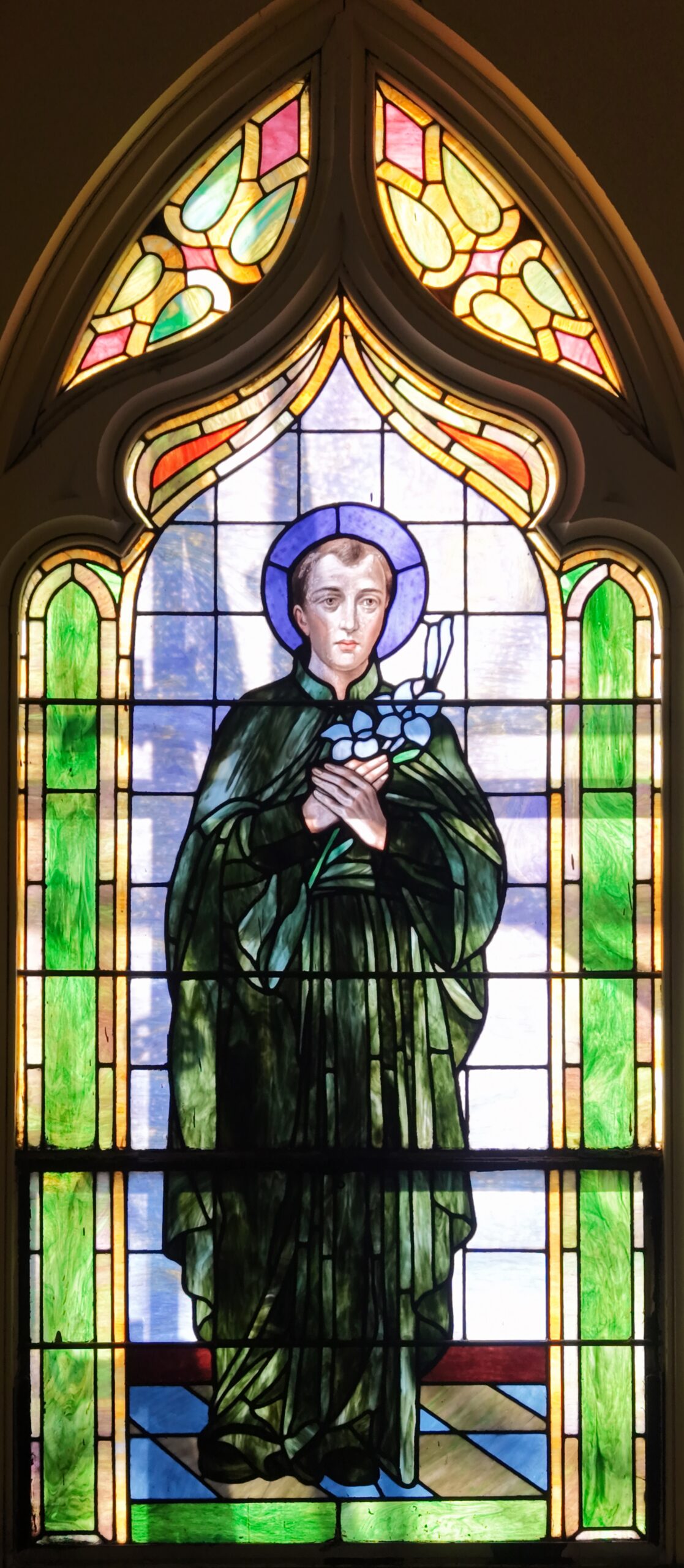
Saint Gerard Magella
Saint John of the Cross
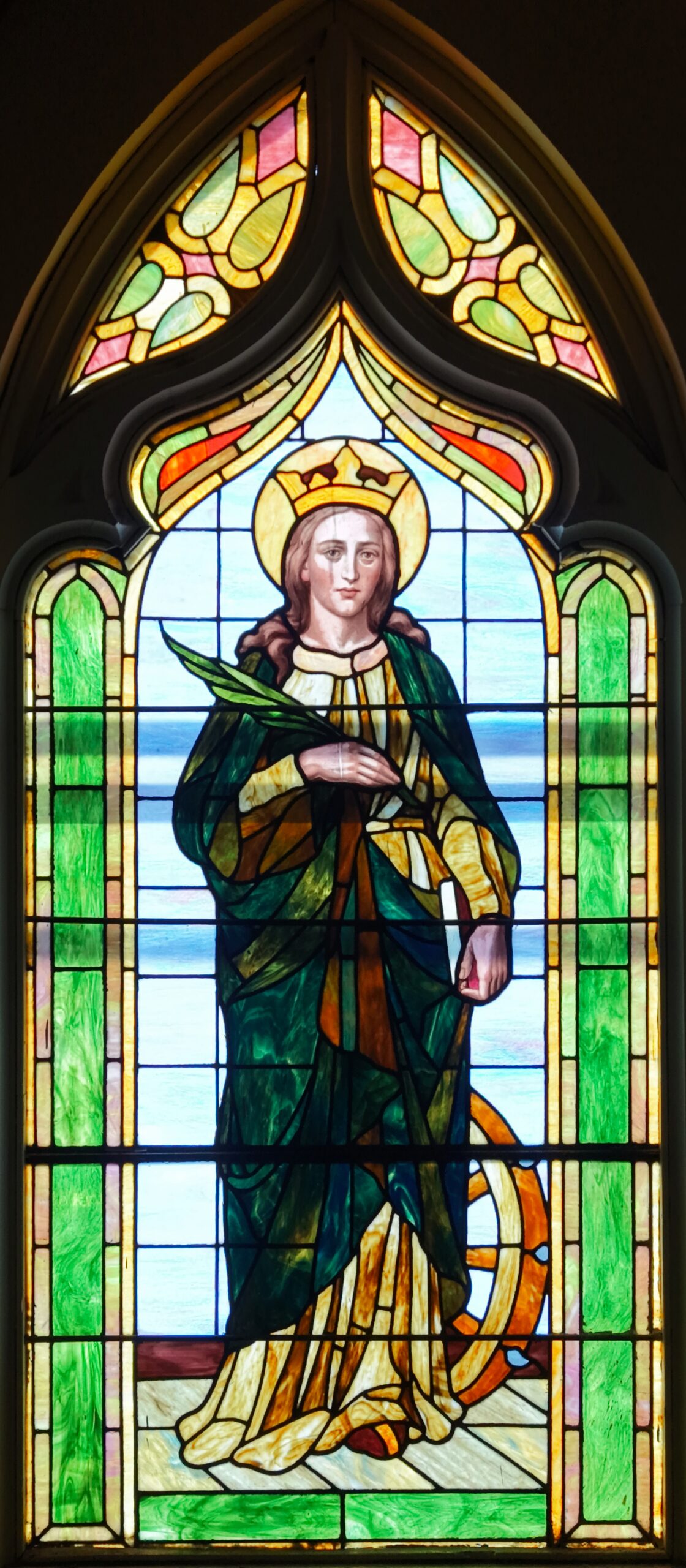
Saint Catherine of Alexandria
Saint Appolonia
Saint Ambrose of Milan
Saint Nicholas
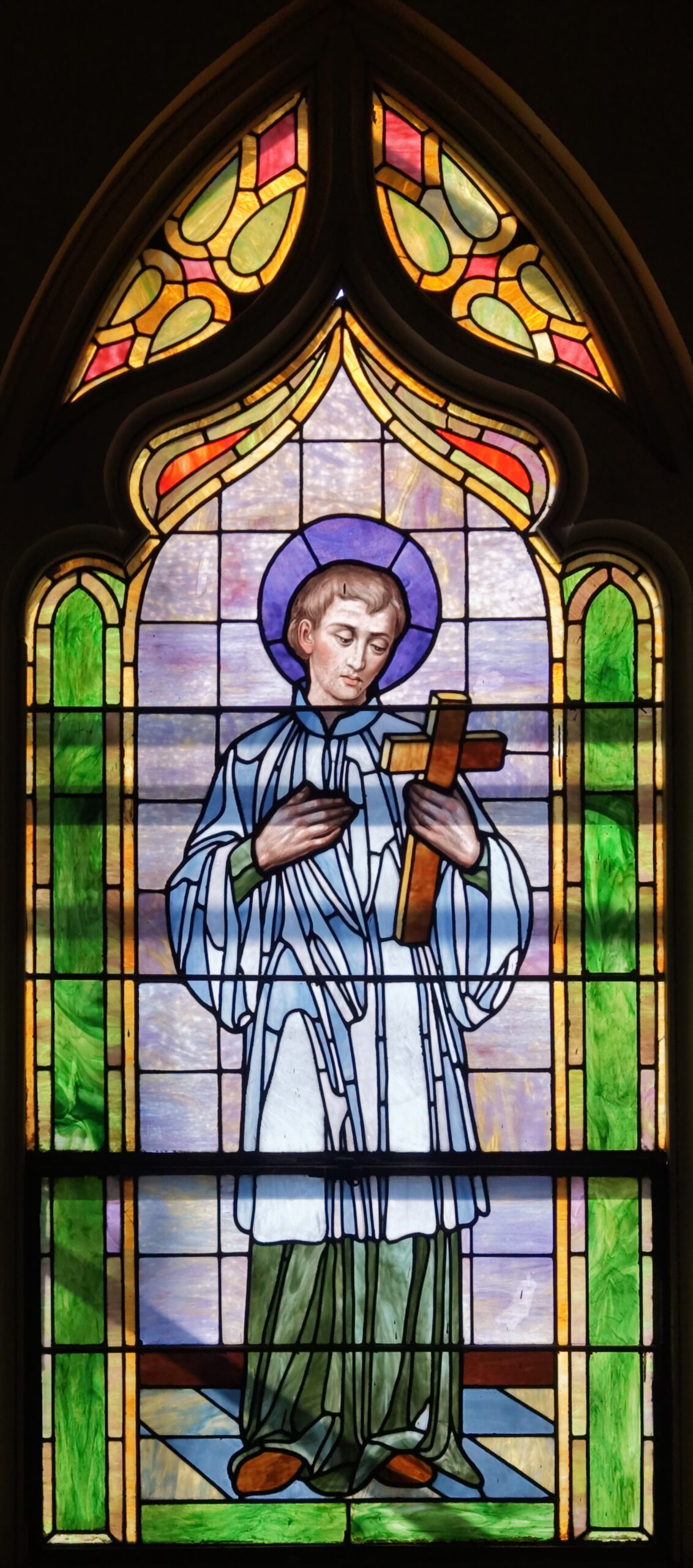
Saint Francis Xavier
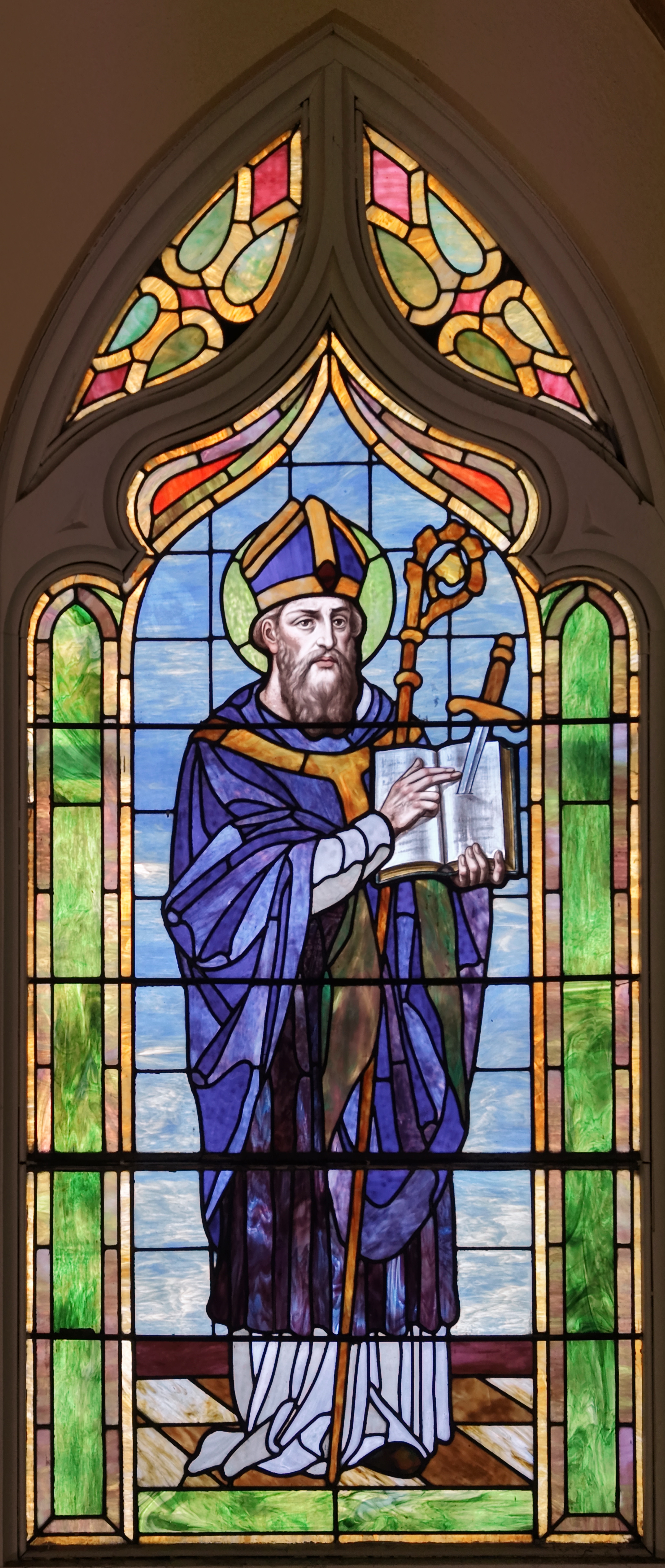
Saint Augustine of Hippo
Saint Mark the Evangelist
Saint Luke the Evangelist
The Transepts
If a cruciform church looks like a cross from above, it is the transepts that are the arms of the cross. The largest two windows in the transepts depict the Lord’s birth and resurrection. The eight clerestory windows in the transepts depict pairs who interact with each other.
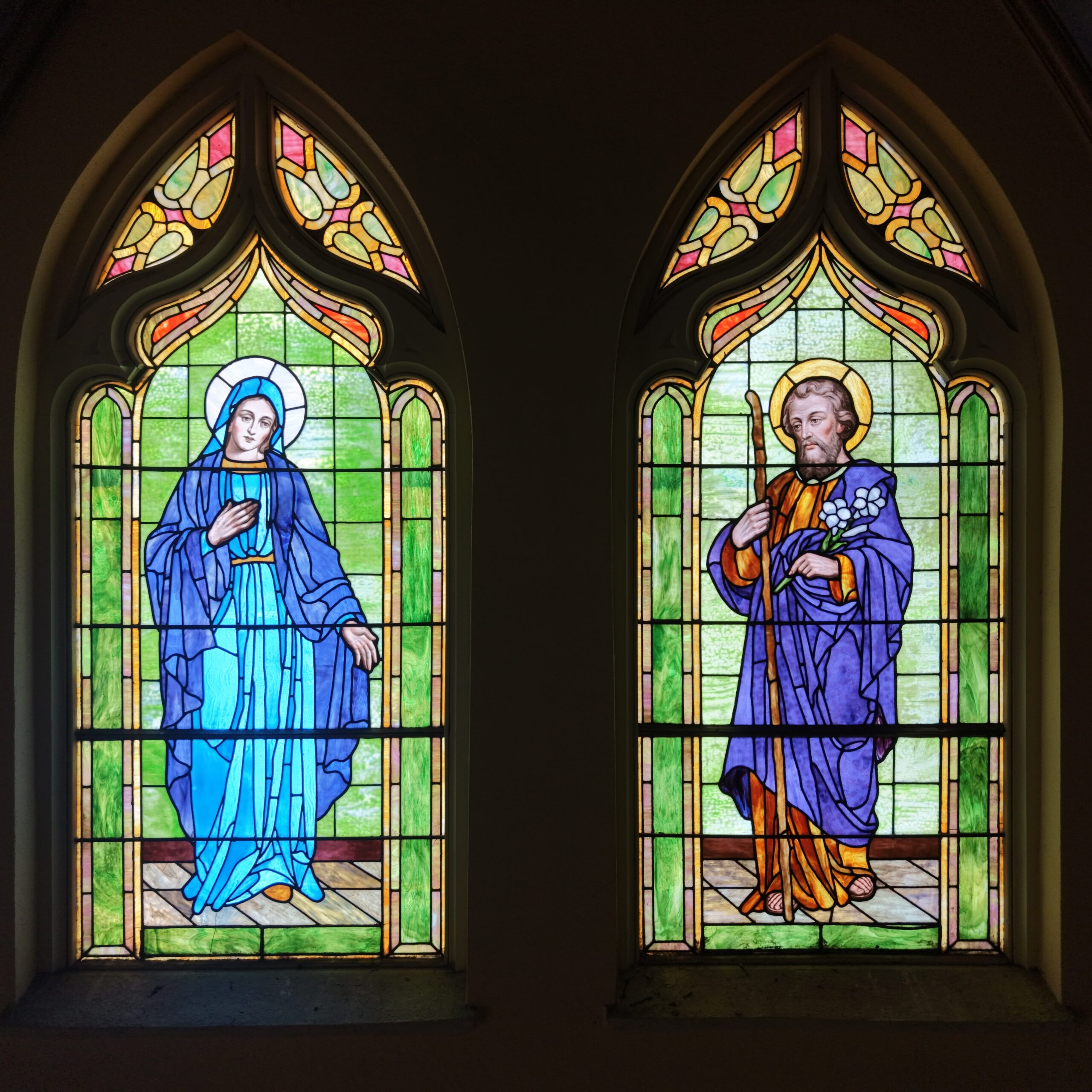
The Blessed Virgin Mary and Saint Joseph
Saint Mary and Saint Joseph are depicted together as the parents of Jesus Christ. The Blessed Virgin Mary wears beautiful blue garments. Saint Joseph bears Easter lillies, a sign of purity.
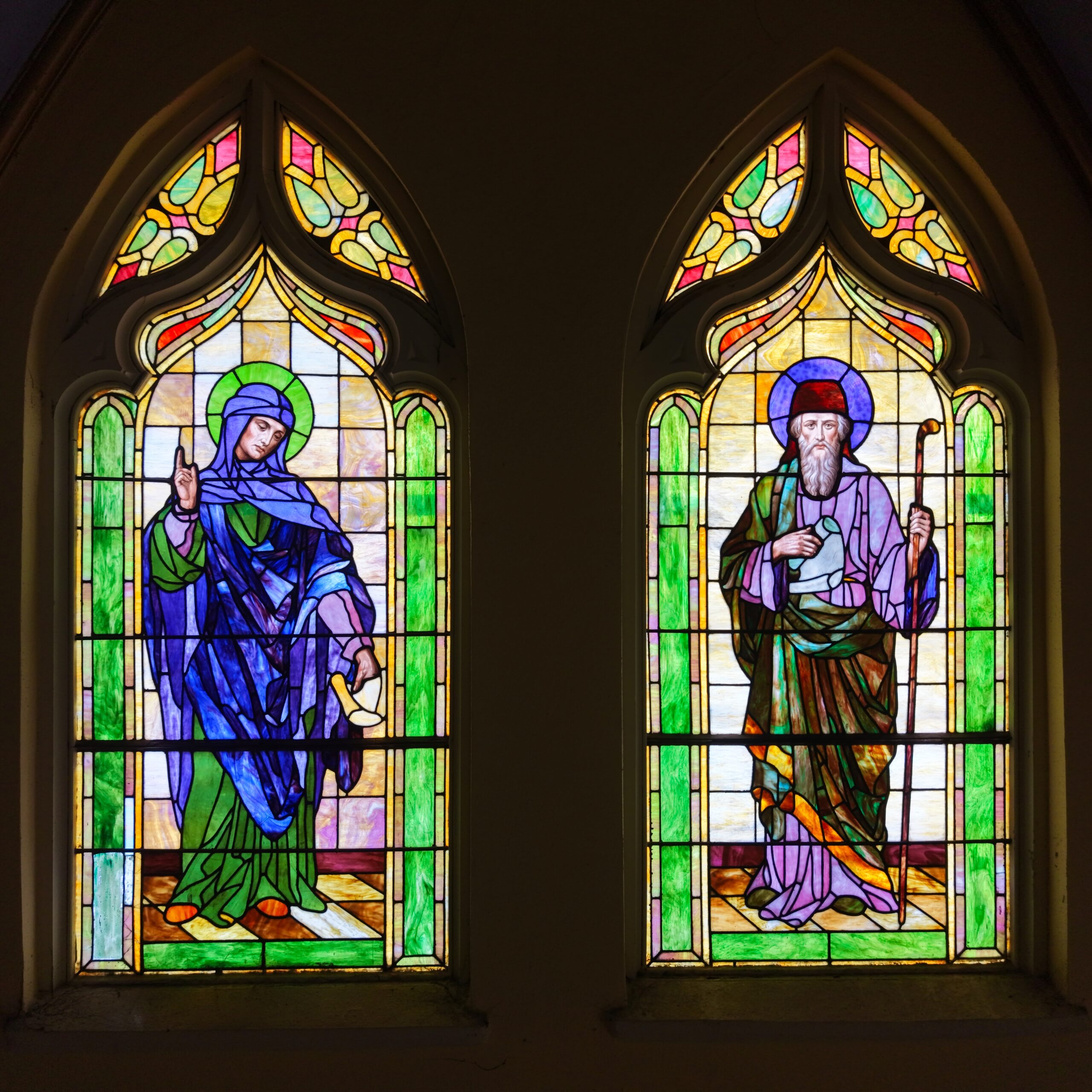
Saints Anna and Joachim
According to tradition, Saints Anna and Joachim were the parents of the Blessed Virgin Mary and the grandparents of Jesus.
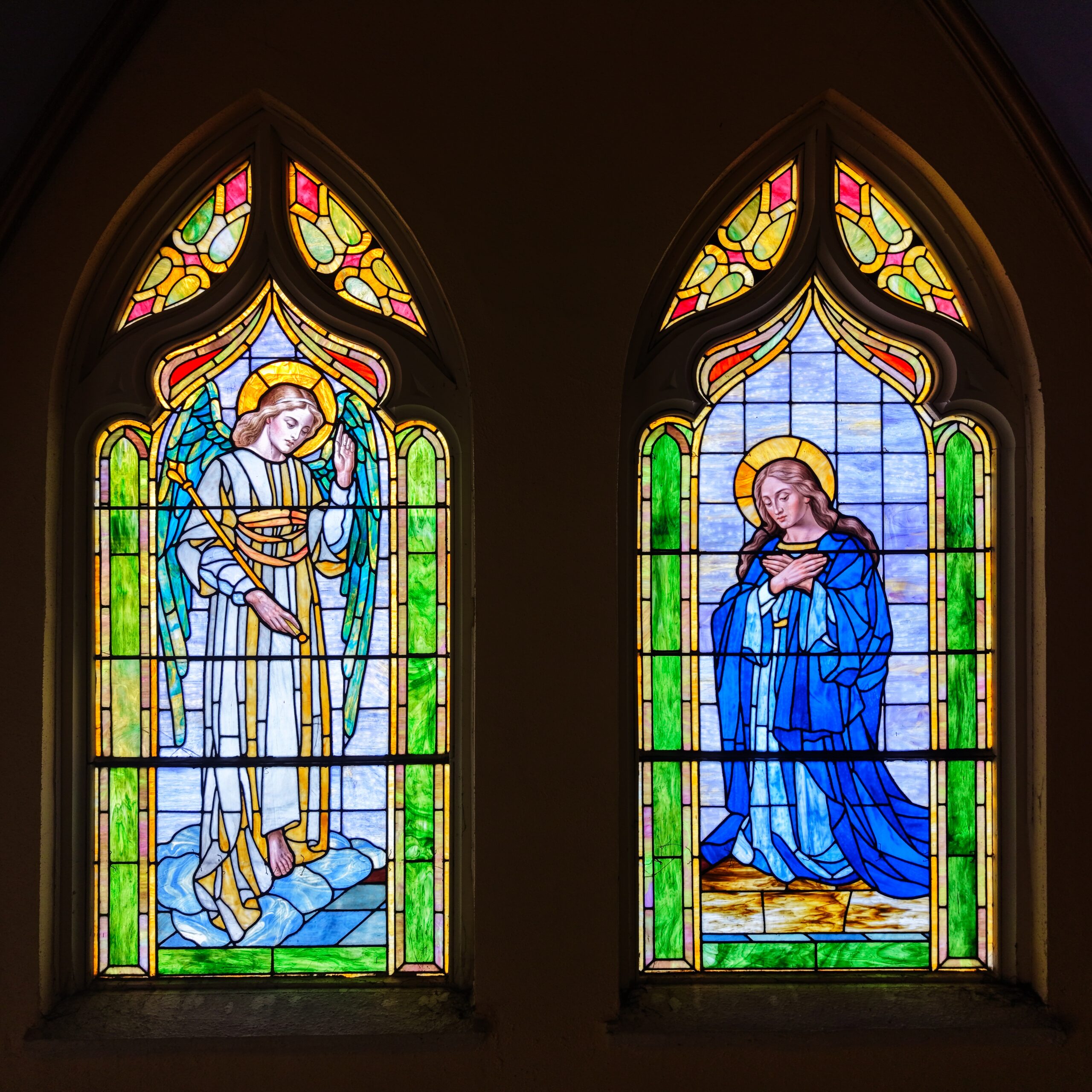
The Angel Gabriel appears in Nazareth to the young virgin Mary betrothed to Joseph. Saint Mary kneels in voluntary obedience to God’s will that she will become the Mother of Jesus.
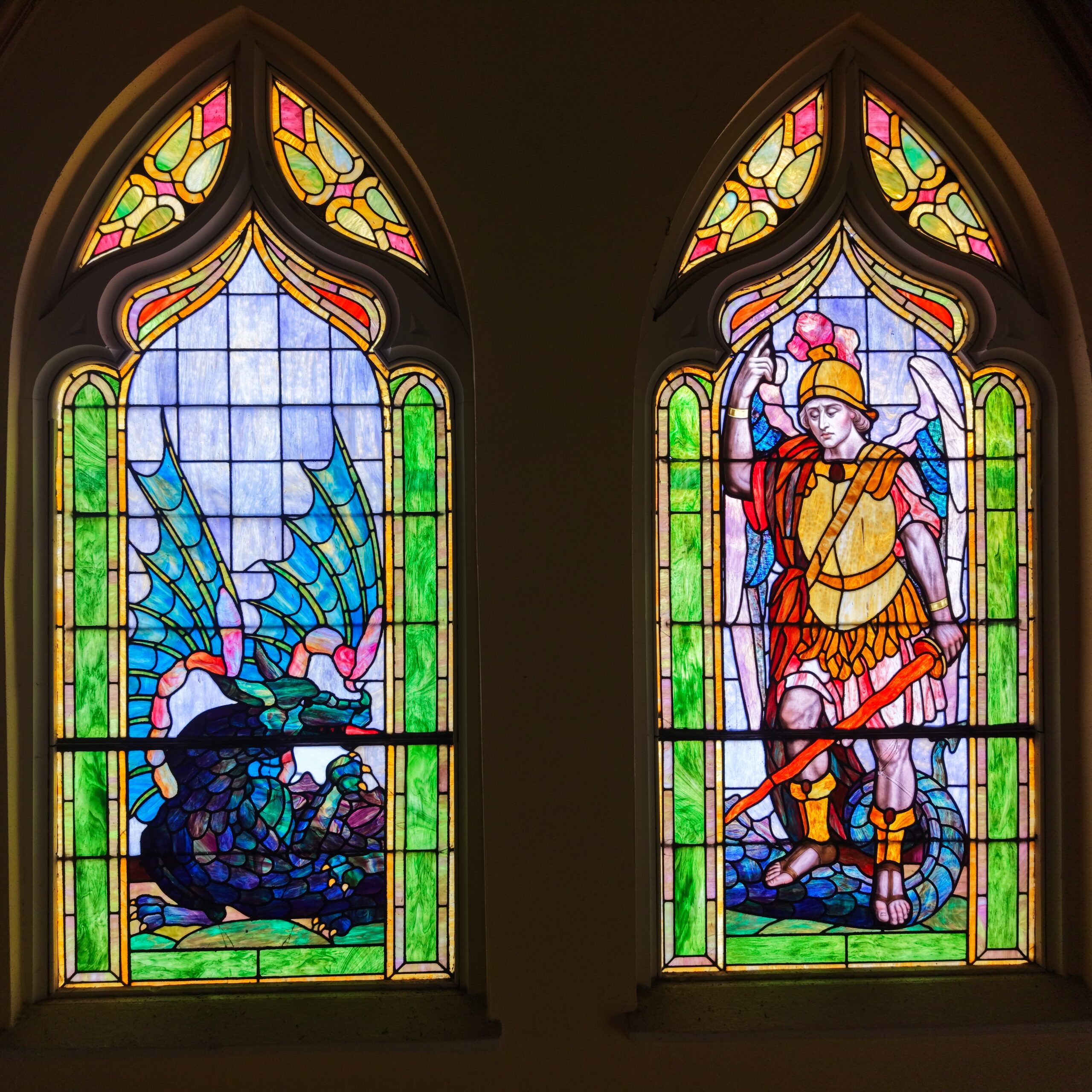
Saint Michael, depicted in military armor, stands on the tail of the defeated Dragon representing the triumph of good over evil. Unlike Saint Mary’s voluntary cooperation, the dragon kneels in involuntary obedience to God’s will.
The Forgiveness Windows
Holy Family’s confessionals are located in the transepts. The six lower windows of the transepts all have forgiveness as their theme.
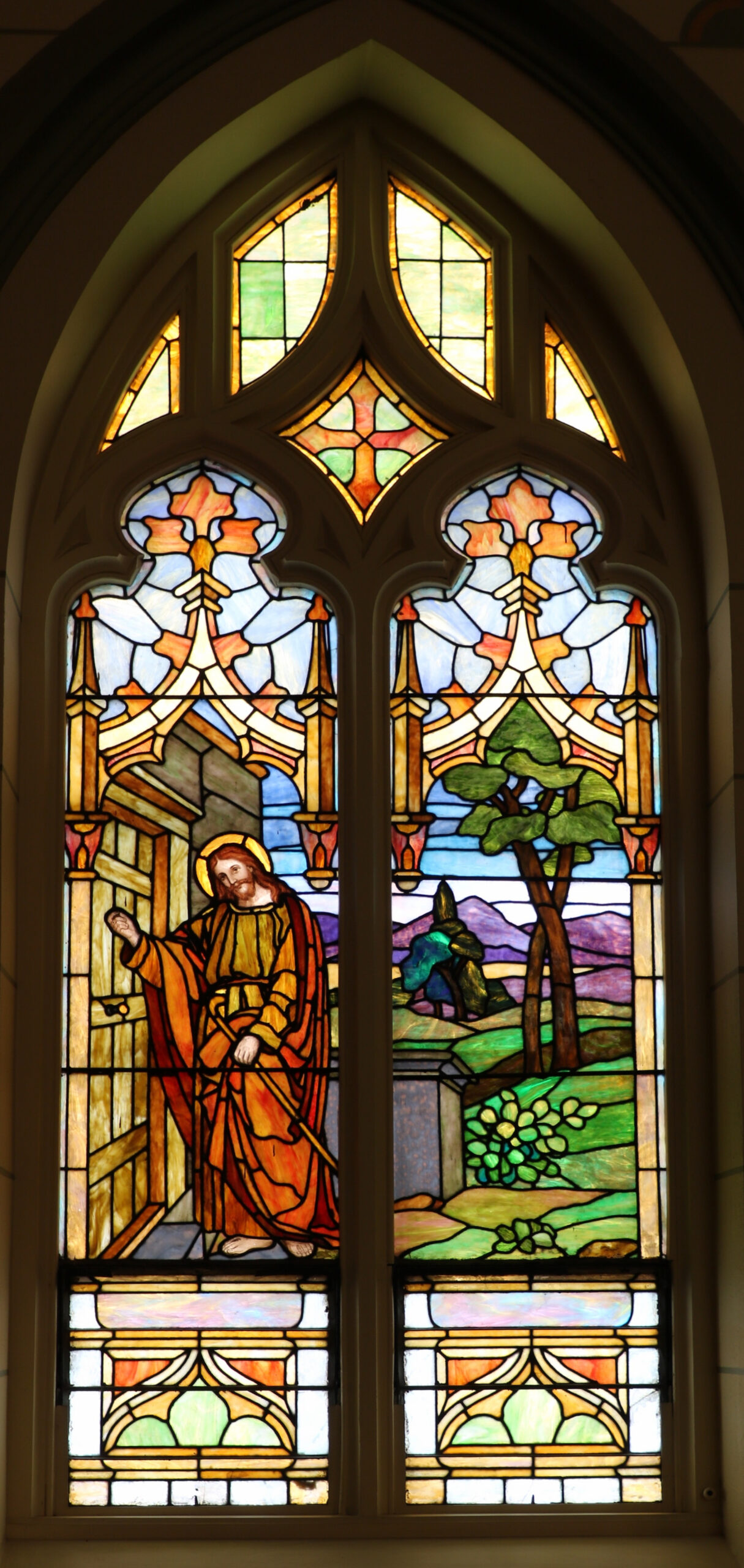
Jesus Knocking on our door
In Revelation 3:20, Jesus says, “Behold, I stand at the door and knock. If anyone hears my voice and opens the door, [then] I will enter his house and dine with him, and he with me.”
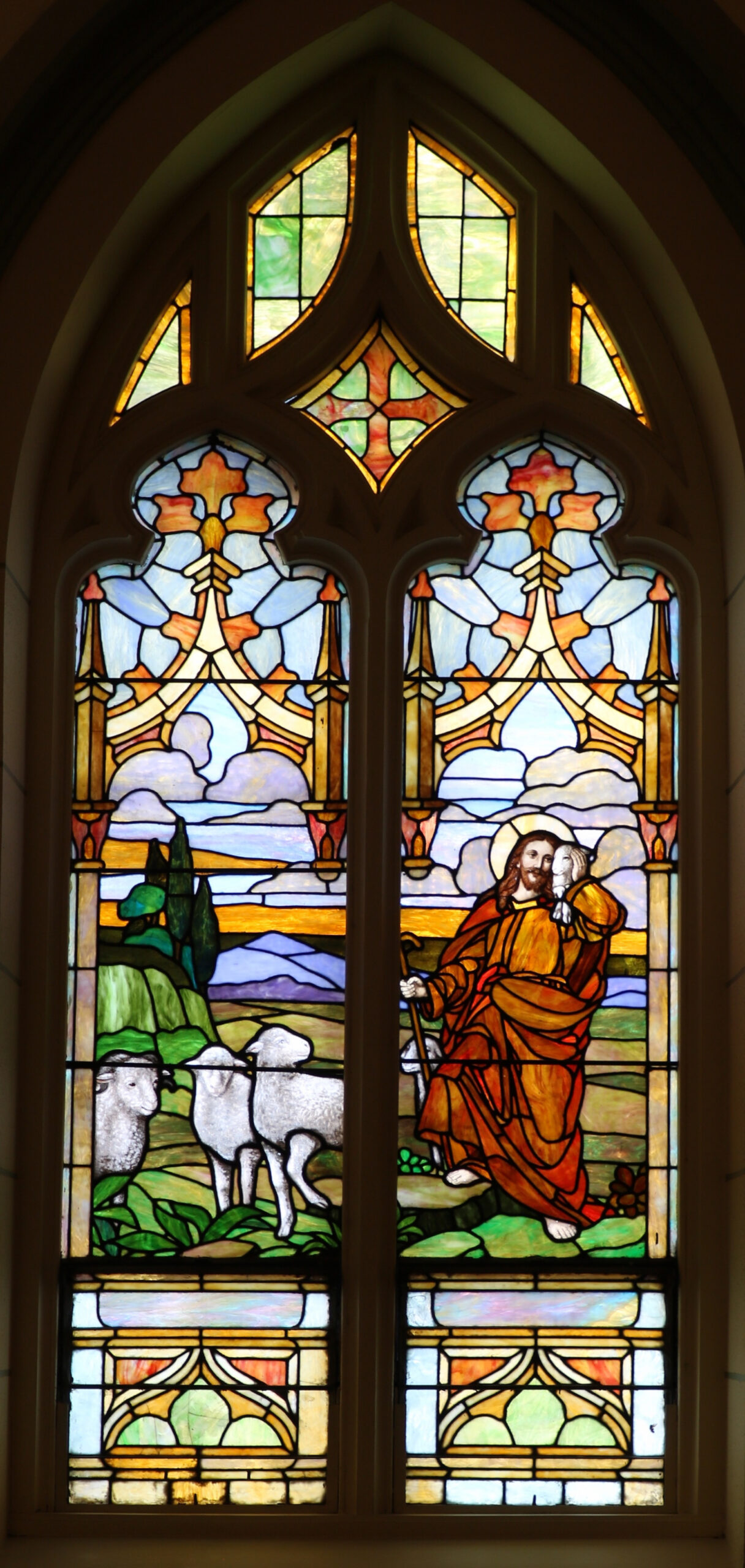
Jesus the Good Shepherd
Jesus tells us “the good shepherd lays down his life for the sheep” in the Gospel of John (Chapter 10).
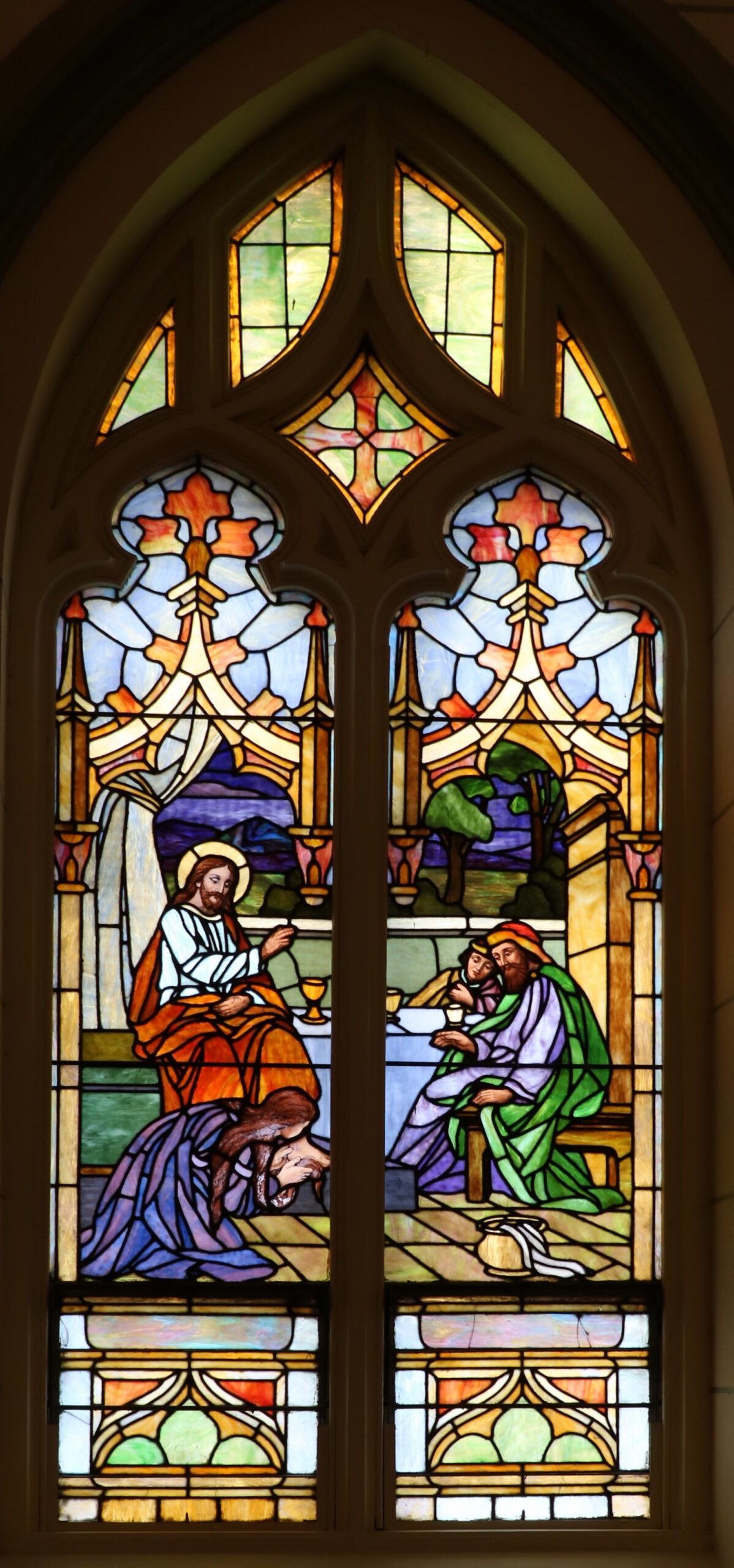
The Anointing at Bethany
Six days before Passover – and Christ’s passion and death – Mary of Bethany anointed Jesus’ feet with costly nard and dried them with her hair at a dinner, serving as a burial preparation. Judas Iscariot criticized the waste, but Jesus defended her act as a profound devotion.
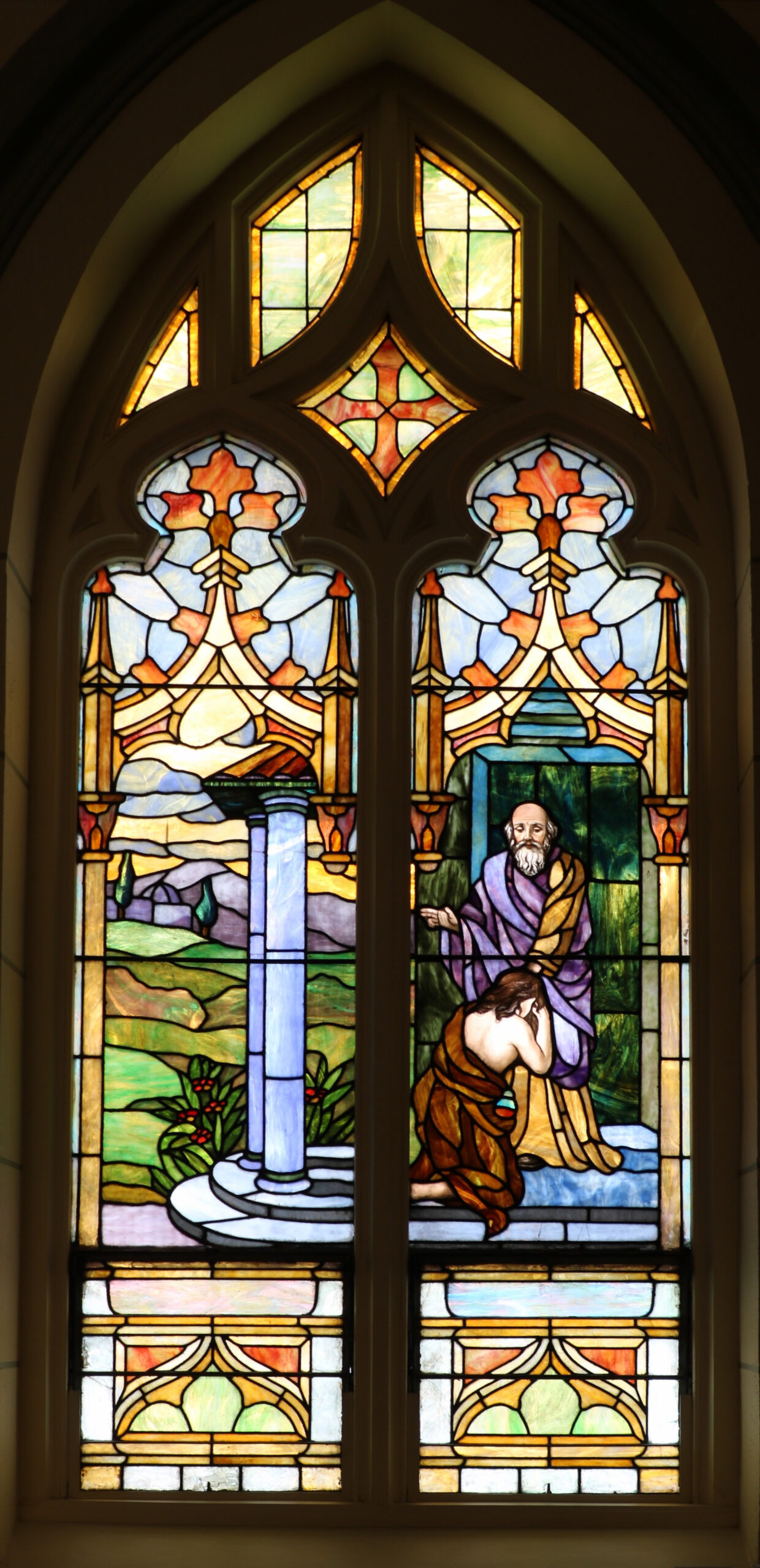
The Prodigal Son
In this parable, the forgiving father rejoices at the opportunity to pardon his son when he proclaimed, “We must celebrate and rejoice, because [the prodigal son] was dead and has come to life again; he was lost and has been found.”
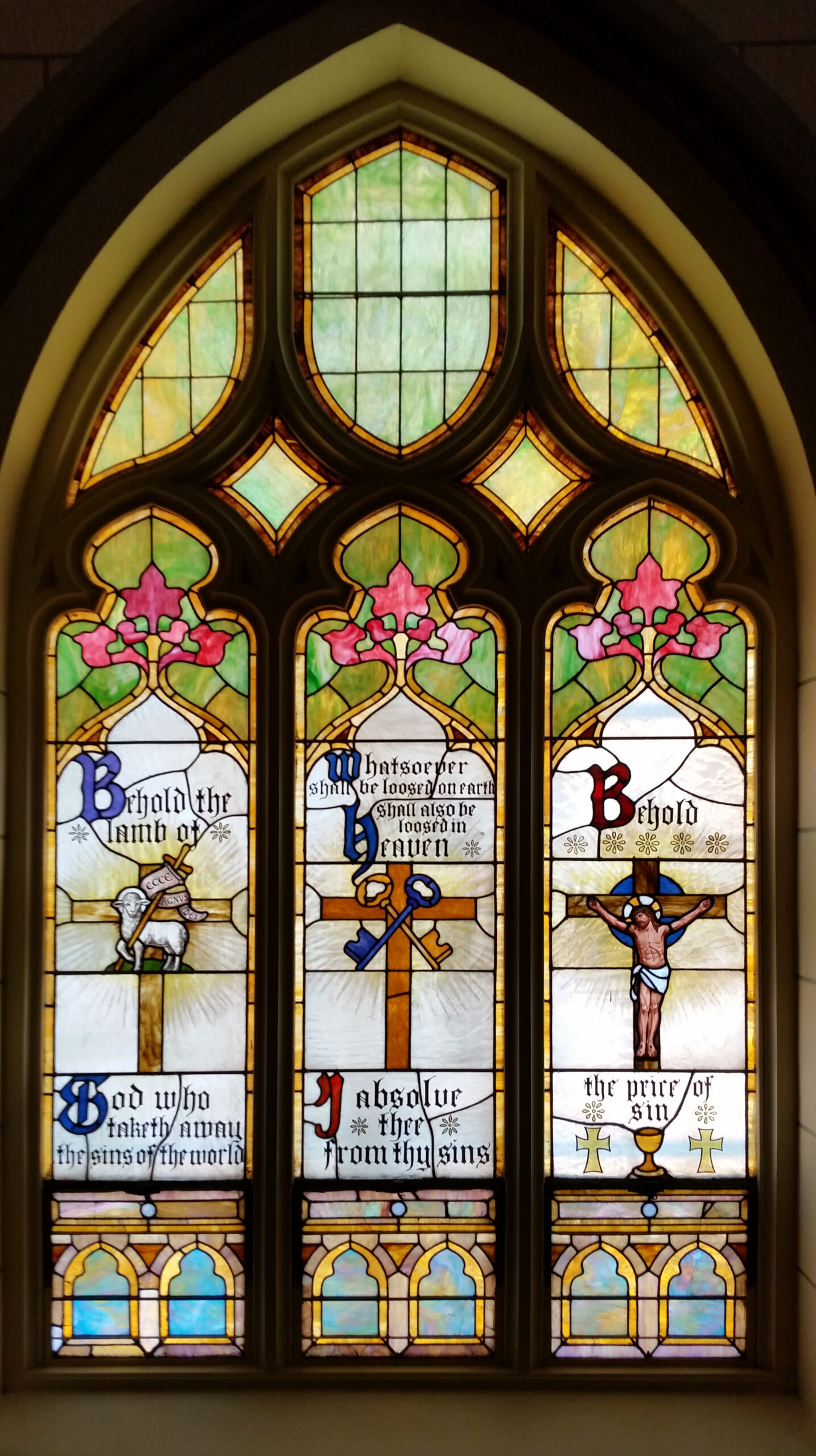
This windows appear twice – at the center of either transept. It contains some of the only words found anywhere in Holy Family’s windows.



Leave a Reply